
How to Clean a Front-Loading Washing Machine: A Practical Guide
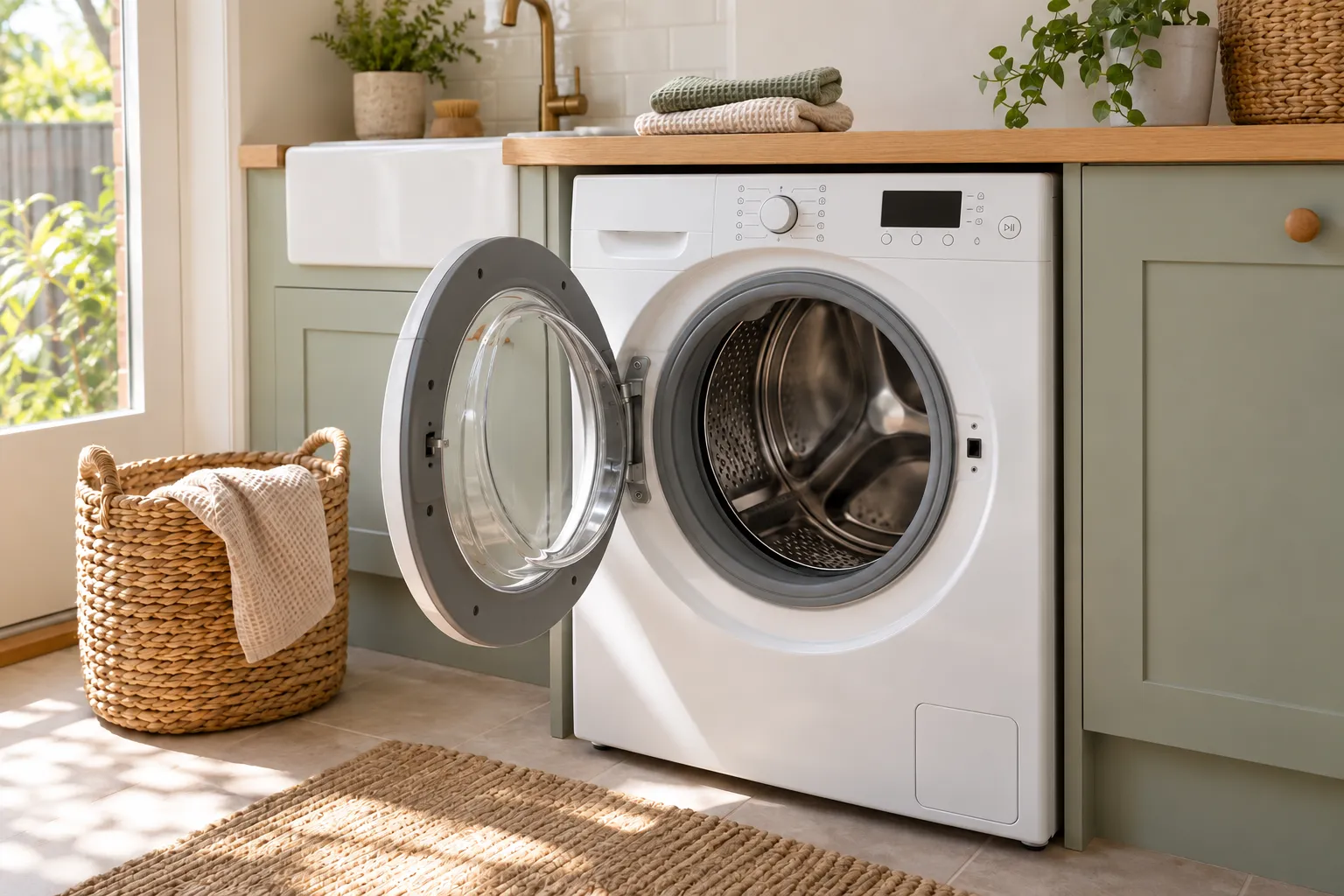
To clean a front-loading washing machine, start with the instructions for its exact model. Wipe the accessible door seal, clean the detergent drawer as directed, run the specified empty maintenance programme and check any user-serviceable filter only by the approved procedure. The right product and programme vary between machines: adding a cleaning tablet is not always appropriate.
This guide helps you organise those jobs without guessing. It covers routine care for Australian households and holiday-rental laundries, with clear stopping points where a cleaner or owner should call an appliance technician. It does not replace your machine's manual or promise that cleaning will fix a mechanical fault.
Download the free washing machine care record (PDF) to note your model, approved programme, cleaning method and next check.
Start with the model, not a cleaning recipe
Find the model number on the appliance's identification label and download the matching manual from the manufacturer's website. Use the maintenance section, not just the quick-start washing guide. Similar-looking machines can have different dispensers, filter arrangements and cleaning programmes.
Write down three answers before you start: which programme cleans the drum, whether it requires a product, and which parts the manufacturer allows you to remove. If the instructions are unclear, ask the manufacturer rather than trying several online methods in succession.
Keep the manual link with the care record. In a shared household, this prevents one person using a tablet after another has selected a programme intended to run without additives. In a holiday rental, it gives the host and cleaning team a common reference.
Why a washer needs attention between laundry loads
The fact that a machine washes clothes does not mean every part stays clean. Bosch identifies detergent residue in the drum as a reason for maintenance cleaning. Its Australian drum-cleaning guidance recommends its washing machine cleaner and gives an approximate three-month interval.
That is brand guidance, not a universal schedule. A care routine needs to reflect the actual machine, its reminders and how it is used. A family washer doing frequent loads and an occasionally used holiday-home washer may need different planning even when they look alike.
Make observations specific. Note whether the issue is a sticky dispenser, visible debris around the door, a persistent smell or an error message. These are different observations, and recording them is more useful than labelling every problem “mould”.
Gather a small, suitable cleaning kit
- The correct appliance manual, open at the maintenance section.
- Soft cloths, including a separate dry cloth.
- A small soft brush if permitted for the part you are cleaning.
- The exact approved product, only where the instructions call for one.
- Towels and a suitable shallow container if the manual describes draining a user-serviceable filter.
- Gloves or other protection required by the product label.
Clear the laundry floor and give yourself space to work without balancing bottles on the machine. Keep children and pets away from the work area. Do not pull out a heavy washer or disturb a stacked dryer just to reach something described in a generic guide.
Step 1: make the machine ready for manual cleaning
Finish the wash, remove the laundry and allow hot parts and water to cool. Before manually cleaning removable parts, turn the machine off and unplug it where safely accessible, following the manual's isolation instructions. If the connection is inaccessible, get advice rather than moving the appliance or reaching behind it blindly.
Do not spray water over the appliance or controls. Keep electrical connections dry. The manufacturer may require power again for the maintenance cycle later, but that comes after the manual cleaning is finished and parts have been properly refitted.
Look for an existing leak, damaged cable or cracked component before proceeding. Cleaning should not become an attempt to work around a fault. If water is near electrical fittings, keep clear and seek qualified help.
Step 2: gently clean the accessible door seal
For routine seal care, Bosch recommends a cloth and warm water and advises against abrasive cleaners. Wipe the reachable surfaces gently, following the shape of the seal. Do not remove the rubber seal or prise at its retaining parts.
Use a clean section of cloth as it picks up residue, rather than spreading the same dirt around the ring. Check the lower accessible area for small items before wiping. Do not push a tool into hidden openings or use a sharp object to scrape a mark.
Finish with a dry cloth where the manual permits. If a stain remains, do not assume stronger chemicals are the next step. Photograph the area and ask the manufacturer about a compatible treatment. A split or distorted seal needs assessment; scrubbing will not repair it.
Step 3: check the detergent drawer design
Some dispensers have simple removable compartments; others contain automatic dosing reservoirs and components that need a different cleaning process. Find the drawer diagram in your manual before pressing release tabs or lifting inserts. Take a photo of the assembled arrangement if it will help you refit the permitted parts.
Use only the cleaning method specified for that drawer. Do not immerse an entire automatic dispenser because a video shows someone rinsing a basic plastic tray. Samsung's Australian auto-dispenser guide points owners to the relevant cleaning and maintenance guidance.
For the conventional front-loader drawer covered by Samsung's drawer-cleaning guide, the process uses the release lever, running water and a soft brush on the removable components, followed by cleaning the recess and refitting the container. Its automatic-dispenser section has different removal details and calls for a dry recess before reinsertion. Follow the section that matches your machine.
Keep small removable inserts together in a tray while you work. Check the refitted drawer sits correctly without force. If it jams, leaks or will not dispense afterwards, stop and consult the manufacturer instead of adding more detergent to compensate.
Step 4: run the right empty drum programme
Samsung's Australian door and drum guide says its described Drum Clean, Drum Clean+ and Tub Clean programmes run with an empty drum and no added cleaning agents or detergent. It recommends monthly drum cleaning. Check your model's manual for the applicable programme and reminders.
This differs from Bosch's cleaner-based advice linked above. Do not combine the instructions: a product recommended for one machine is not permission to add it to another machine's self-clean cycle.
Before starting, confirm the parts are refitted, the drum is empty and any product quantity and placement match the instructions. Restore power safely, select the specified programme and let it finish. Do not add a few towels to “make use of” a cycle that is meant to clean the empty appliance.
Record the programme and any product used. If the cycle stops with an error, record the code and consult support. Repeatedly restarting different hot programmes makes the sequence harder to explain and may leave the underlying problem unresolved.
Step 5: treat the pump filter as a separate task
Only clean a filter the manual identifies as user-serviceable. Samsung's front-loader pump-filter guide describes switching off and unplugging, protecting the floor, draining residual water through the emergency hose, cleaning the filter and securing both filter and hose cap afterwards. It suggests five to six cleans per year for the models covered.
Use your own model's sequence, not those steps as universal instructions. Never open a filter containing hot water. Allow cooling time and use the manual's draining procedure before removal. If a cap will not release normally, do not force it with pliers.
This task can release more water than expected. If you cannot safely get down to the access panel or control the drainage, arrange help. Leave dismantling, inaccessible obstructions and unresolved drainage faults to an appliance technician.
Can you use vinegar, bleach or a dishwasher tablet?
Do not improvise a chemical recipe. Bosch advises against vinegar in its washing machines because of potential damage to rubber components. That is a useful reminder that a household cleaning ingredient is not automatically suitable for appliance internals.
Use bleach only if the exact appliance instructions and product label permit that application; do not invent a dilution. Never mix cleaning products. A dishwasher tablet is made for a different appliance, so do not substitute one for a specified washing machine product.
If advice seems contradictory, pause and confirm it with the manufacturer. For other surfaces around the home, our vinegar cleaning guide explains why material compatibility matters.
Build a routine that someone will actually follow
Put the model's maintenance interval into a calendar or use its built-in reminder. Avoid adopting a generic monthly checklist without checking what each task requires. The seal, dispenser, drum programme and filter do not necessarily share one schedule.
After laundry, remove the load promptly and follow the manual's drying advice. Where it recommends an open door or drawer, do this only when the arrangement is safe for children and pets and does not obstruct a walkway. An accessible open drum should not become a hiding place.
For a holiday rental, assign one person to monitor the record. Keep appliance maintenance separate from guest checkout requests, and leave enough time for a full cycle between laundry sessions. Our linen and laundry planning guide can help you organise stock around that downtime.
Common mistakes to avoid
- Using another model's instructions. Match the full model number, especially for automatic dispensers.
- Adding cleaner to a no-additive programme. Confirm the method before opening a product.
- Forcing a stuck component. A drawer or filter that will not move needs investigation.
- Opening a hot or undrained filter. Cooling and controlled drainage come first.
- Calling a smell proof of a specific fault. Record what you observe and let a technician diagnose persistent problems.
- Assuming a household clean includes servicing. Agree any accessible cleaning tasks separately; appliance repair is a different job.
Frequently asked questions
How often should I clean my front loader?
Use the model's manual and reminders. The manufacturer examples above show why there is no single interval for every washer or every component. Record the applicable schedule rather than copying a frequency from a different appliance.
What if the machine still smells after cleaning?
Note when the smell occurs, what you cleaned and which programme you ran. Contact the manufacturer if it persists. Do not keep adding stronger products or assume that a drain, hose or hidden component can be diagnosed from the smell alone.
Can I follow this for a top loader?
Use a top-loader-specific manual. Door seals, lint filters, dispensers and access arrangements differ. The planning record is reusable, but the front-loader steps should not be transferred to another design without checking.
What should a renter do about a supplied washer?
Find the appliance instructions and report faults to the property manager or owner. Keep a factual note of the problem and any ordinary care already completed. Do not arrange dismantling or replacement parts without checking the appropriate process.
Download your care record
Print the washing machine care record and keep it with the appliance instructions. It has space for the approved programme, product requirements, completed tasks and next check. It is a planning worksheet, not a service certificate.
For help with the surrounding laundry and household cleaning, contact Housekept about your needs in Sydney, the Illawarra or the Shoalhaven. Confirm the cleaning scope when booking; use a qualified appliance technician for repairs.
Sources and checked date
Checked 16 October 2026. Manufacturer links appear beside the advice they support. The scheduling and record-keeping suggestions are Housekept's editorial guidance; your exact model's instructions take priority.