
How to Reset Your Cleaning Cupboard: Storage and Disposal in NSW
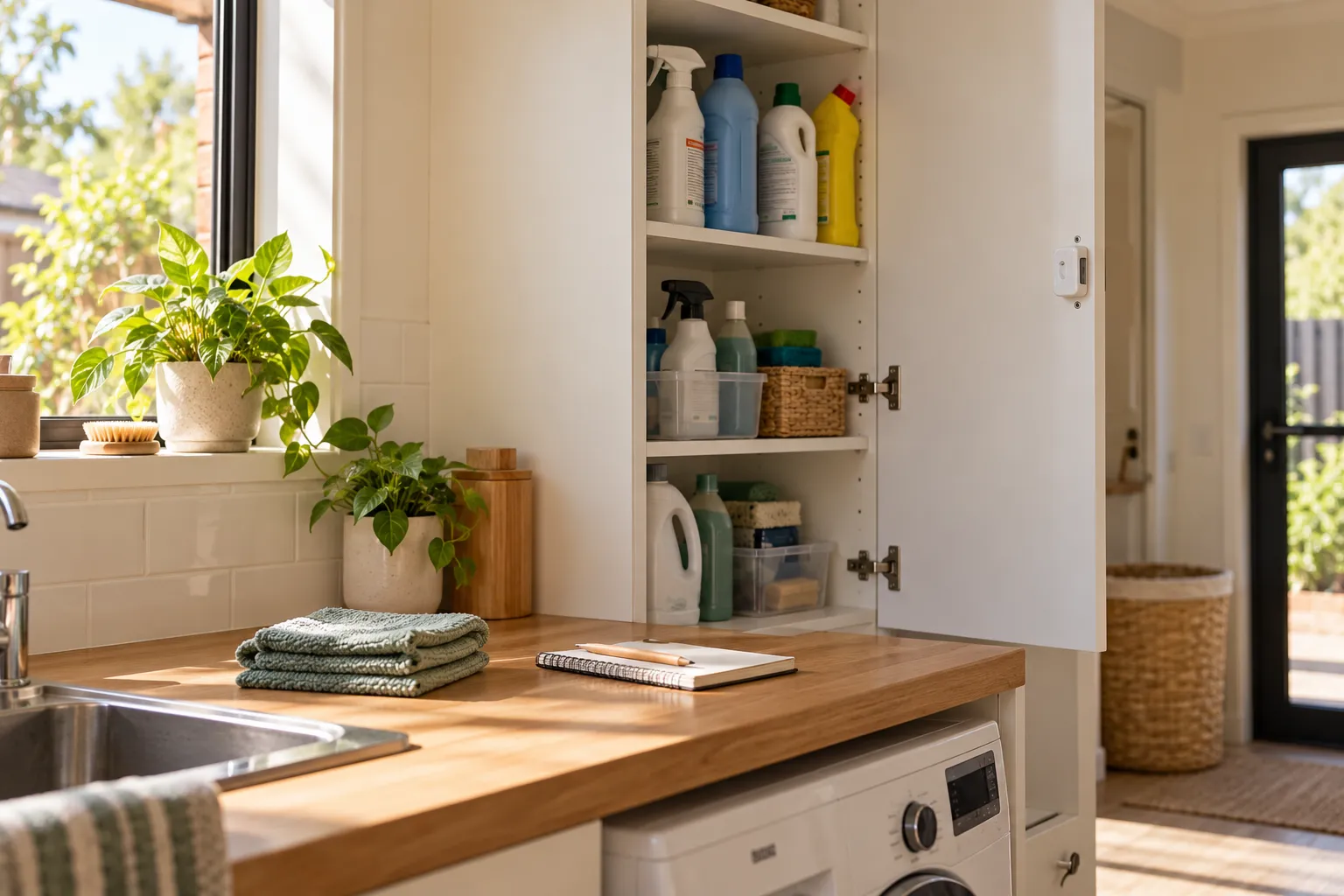
A useful cleaning cupboard lets you find the right product, read its label and put it away safely after use. Start by recording what you already own, keep products in their original containers, follow their storage instructions and arrange a proper disposal route for unwanted chemicals. Do not combine leftovers to make space.
This guide is for household cupboards in NSW, including Sydney, the Illawarra and the Shoalhaven. It covers everyday organisation and the difference between a Community Recycling Centre and a Household Chemical CleanOut event. It is an evergreen guide, not an announcement of a new disposal service.
Download the free cleaning-cupboard inventory and disposal planner (PDF). Use it to record products to keep, questions to resolve and the collection details you have checked.
Start with a cupboard audit, not a shopping trip
Before buying matching baskets or replacement sprays, walk through the places where cleaning products actually live. Include the laundry, bathroom, kitchen and any garage storage. Write down the locations first. A bottle forgotten in a second cupboard is easy to replace unnecessarily when you only check the main shelf.
Choose a time when you can complete the review without leaving products unattended. Keep children and pets away from the working area. You do not need to empty every shelf at once: work through one manageable section, recording information from intact containers and returning items to appropriate storage as you go.
If you find a leaking, swollen, badly corroded or unidentified container, stop handling that item and seek advice from your council or the relevant waste service. Do not open it to investigate. An ordinary cupboard reset should not turn into an improvised chemical clean-up.
Record five things about each product
1. Its exact identity
Write the product name and version from the label. “Bathroom spray” is too vague if you own several different products. Add a photograph of the intact label to your own household records if that helps, but keep the original label on the bottle.
2. The job it has in your home
Give each product a specific purpose: the approved cleaner for a particular floor, the product used on a particular appliance or the detergent used for a routine task. If you cannot name a current use, mark it for review instead of putting it back automatically.
3. Where it can and cannot be used
Read the surface exclusions and compare them with the materials in your home. Keep manufacturer care instructions nearby for special finishes. A product that worked in a previous property may be unsuitable for a new stone benchtop, coated shower screen or coloured tap.
4. How it must be used and stored
Record where to find the directions rather than rewriting a chemical recipe from memory. Check whether the product is ready to use, whether dilution is specified, and what the label says about ventilation, protective equipment and storage. Your inventory is an index to the instructions, not a substitute for them.
5. What happens next
Choose one action: keep for a defined job, ask the manufacturer a question, or arrange disposal. Give the action an owner and a date. This is more useful than a large “maybe” box that stays untouched until the next annual clean.
Keep the packaging that carries the instructions
The NSW Poisons Information Centre advises keeping medicines, cleaning products and chemicals in their original containers with clear labels. That makes a cupboard full of different-shaped bottles preferable to an attractive row of anonymous containers.
Do not transfer cleaning chemicals into drink bottles or food containers. Do not pour two part-used bottles together, even to reduce clutter. Keep the product's closure with its container and follow the label when closing it. If a label is unreadable, seek advice rather than identifying the contents by colour, smell or a guess.
For the inventory, “unknown product: advice needed” is a valid entry. It is better than inventing a name and giving the next person false confidence. Record the location so you can describe the situation when contacting the council or waste service.
Choose storage for the household you actually have
The ACCC's household chemical safety guide recommends storing products out of children's sight and reach, putting them away immediately after use, and using child-resistant locks on low or accessible cupboards. A storage plan needs to account for visiting children as well as those who live with you.
Follow each product's storage instructions, including any temperature or separation requirements. Do not group products together solely because their bottles fit the same basket. Organisation should make the required storage easier to follow, not override it.
Before buying an organiser, measure the available space with the cupboard closed. Check that bottles can stand upright, labels remain accessible and the door and lock can operate properly. Avoid stacking products so that retrieving one means balancing several others on the bench.
Think about the return journey too. The best location is one the responsible adult can use consistently while maintaining safe storage. A temporary open caddy on the floor is not a replacement for putting products away when the task is finished.
Reduce duplicates without rushing through chemicals
Separate “we already own this” from “we need to use it immediately”. You do not need to add extra cleaning, use more product than directed or apply something to an unsuitable surface simply to empty a bottle.
For example, suppose the audit finds three products bought for the same shower. The sensible next step is to check which one is suitable for the screen and fittings, then decide what to do with the others. It is not to try all three in sequence during one cleaning session.
The NSW cleaning-product safety guidance says to use products in a ventilated area and not mix chemicals. Keep that rule separate from shopping decisions: a smaller cupboard is useful, but combining products is not a safe shortcut to achieving it.
Make a short replacement list only after the audit. Note the exact approved product, the job it serves and where it is stored. Before someone places a household order, check that list against the cupboard. There is no universal number of bottles every home should own.
Where unwanted cleaning chemicals go in NSW
The NSW EPA's Household Chemical CleanOut program provides free drive-through events on specified dates. Accepted materials include household cleaners, ammonia-based cleaners and floor-care products. Its general limit is 20 litres or 20 kilograms of a single item; check the current acceptance conditions before travelling.
A Community Recycling Centre is not automatically an alternative for every cleaning chemical. The EPA's centre and event finder distinguishes year-round problem-waste facilities from scheduled CleanOut events. It also states that these services are not available for business waste. If the products came from a cleaning business or commercial operation, ask an appropriate waste service about the correct route.
Illawarra households
Wollongong Council's household-chemical guidance says Chemical CleanOut events are currently the local service accepting household chemicals. Its Community Recycling Centre accepts other problem items, but that does not mean you can take an unwanted household cleaner there. Check the current event listing for your area.
Shoalhaven households
Shoalhaven Council's household-cleaner guidance directs residents to Chemical CleanOut events and says to keep these materials out of both kerbside bins. It advises safe storage in clearly labelled containers away from children and pets while awaiting disposal.
Sydney households
Use the EPA finder to identify an upcoming event and read its location, date, hours and conditions. Search results can continue to show past events, so check the year as well as the day and month. Put the verified details in your planner rather than relying on a saved search snippet.
Make a disposal plan before loading the car
List the products and approximate quantities, then check that the receiving service accepts them. Contact the organiser first about unknown contents, damaged packaging or anything outside the published limits. Do not assume staff can resolve every packaging problem when you arrive.
The EPA advises keeping chemicals in original containers wherever possible, making sure containers are labelled and sealed, and keeping them away from passengers during transport. Its CleanOut page gives specific packing instructions for liquids. Follow that current guidance; do not mix chemicals or transfer them to make transport easier.
Write down who will take the items, where the confirmed event is and what still needs clarification. Keep unwanted products appropriately stored until the agreed disposal step. Tick the planner only after the handover is complete, not when the trip is merely pencilled into the diary.
Share the useful information with your cleaner
If someone else cleans your home, share the relevant surface-care instructions and product preferences. Explain which items are not to be used or moved. Do not assume that a household cleaning appointment includes transporting unwanted chemicals or clearing an unknown spill.
Our guide to preparing for a cleaner can help with the wider visit. For a specific example of surface compatibility, read how to remove shower soap scum safely.
Cleaning-cupboard FAQs
Should I throw away every duplicate?
No. Review its purpose, condition, label and storage requirements. A suitable product you can store correctly may have a future use. An unwanted one needs the appropriate disposal route, not an automatic trip to the bin.
Can I leave unwanted products for my cleaner to take?
Do not assume that service is included. Confirm responsibility separately and use the council or EPA guidance to establish a suitable destination.
How often should I repeat the audit?
Choose a review point that fits your household, such as before a large supply order or after changing a surface or appliance. Update the inventory when a product is replaced or removed so it stays useful.
Start with one shelf and the free inventory and disposal planner. If you would like support with routine household cleaning, explore Housekept home cleaning and discuss your materials and preferences when agreeing the scope.
Sources and checked date
Checked 22 October 2026. This guide combines official safety and disposal guidance with original household organisation advice. Product labels and current receiving-service instructions take priority over a general checklist.