
How to Remove Soap Scum from Shower Glass Safely
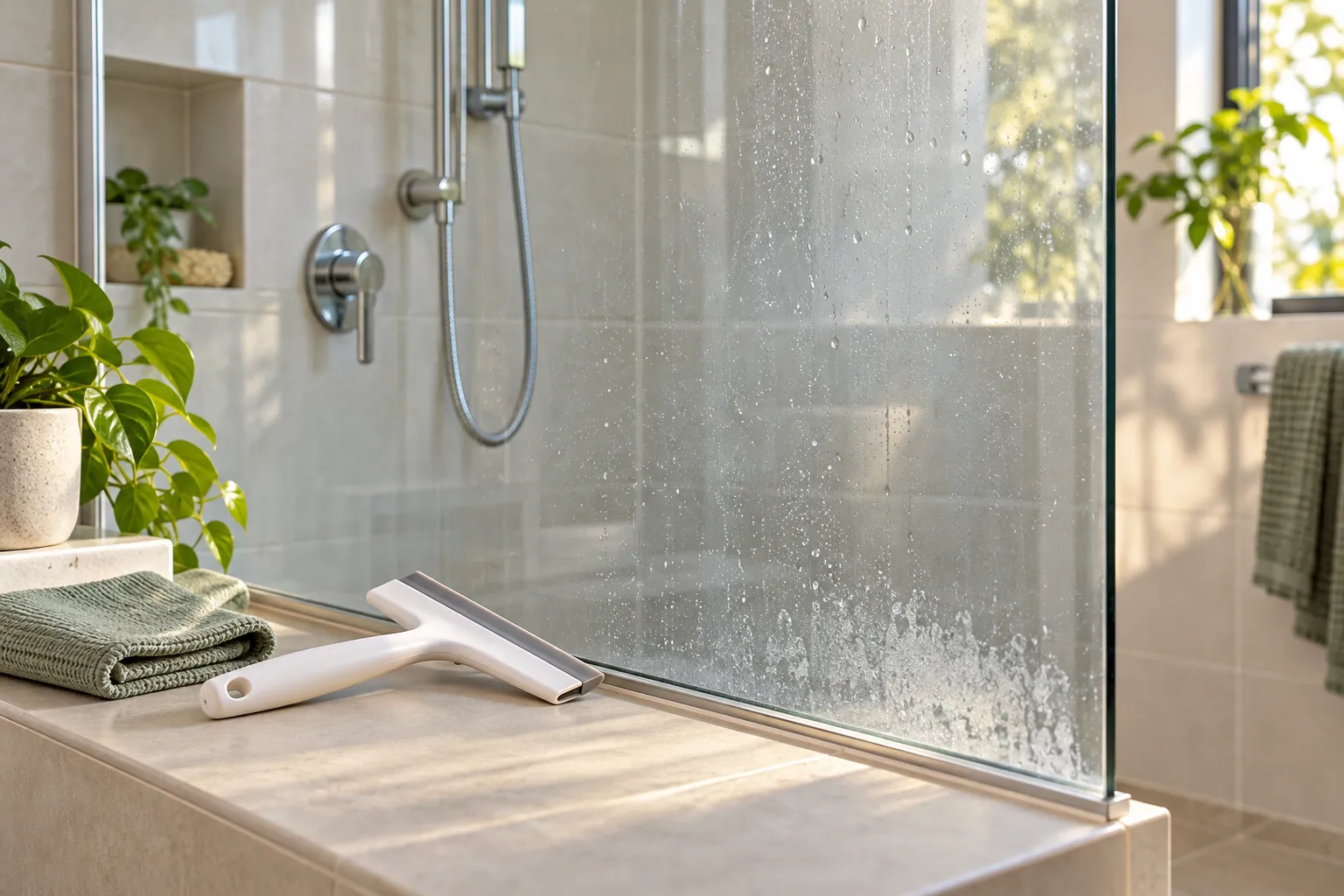
To remove soap scum from a shower, identify the glass, coating and surrounding finishes first, then use a compatible cleaner, rinse thoroughly and dry. Start with the mild method recommended by your shower manufacturer. If the residue remains, choose a purpose-made product approved for those surfaces rather than scrubbing harder or mixing cleaners.
This guide helps you plan the job, work through stubborn patches and keep a record of what your bathroom can tolerate. It is useful whether you are maintaining a family bathroom in Sydney, preparing an Illawarra rental for an inspection or resetting a Shoalhaven holiday home between guests. It does not promise to reverse damaged glass or keep a working shower permanently spotless.
Download the free shower cleaning checklist and care record (PDF). Use it to note your surfaces, approved products, test result and next cleaning date.
First, work out what you are trying to remove
A cloudy shower is a description, not a diagnosis. Record where the mark appears: across the whole panel, around bottle bases, beneath the tap or along a seal. Photograph it while the surface is dry, in ordinary daylight. This gives you something useful to compare after cleaning instead of relying on how shiny the glass looks while wet.
Soap and shower-product residue may respond to a routine wash. Mineral deposits may need a different compatible treatment. A mark that stays after cleaning is not automatically proof that you need a stronger chemical. Greater Glass warns that glass corrosion can also produce a cloudy appearance. See its shower-screen care factsheet.
Keep suspected mould, failed silicone and damaged fittings on a separate list. A soap-scum cleaning session is not a repair. If a panel is cracked, chipped or loose, stop and arrange an assessment before working around it.
Check the whole shower, not just the glass
Coated shower glass
Look for the installation paperwork, a supplier invoice or the coating brand. An easy-clean coating still has a maintenance routine. For example, EnduroShield's care instructions recommend weekly cleaning with mild detergent and a damp microfibre cloth, followed by rinsing and squeegeeing. They warn against rough, gritty and abrasive cleaners and highly acidic or alkaline products. That is guidance for its treated surfaces, not permission to use every bathroom cleaner on every coating.
Stone, tiles and grout
Find out whether the shower includes natural stone, ceramic or porcelain tile, and whether there are special sealer instructions. If you cannot identify the material, ask the installer or property manager before trying a descaler. A product that runs off glass will also reach the sill, grout and floor.
Marble and limestone can be etched by acidic contact, including vinegar. Caesarstone explains this distinction in its natural-stone comparison. Engineered stone has its own care requirements too; do not assume a cleaner suitable for a nearby tile is suitable for a vanity or shower ledge.
Taps, frames and accessories
Include the finish of the tapware in your check. Caroma advises gentle care for coloured plated finishes and warns that abrasive cleaners and harsh detergents can scratch tapware. Its bathroom care guidance describes warm soapy water and soft cloths for this purpose. Keep the instructions for the actual fixture you own: chrome, brushed and coloured finishes need not share the same approved products.
Set up a simple, safe cleaning kit
Gather two clean soft cloths, a suitable squeegee, your approved cleaner, clean rinsing water and the protective equipment specified on the label. Read the instructions before opening the bottle. Check the permitted surfaces, dilution, application method, contact time and rinsing requirements. Do not invent a longer soak because the build-up looks heavy.
Ventilate the room, keep children and pets away from the work area and never mix cleaning chemicals. The NSW Poisons Information Centre specifically recommends ventilation and avoiding chemical mixtures. This includes adding another product to a bottle that still contains an old cleaner. Keep products in their original labelled packaging.
Remove shampoo bottles, razors and loose accessories. Put them on a washable tray outside your working area rather than on a stone vanity. Give yourself a clear route out of the shower and keep the bathroom floor outside it dry. Avoid balancing on the bath edge or a chair to reach high glass.
How to remove soap scum, step by step
1. Choose a small test area
Use an inconspicuous section that represents the affected surface. Follow both the surface-care instructions and the cleaner label, including any patch-test directions. Rinse and dry the test area before judging it. If you notice a change in colour, gloss or texture, stop. Write the result on your care record so nobody repeats an unsuccessful experiment next week.
2. Start with the approved routine wash
For glass whose manufacturer permits it, use the specified mild detergent method with a clean soft cloth. Work in manageable sections. Keep the cloth free of grit and change it if it picks up debris. Greater Glass recommends working from the top down, rinsing thoroughly and drying promptly; it also warns against abrasive cleaners and metal squeegee holders touching the glass.
Plan the order before starting: main panel, door, then the accessible lower edges. This makes it easier to see which areas you have finished. Do not dismantle the door, remove seals or force cloths into hardware to chase a small mark.
3. Rinse, dry and compare
Complete the rinse required by the product and surface instructions. Remove remaining water with a suitable clean squeegee or soft cloth. Compare the dry test section with the original photograph. If it has improved, repeat the same permitted process on the remaining areas. Take the win rather than adding extra chemicals to a surface that is already clean.
4. Treat remaining build-up selectively
If the routine wash leaves residue, check whether your manufacturer approves a dedicated soap-scum remover or mineral-deposit treatment. The name on the front of the bottle is not enough: read the exclusions on the back. If the glass coating or neighbouring materials are excluded, choose another method or ask the supplier for advice.
Apply only as directed and keep track of the stated contact time. Work on the affected section rather than automatically treating every wall and fitting. If the directions cannot be followed without exposing an incompatible nearby finish, do not use that product there. Never layer a second cleaner over the first.
5. Record the result and stop at a sensible point
After the final rinse and dry, note which product and method helped. If the same patch is unchanged, stop escalating the process. Send the photographs and your cleaning record to the shower supplier or a qualified glass professional. Ask whether the mark is removable residue, a coating issue or damage, and what treatment they recommend.
Why vinegar and abrasive pastes are not universal fixes
A familiar household ingredient still needs a surface check. Some coating instructions permit diluted vinegar in particular circumstances; that does not make undiluted vinegar suitable for an entire mixed-material bathroom. Stone, grout, sealers and metal finishes may impose different limits. Our guide to cleaning with vinegar explains why the material matters.
Likewise, a paste or pad marketed as a simple cleaning hack can still be abrasive. Do not assume that a household ingredient, a non-scratch claim or a recommendation for someone else's shower overrides your manufacturer's instructions. Avoid blades and improvised scraping tools on shower glass unless a qualified professional has assessed the job and specified the method.
Build a routine you can actually keep
Use the manufacturer's recommended frequency as your starting point. Make the routine practical: keep a suitable squeegee where it can be reached safely, give cloths a place to dry and store the approved product where the person doing the cleaning can find it. Keep the care record with your household cleaning information rather than relying on memory.
For a shared bathroom, agree who checks the shower and when. For a holiday rental, add a dry-glass inspection to the turnover handover: product used, areas completed and any remaining mark. A dated note is more useful than asking the next cleaner to guess what the previous cleaner tried.
Review the routine after a few cleans. If the shower stays manageable, keep it simple. If build-up repeatedly remains in the same place, investigate the cause with the supplier rather than constantly changing products. For a wider household plan, see how often to clean each room.
Use the printable checklist to avoid repeat mistakes
The shower cleaning checklist and care record has space for the glass or coating brand, surrounding finishes, approved cleaner and label instructions. Tick off the setup and final checks, then record the test result and anything needing repair or advice.
For example, an owner might identify a coated panel and coloured tapware, then discover that the proposed descaler is unsuitable for the fittings. Recording that before cleaning prevents the same unsuitable product being handed to a visiting cleaner. If you rent and do not know the materials, use the questions on the sheet to request the missing care information.
Soap-scum cleaning FAQs
Can I remove every cloudy mark myself?
No. Residue, coating problems and glass damage can look similar. If an approved cleaning method does not improve the dry surface, get an assessment instead of repeatedly increasing strength or pressure.
Can I leave a cleaner on overnight?
Only use the contact time expressly allowed by the product and surface instructions. A longer treatment is not automatically more effective or compatible. If the label's method does not work, seek advice before changing it.
Does easy-clean glass mean no cleaning?
No. Check the coating manufacturer's maintenance routine. Keep that information available to everyone who cleans the shower, including visiting cleaners and holiday-rental teams.
What should I tell a professional cleaner?
Share the surface and coating details, photographs, products already used and the result you want. Flag loose fittings or damaged seals separately. Ask what is included and whether a stubborn mark needs specialist glass advice; do not assume a cleaning booking includes restoration.
If you would like help maintaining the bathroom, explore Housekept home cleaning and discuss the shower's materials and condition when arranging the scope.
Sources and checked date
Checked 19 October 2026. This is a practical cleaning guide, not a product test. Always follow the instructions for your own surfaces and cleaner.