
What does an end of lease clean include?

An end-of-lease clean covers detailed cleaning of the kitchen, bathrooms, bedrooms, living areas and floors, with the exact tasks defined by your booking’s written scope. Do not assume carpet steam cleaning, external windows, full wall washing or outdoor work is included: confirm these separately before you book.
TL;DR
- What does an end of lease clean include? Detailed room-by-room cleaning, subject to the written booking scope.
- Confirm oven interiors, cupboards, windows and tracks individually; a service name does not establish inclusions.
- Housekept provides end-of-lease cleaning across Sydney, Shoalhaven and Illawarra; confirm your property’s requirements before booking.
- Use your entry condition report and final inspection checklist to identify cleaning tasks, damage and existing marks.
What does an end of lease clean include?
An end-of-lease cleaning checklist should identify the rooms, surfaces and fixtures being cleaned, plus any exclusions. Book against a written task list, not the words ‘bond clean’ alone. A property with an oven, balcony and carpet needs those areas addressed explicitly, rather than assumed to sit inside a general package.
Use this checklist when arranging your 2026 move-out clean. It is a scope-checking guide, not a promise that every cleaner includes every task.
Kitchen
- Tasks to put on the checklist: Benchtops, sink, splashback, cooktop and cupboard surfaces
- Details to confirm: Oven interior, rangehood filters and inside cupboards
Bathrooms
- Tasks to put on the checklist: Toilet, basin, shower, bath, mirrors and accessible tiled surfaces
- Details to confirm: Grout staining, mould treatment and mineral deposits
Bedrooms and living areas
- Tasks to put on the checklist: Accessible surfaces, skirting boards, doors and wardrobe surfaces
- Details to confirm: Wall washing, blinds and high fixtures
Floors
- Tasks to put on the checklist: Vacuuming carpets and cleaning suitable hard floors
- Details to confirm: Carpet extraction, stain treatment and specialist floor care
Windows
- Tasks to put on the checklist: Glass, frames, sills and tracks specified in the booking
- Details to confirm: Internal versus external glass and access limits
Laundry and outdoor areas
- Tasks to put on the checklist: Laundry sink, cupboards and any agreed external surfaces
- Details to confirm: Appliance interiors, balconies, garages and garden work
Housekept offers end-of-lease cleaning across Sydney, Shoalhaven and Illawarra. Confirm the checklist for your particular property before treating any task above as a booking inclusion.
Why this matters
The biggest scope problem is simple: you and the cleaner can mean different things by the same phrase. ‘Kitchen cleaning’ does not tell you whether someone will clean inside the oven, remove rangehood filters or wipe every cupboard shelf.
For a 2026 tenancy handover, start with the property’s entry condition report and the agent’s written inspection instructions. Those documents help you distinguish a cleaning task from an existing mark, maintenance issue or damaged surface. They also give you something more useful than a generic checklist: a record of the property you actually rented.
Cleaning and repairs are separate jobs. Scrubbing harder will not fix chipped paint, damaged grout or a broken fitting, and a cleaning booking should not be treated as a repair agreement.
Kitchen: check inside as well as outside
Put the benchtops, sink, taps, splashback and cooktop on your kitchen checklist. Then name the less obvious surfaces: cupboard doors, handles, shelves, drawers, kickboards and the accessible spaces around appliances.
The oven needs its own line. Ask whether the agreed work covers the oven cavity, racks, trays and door glass, rather than accepting ‘oven cleaning’ without detail. Likewise, clarify whether rangehood cleaning means wiping the exterior or also cleaning removable filters.
- Cupboards: Empty them so shelves and corners are accessible.
- Appliances: Identify which appliances belong to the property and which you are taking.
- Fridge space: Arrange access after your fridge is removed if that area needs cleaning.
- Dishwasher: Ask about the door edges, seals, filter and interior separately.
Follow the appliance manufacturer’s cleaning instructions, particularly for coated surfaces and oven components. Do not dismantle an appliance simply to make it look more thoroughly cleaned.
Bathrooms and laundry: separate residue from damage
Bathroom cleaning should be described by surface: toilet, basin, taps, shower screen, shower recess, bath, mirrors and accessible tiles. Include the laundry sink and surrounding surfaces rather than assuming they are covered by ‘wet areas’.
Soap residue, surface dirt, stained grout and damaged silicone are different problems. Tell the cleaner what you can see before booking, ideally with clear photographs. A stained or deteriorated material needs an assessment rather than an automatic promise of removal.
Ask whether the scope includes accessible exhaust covers, vanity drawers and cupboard interiors. Also identify any loose fittings, leaks or damaged surfaces before work starts. That keeps cleaning instructions separate from maintenance requests.
Do not expect a clean to resolve the cause of recurring mould. Report moisture or ventilation problems through the appropriate property-management process, and ask what cleaning work is suitable for the affected area.
Bedrooms and living areas: name the easily missed surfaces
A room can look tidy while its skirting boards, wardrobe tracks and door edges still need attention. Your checklist should cover accessible surfaces, wardrobe shelving, window sills, switches, door handles and other fixtures that need cleaning.
Make wall treatment explicit. Removing isolated marks is different from washing every wall, and painted surfaces require care. Point out existing scuffs, peeling paint and marks recorded at the start of the tenancy before anyone attempts treatment.
Blinds, curtains, ceiling fans and light fittings also need individual clarification. Ask what can be cleaned safely from the available access position, and flag fragile fittings or loose components. Do not assume the cleaner will move heavy furniture or work at height because the room itself is included.
Floors and windows: avoid broad descriptions
‘Floors included’ is not enough detail for a move-out booking. Ask which floor surfaces will be vacuumed or mopped and whether any specialist treatment is part of the agreement.
Carpet vacuuming and carpet extraction are different tasks. If your inspection instructions mention professional carpet cleaning, clarify the requirement and arrange the appropriate work. Also disclose pet hair, visible stains and odours rather than expecting ordinary vacuuming to address them.
For windows, separate internal glass, external glass, frames, sills, tracks and flyscreens. Access matters: an easily reached internal pane is not the same job as external glass above ground level. Identify security screens, restricted access and fragile fittings before booking.
Use surface-appropriate cleaning methods throughout. A method suited to one floor finish or window component is not automatically suitable for another.
What is not automatically included in an end-of-lease clean?
Treat any task absent from the written scope as unconfirmed. This is especially important for work that needs different equipment, access arrangements or a separate trade.
Ask specifically about:
- Carpet extraction: Confirm the method and rooms involved.
- External windows: Identify access requirements and which panes need attention.
- Full wall washing: Distinguish this from isolated mark removal.
- Outdoor cleaning: Name balconies, patios, garages and external storage areas.
- Garden work: Separate mowing and garden maintenance from indoor cleaning.
- Rubbish removal: Agree who removes leftover belongings and waste.
Pest treatment, repairs and specialist restoration also need their own arrangements. Do not leave these decisions until the cleaner arrives at an otherwise empty property.
For your 2026 booking, request a written inclusions-and-exclusions list that matches the rooms and features in your home. Save that list with the booking confirmation so you can check the completed work against the same agreement.
Why end-of-lease cleaning scope varies
The right scope depends on the property and its condition, not just the number of bedrooms. Give the cleaner enough detail to identify the actual work before the appointment.
- Property layout: Additional bathrooms, stairs, storage areas and balconies add distinct cleaning areas.
- Current condition: Built-up grease and soap residue require different attention from light surface dust.
- Surface materials: Timber, stone, painted finishes and other materials need suitable methods.
- Access: Furniture, stored belongings, locked rooms and restricted window access affect what can be reached.
- Appliances and fixtures: An oven, rangehood, dishwasher and fitted wardrobes each need a defined scope.
- Inspection instructions: The agent’s checklist helps identify tasks to discuss, without replacing the booking agreement.
Send photographs of problem areas and describe them plainly. ‘Grease inside oven door’ is more useful than ‘kitchen needs a good clean’.
How do you prepare for an end-of-lease clean?
Prepare the property around the agreed work, rather than spending time cleaning surfaces that are already in the booking. The aim is access, clear instructions and a sensible handover sequence.
- Check the report. Compare the entry condition report with the agent’s final inspection instructions and note existing damage.
- Confirm the scope. List rooms, appliance interiors, windows and any separate work in writing.
- Clear access. Remove belongings and rubbish, empty cupboards and agree any furniture-moving responsibilities.
- Arrange utilities. Confirm what electricity, water and access arrangements the cleaner requires.
- Check the result. Walk through the property against the agreed checklist before returning the keys.
This sequence keeps the preparation focused. Your end-of-lease cleaning preparation guide covers the steps to organise before the appointment.
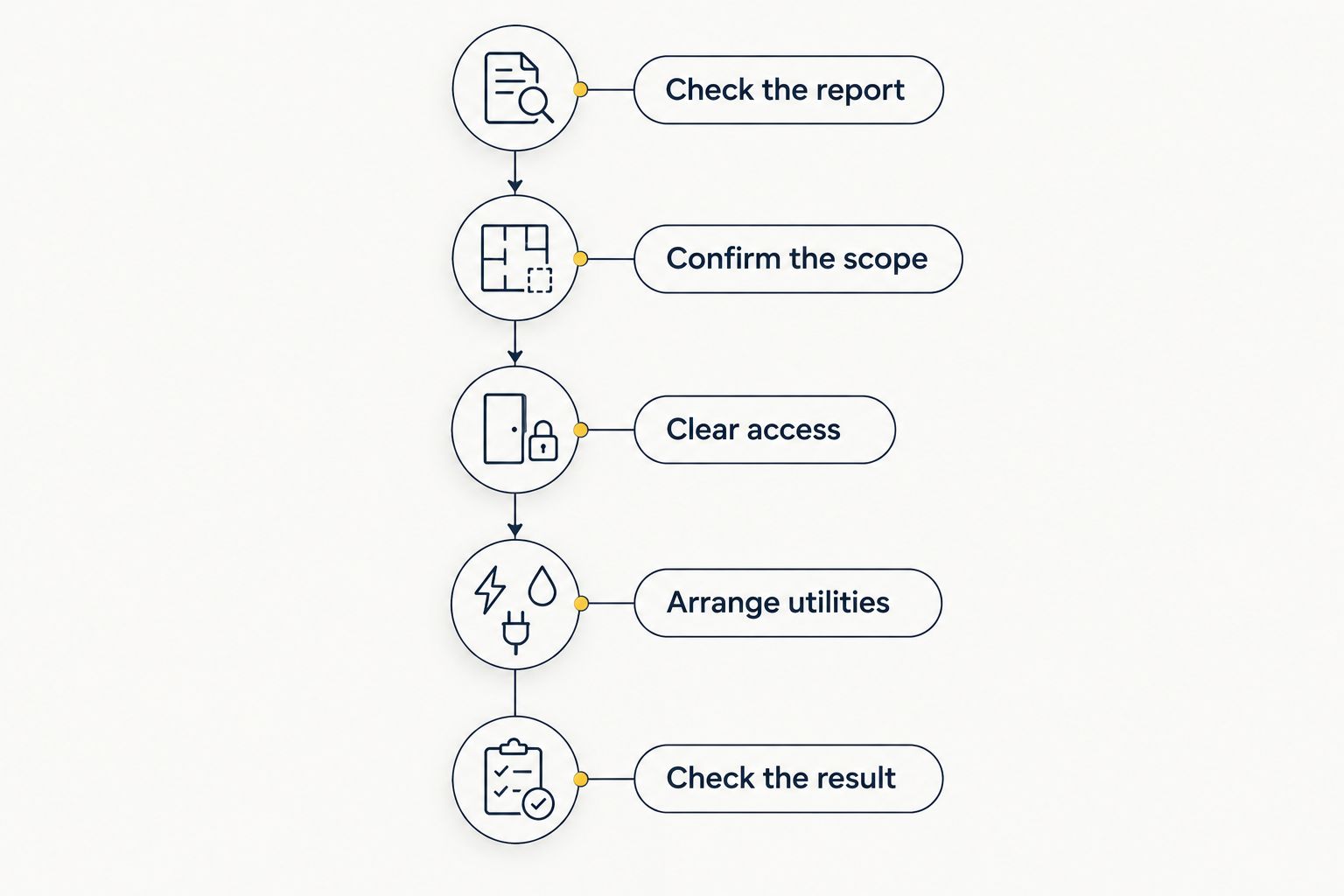
Confirm the scope before clearing the property and arranging the final walkthrough.
Plan your 2026 handover so removalists, repairs and cleaning do not work against each other. Moving furniture through freshly cleaned rooms can undo work, while a repair completed afterwards can leave new dust or debris. Agree the sequence with everyone who needs access.
Is a professional end-of-lease clean worth arranging?
Professional cleaning suits renters who want help completing a detailed move-out checklist. The benefit is handing over agreed cleaning work; the limitation is that the booking still needs a clear scope and does not replace repairs or settle a bond dispute.
Housekept suits renters seeking end-of-lease cleaning in Sydney, Shoalhaven and Illawarra. Check the property-specific inclusions before booking, especially where carpet treatment, difficult access or outdoor work is involved.
A professional booking is not proof that every inspection requirement has been met. Keep your entry report, booking scope and dated completion photographs together, and address any remaining issue by identifying the exact surface or task involved.
Discuss your end-of-lease clean
Check the service scope against your property and move-out requirements.
Does an end-of-lease clean guarantee your bond back?
An end-of-lease clean does not by itself guarantee a bond refund. Cleaning is only one part of a tenancy handover, and the condition of the property must be considered separately from the cleaner’s agreed work.
Do not assume a booking includes a return visit either. Ask what happens if you identify an omitted task, how to report it and whether any follow-up terms apply. Keep the answer in writing rather than relying on the phrase ‘bond clean’.
FAQ
What does an end of lease clean include in 2026?
An end-of-lease clean covers detailed cleaning of agreed rooms, surfaces and fixtures, with exact inclusions set by the written booking scope. Confirm kitchen appliances, cupboard interiors, bathrooms, floors and windows individually.
Does end-of-lease cleaning include the oven?
Oven cleaning must be confirmed in the booking scope. Ask whether the work covers the cavity, racks, trays and door glass rather than assuming an exterior wipe includes them.
Are carpets steam cleaned during an end-of-lease clean?
Do not assume carpet steam cleaning is included in an end-of-lease booking. Confirm whether the service covers vacuuming only or a separate carpet treatment, and check your property’s written requirements.
Does an end-of-lease cleaner wash every wall?
Full wall washing is not an automatic inclusion. Specify whether you need isolated mark removal or broader cleaning, and identify damaged or delicate paint before treatment.
Do I need to empty cupboards before the cleaner arrives?
Empty cupboards when their interiors are part of the agreed clean. Removing belongings gives the cleaner access to shelves, corners and drawer interiors.
Does a bond clean include rubbish removal and lawn mowing?
Rubbish removal and lawn mowing need explicit confirmation rather than an assumption that they accompany indoor cleaning. List leftover waste and outdoor tasks separately when discussing the booking.
Can Housekept help with an end-of-lease clean?
Housekept provides end-of-lease cleaning across Sydney, Shoalhaven and Illawarra. Confirm the scope for your property, including any appliance interiors, windows or specialist work you need.
One last thing
Check the property after your belongings leave, not just before the removalists arrive. Empty rooms expose cupboard corners, floor edges and spaces previously hidden by appliances or furniture.
For your 2026 handover, take dated photographs after cleaning and before returning the keys. Include close-ups of any disputed area alongside wider room photographs, and retain the original files with your condition report and booking agreement.