
What does a commercial office clean include?
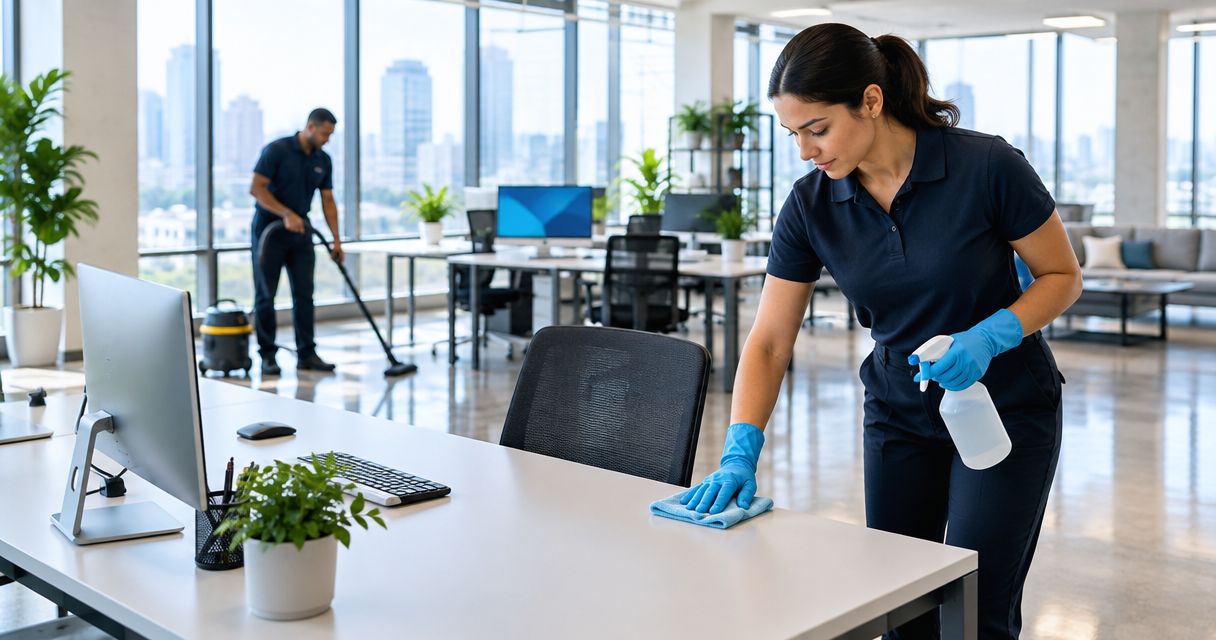
A commercial office clean generally includes bins, floors, accessible surfaces, kitchens, toilets and shared touchpoints, with the exact tasks set out in your cleaning agreement. Carpet extraction, exterior windows, appliance interiors and specialist waste handling need separate confirmation; the word commercial does not make every task an inclusion.
TL;DR
- What does a commercial office clean include? Routine office cleaning covers agreed floors, surfaces, bins, kitchens and toilets.
- Housekept provides commercial cleaning for businesses across Sydney, Shoalhaven and Illawarra.
- Separate routine cleaning from periodic work, such as carpet extraction and detailed window cleaning.
- Get tasks, frequencies, exclusions and access arrangements in writing before booking.
What does a commercial office clean include?
A useful office cleaning scope names both the area and the work: vacuum carpeted floors, wipe accessible desks, clean toilet fixtures and empty agreed bins. A room name alone is not enough. For a broader planning checklist, see the guide to commercial cleaning for small offices and clinics.
Use this 2026 checklist to discuss inclusions, not as a promise that every provider supplies every task.
Workstations
- Routine tasks to put in the agreement: Wipe clear, accessible surfaces; remove agreed rubbish
- Tasks to confirm separately: Moving paperwork, cleaning keyboards, handling personal belongings
Floors
- Routine tasks to put in the agreement: Vacuum carpets; sweep or mop suitable hard floors
- Tasks to confirm separately: Carpet extraction, stain treatment, polishing or restoration
Kitchen
- Routine tasks to put in the agreement: Clean benches, sink, taps and agreed appliance exteriors
- Tasks to confirm separately: Fridge interiors, microwave interiors, dishes and food disposal
Toilets
- Routine tasks to put in the agreement: Clean toilets, basins, taps, mirrors and floors
- Tasks to confirm separately: Consumable supply, sanitary waste services, specialist contamination
Reception and meeting rooms
- Routine tasks to put in the agreement: Wipe accessible tables and surfaces; clean floors
- Tasks to confirm separately: Upholstery treatment, detailed glass cleaning, moving heavy furniture
Touchpoints
- Routine tasks to put in the agreement: Clean agreed handles, switches and shared contact surfaces
- Tasks to confirm separately: A specified disinfection procedure or outbreak response
Waste
- Routine tasks to put in the agreement: Empty nominated bins and transfer waste to the agreed collection point
- Tasks to confirm separately: Confidential documents, sharps, chemicals and other specialist waste
The written scope decides what is included—not the service label. Keep this table beside the quote and resolve blank areas before approving the work.
Why this matters
Your office can look tidy while important tasks remain unassigned. A kitchen bench might be wiped every visit while food inside the fridge stays untouched because nobody agreed who removes it.
Housekept commercial cleaning is suited to businesses seeking a provider serving Sydney, Shoalhaven and Illawarra. Confirm your site's specific tasks before booking; the service category alone does not establish an inclusion or frequency.
For your 2026 cleaning agreement, separate the outcome you want from the task needed to achieve it. “Keep the kitchen clean” is open to interpretation. “Clean the sink, taps, bench and appliance exteriors” gives everyone something concrete to check.
Routine office cleaning: keep everyday areas usable
Best for: maintaining occupied offices between deeper cleaning tasks. Routine cleaning deals with the areas employees and visitors use throughout the working day. Its strength is consistency; its limitation is that it does not replace specialist treatment or detailed cleaning of every surface.
Desks, meeting rooms and reception
Specify which desks and tables are accessible for wiping. A clear-desk arrangement lets cleaners reach the surface without deciding whether a document, cable or personal item can be moved.
Keep screens, keyboards, docking stations and other electronics on a separate instruction list. Cleaning a desk does not automatically authorise handling the equipment sitting on it. Ask staff to secure confidential material rather than expecting cleaners to sort it.
Meeting rooms need the same clarity. Name tables, accessible ledges, chair surfaces and internal glass individually if you want them included. “Clean meeting room” does not explain whether the work includes removing marks from glass partitions.
Floors and bins
Match the method to the floor. Vacuuming carpet removes loose debris, while suitable hard floors can be swept and mopped; neither instruction means carpet extraction or floor restoration.
Nominate the bins to empty and the place where waste should go. Distinguish general rubbish from recycling and confidential waste. If the building has shared waste facilities, confirm access and sorting instructions with the building manager.
Kitchens and toilets
List kitchen benches, sinks, taps and appliance exteriors separately from appliance interiors. State who handles dishes, expired food and personal containers. Cleaners should not have to decide which lunch container someone still wants.
For toilets, name the fixtures, mirrors and floor surfaces. Then clarify who supplies toilet paper, soap, paper towels and bin liners. Restocking an item and supplying that item are different responsibilities.
Periodic detail cleaning: address work beyond the routine
Best for: tasks that need their own schedule rather than an assumption. Periodic work gives detail tasks a defined place in the cleaning plan. The limitation is that those tasks stay outside the routine visit unless the agreement expressly includes them.
Examples to discuss include accessible skirting boards, internal glass, vents, fridge interiors and the spaces beneath movable furniture. Do not treat this as a universal package. Each task needs a method, an access arrangement and a stated frequency.
For a 2026 office cleaning schedule, give each periodic task its own line. “Clean fridge interior” should also explain who empties the fridge beforehand and what happens to food left inside.
Make furniture arrangements explicit. Cleaning beneath a lightweight chair differs from moving a storage cabinet full of files. Agree what can move safely and what must stay in place.
Specialist cleaning: confirm the method before the booking
Best for: work requiring a defined treatment or separate waste process. Specialist cleaning addresses needs that ordinary surface wiping, vacuuming and mopping do not cover. It requires a separate discussion rather than a broader interpretation of the routine checklist.
Carpet extraction, upholstery treatment, exterior window work and floor restoration are examples to raise with the provider. Ask whether the provider undertakes the task, what preparation is needed and how the work affects access to the office.
Sharps, bodily fluids, hazardous substances and confidential material need explicit handling arrangements. Do not place them under a general instruction to empty bins. Where your workplace has specific hygiene or waste requirements, provide those requirements before the scope is agreed.
Do not use a standard office checklist as a substitute for a site-specific cleaning procedure. An office reception area and a treatment room should not be treated as interchangeable just because they share an address.
Why commercial office cleaning inclusions vary
Different offices need different task lists. These are the practical details to resolve rather than assuming a standard package covers your workplace:
- Room use: Identify workstations, kitchens, toilets, reception areas and any rooms with separate cleaning requirements.
- Surface materials: Specify carpet, hard flooring, glass, upholstery and sensitive finishes so the cleaning method suits the surface.
- Access: Explain locked rooms, occupied desks, secure storage and areas the cleaner must not enter.
- Responsibility: Assign dishes, food disposal, consumables, recycling and confidential waste to a named party.
- Task frequency: Separate work required at every visit from work scheduled periodically or requested separately.
- Building boundaries: Clarify whether corridors, lifts, shared toilets and external areas belong to your tenancy or the building's cleaning arrangement.
These details change the work, not just the wording of the quote. A cleaner cannot reliably maintain a locked room without an access arrangement, and an office manager cannot assess completion against an undefined task.
How do you turn a quote into a usable cleaning scope?
Build the agreement around a room-by-room sequence. Each step should remove an assumption before the first visit.
- List areas. Name every room and shared space you want covered, including any exclusions.
- Assign tasks. Write the action beside the surface: vacuum carpet, clean basin or wipe clear desk.
- Set frequency. Identify work for each visit and work that needs a separate schedule.
- Confirm access. Record entry, alarms, keys, locked rooms and the procedure for leaving the premises.
- Check completion. Agree how to report missed tasks, damage, access problems and changes to the scope.
Keep the completed scope with your 2026 service records. Give the cleaner the current version rather than relying on instructions passed between staff.
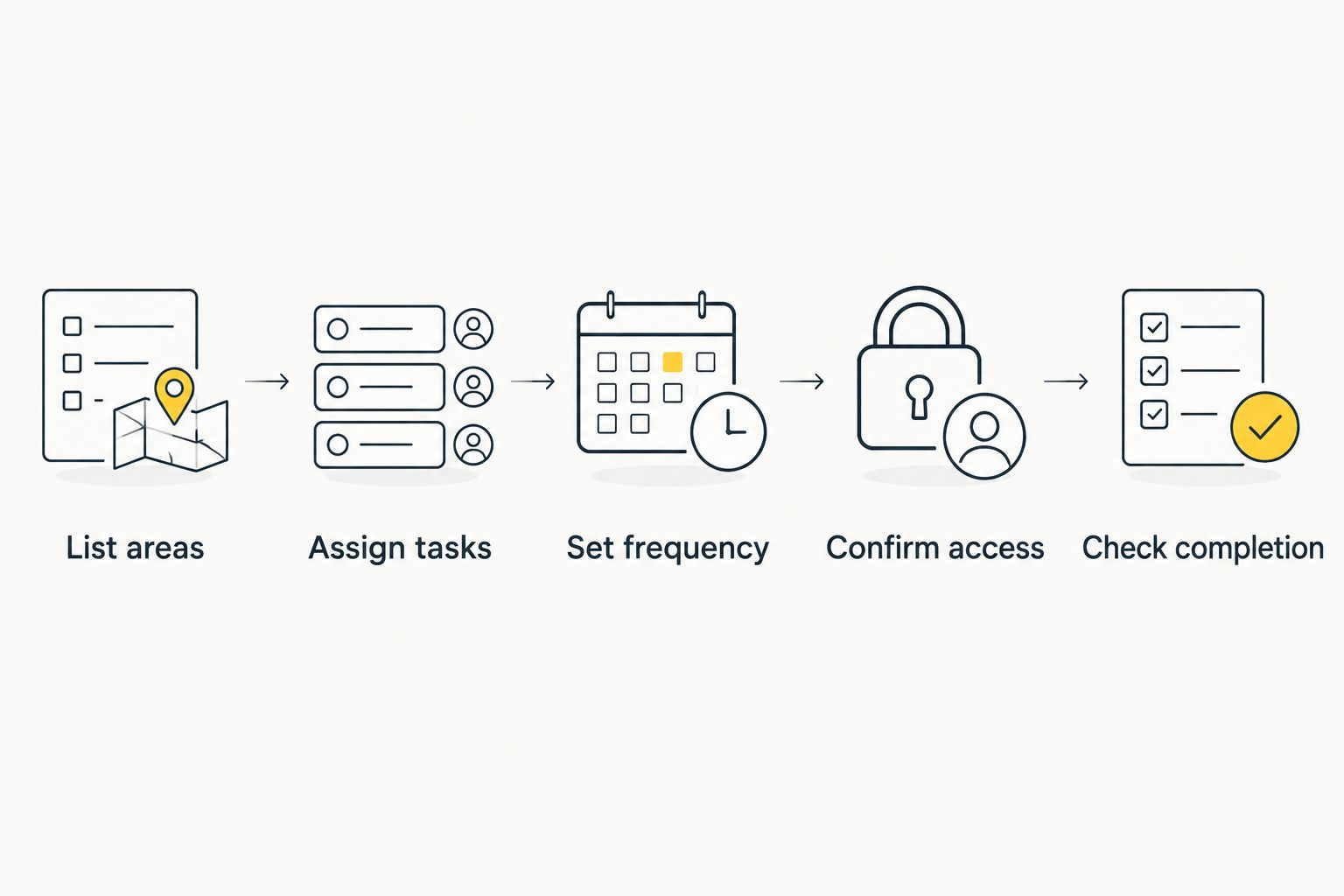
Agree the tasks and access arrangements before the first visit.
When discussing commercial cleaning with Housekept, use your room list to ask for confirmed inclusions and exclusions. Describe the outcome you need, but keep the agreement specific enough to check after a visit.
Discuss your office cleaning needs
Identify the rooms, tasks and access arrangements your office needs covered.
Does office cleaning include disinfecting every surface?
Cleaning and disinfection are different tasks. Cleaning removes dirt and other material; disinfection uses an appropriate product according to its directions to address microorganisms. A wiped surface is not evidence that a disinfection procedure was completed.
If your workplace requires disinfection, identify the surfaces and the required procedure. Product suitability, preparation and label directions matter. Avoid vague requests such as “sanitise everything”, particularly around electronics, food areas and finishes that need specific care.
Does a commercial clean include inside appliances?
Appliance interiors need explicit confirmation. Wiping a fridge door or microwave exterior does not establish that the inside is included.
Name each appliance and the work required. Agree who removes food, trays and personal containers, and make sure the cleaner has access when the task is scheduled. This keeps food disposal decisions with the person responsible for the office kitchen.
Who cleans the building's shared areas?
Shared-area cleaning depends on the building arrangement, not just your office booking. Corridors, lifts, entrance lobbies and shared toilets need an assigned responsibility.
Check the tenancy or building management arrangement before adding those areas to your scope. Then identify the boundary clearly: your suite, your private amenities and any shared spaces expressly assigned to your provider.
FAQ
What's normally included in a commercial office clean?
A commercial office clean generally covers agreed bins, floors, accessible surfaces, kitchens and toilets. The written scope should identify the tasks and their frequency, with specialist work listed separately.
Will office cleaners move papers to clean my desk?
Do not assume office cleaners will move papers or personal belongings. Agree a clear-desk arrangement and identify any equipment or surfaces that need separate cleaning instructions.
Does office cleaning include carpet steam cleaning?
Routine carpet vacuuming does not establish that carpet extraction or steam cleaning is included. Confirm the treatment separately, including preparation and access arrangements.
Do commercial cleaners supply toilet paper and hand soap?
Consumable supply needs explicit confirmation in your cleaning agreement. State separately who purchases each item, where it is stored and who restocks it.
Can an office cleaner empty confidential waste bins?
Confidential waste needs an agreed secure handling process rather than ordinary rubbish instructions. Identify the authorised collection arrangement and keep it separate from general waste.
Does Housekept provide commercial cleaning in my region?
Housekept provides commercial cleaning services across Sydney, Shoalhaven and Illawarra. Confirm your address and the tasks your workplace needs when discussing the service.
How do I check whether an office clean is complete?
Check the completed work against the agreed task list, not a general impression of tidiness. Record the specific area and task when reporting an issue, and use the agreed reporting process.
One last thing
Inspect the scope before you inspect the clean. A disagreement about a dirty microwave can actually be a missing instruction about appliance interiors, not a failure to complete the booked work.
Before renewing your office cleaning arrangement in 2026, walk through the premises with the task list in hand. Mark every surface you expect to be cleaned and every responsibility that remains with staff or building management. Resolve those gaps before the next booking.