
End of lease cleaning for share house tenants: complete 2026 guide

Share house tenants’ end-of-lease cleaning is a coordinated clean of private bedrooms and shared spaces with the aim of handing back the property in the required condition. Your main challenge is agreeing who handles communal mess, who checks the finished work and what happens when housemates leave on different days.
TL;DR
- End of lease cleaning for share house tenants needs named room owners, a shared checklist and a final walkthrough.
- Housekept suits tenants seeking professional end-of-lease cleaning in Sydney, Shoalhaven and Illawarra.
- Compare the property with its entry condition report; separate cleaning tasks from damage and maintenance.
- Agree on shared-area responsibilities before booking a bond clean or starting your move-out cleaning.
Why end-of-lease cleaning matters for share house tenants
A clean bedroom does not finish a share house handover. Kitchens, bathrooms, hallways and outdoor areas still need someone responsible for them. When each person assumes another housemate is handling the common areas, tasks fall between the gaps.
For your 2026 move-out, start with the entry condition report, the tenancy agreement and any written handover instructions. In NSW, the general requirement is to leave the premises as nearly as possible in their original condition, allowing for fair wear and tear; check current NSW Fair Trading guidance for your circumstances.
If you want professional help, Housekept’s cleaning services include end-of-lease cleaning across Sydney, Shoalhaven and Illawarra. Decide the work you need before requesting a quote, rather than treating every service description as the same checklist.
How to organise your share house move-out clean
Use this order: Check condition, Assign tasks, Confirm scope, Clear rooms, Clean systematically, Check together, Save records. Keep the plan in a shared document so departing housemates can see the same instructions as those staying until handover.
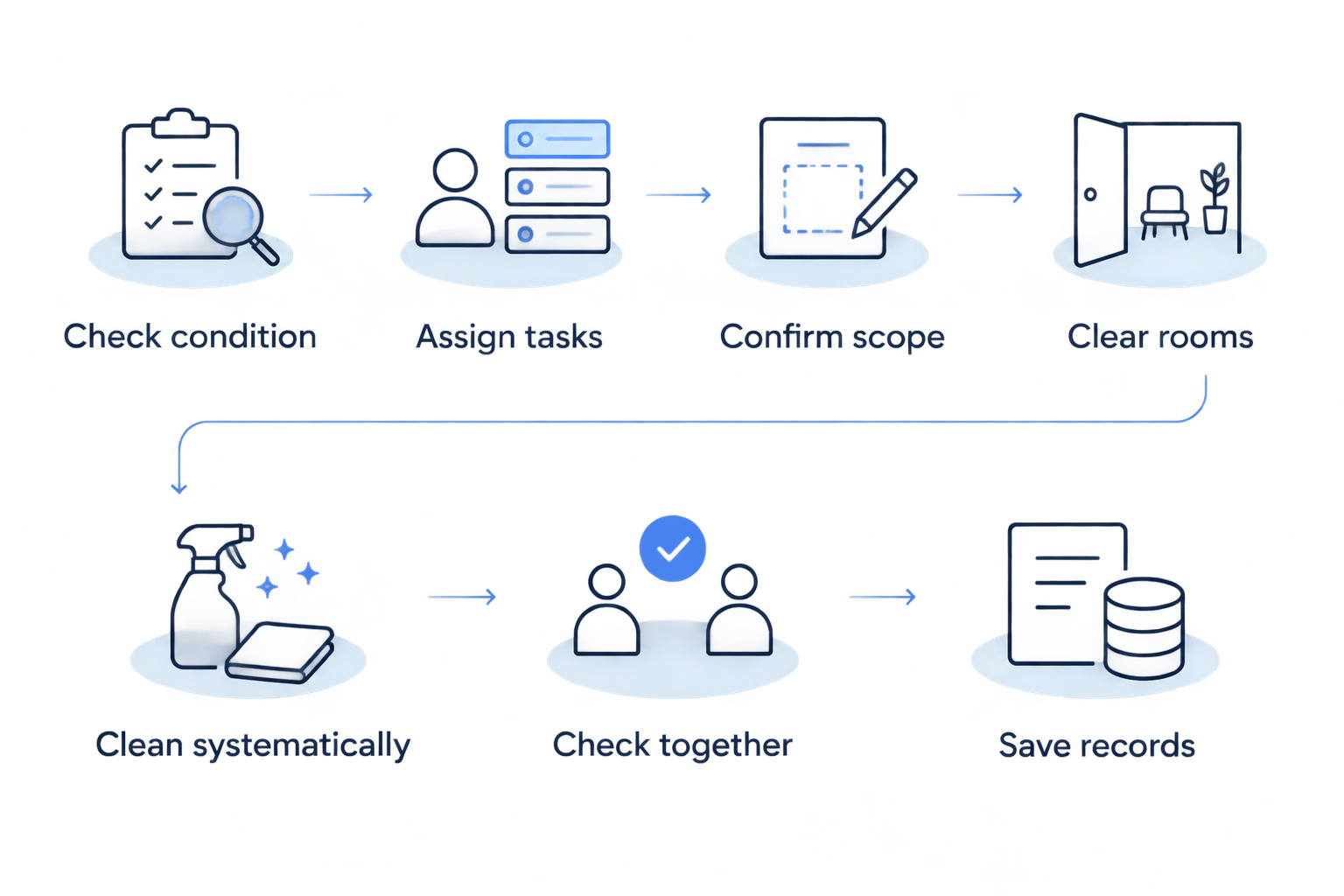
Agree on responsibilities before anyone starts cleaning or books a service.
Check condition before dividing the work
Walk through the property with the entry condition report open. Compare each room with the original notes and photographs, rather than relying on what the longest-serving housemate remembers.
Separate removable dirt from damage, deterioration and maintenance issues. A cracked tile is not a cleaning task, and repeated scrubbing is not the answer to a damaged surface. Record concerns and raise them through the appropriate tenancy channel instead of promising that a cleaner will fix them.
For a 2026 handover, keep the current inspection instructions alongside your original records. An agent’s checklist helps organise your work, but questions about your obligations belong with current tenancy guidance or a tenants’ advice service.
- Mark existing stains and damage against the entry report.
- List cleaning tasks room by room.
- Photograph uncertain areas before treating them.
- Flag leaks, broken fittings and unsafe surfaces separately.
Assign tasks across private and shared areas
Divide the property into 3 working zones: bedrooms, shared rooms and outdoor areas. This is a planning method, not a rule about legal responsibility. Each zone needs a named person to organise its completion, even if several housemates do the work.
Agree on the arrangement before the first person moves out. Someone leaving early should know what they must finish and how shared tasks will be handled after their departure. Keep any payment agreement separate from assumptions about the bond.
Assign 1 booking contact if you use a cleaning service. That person should pass on the agreed scope and access details, not make new commitments on everyone’s behalf without agreement.
- Bedrooms: assign each room and its built-in storage.
- Shared rooms: name owners for the kitchen, bathrooms and living areas.
- Outdoor areas: allocate balconies, accessible paths and rubbish removal.
- Final check: name the person coordinating the walkthrough.
- Record everyone’s agreement in the shared document.
Confirm scope before choosing professional help
Start with the manual option: inspect the property together and write down what you can complete yourselves. Then identify tasks your group lacks the time, equipment or confidence to handle safely.
Housekept is best for share house tenants seeking professional end-of-lease cleaning in Sydney, Shoalhaven and Illawarra. Professional help gives you a service to delegate agreed cleaning work to, but the exact inclusions still need confirmation. Do not assume carpets, exterior windows, rubbish removal or garden work form part of a standard booking.
Send the same room list and condition information with each enquiry. Comparing different scopes tells you little about which option fits your property.
- Describe the bedrooms, bathrooms and shared living areas.
- Send clear photographs of areas needing extra attention.
- Ask about appliance interiors, cupboards and accessible windows.
- Confirm exclusions and any separately arranged work.
- Ask what happens if an agreed cleaning task needs attention afterwards.
Clear rooms before the final clean
Remove belongings before cleaning the surfaces beneath and behind them. Cleaning around packed boxes leaves you with another job when those boxes finally move.
Plan the final clean after the last major furniture removal, not before a housemate drags a bed through a freshly cleaned hallway. If departures are staggered, agree which areas remain in use and who will revisit them. Tell your cleaner about anything that must stay in the property.
Keep water, electricity and access arrangements in mind when organising the sequence. Confirm what the cleaning work requires before arranging disconnections or handing over keys.
- Empty cupboards, wardrobes and drawers that belong to the tenancy.
- Remove food and personal items from shared appliances.
- Separate landlord-owned items from unwanted housemate belongings.
- Dispose of rubbish through the appropriate local arrangements.
- Keep walkways and the agreed access point clear.
Clean systematically from surfaces to floors
Work through each room in a consistent order. Remove loose dust and debris, clean suitable surfaces and finish with the floors so you are not walking dirt across completed areas.
Shared kitchens and bathrooms need explicit task lists. “Do the kitchen” leaves too much open to interpretation: the cooktop, cupboard shelves and sink are separate jobs. Include appliance interiors only where relevant to the tenancy and agreed cleaning scope.
Follow surface-care instructions and cleaning-product labels. Never mix cleaning chemicals, and stop if a product changes a surface’s colour or finish. Do not improvise treatment for mould associated with a leak or another unresolved maintenance problem.
- Kitchen: check the cooktop, splashback, sink and cupboards.
- Bathroom: check the shower, toilet, basin and accessible fittings.
- Bedrooms: check wardrobes, shelves, skirting boards and floors.
- Shared spaces: check accessible ledges, switches and door handles.
- Floors: vacuum or sweep before using a surface-suitable cleaning method.
Check together before handing back keys
Use 2 walkthroughs: one task check and one departure check. During the task check, compare the finished work against your room list. During the departure check, look for belongings, rubbish and marks left during the final move.
For your 2026 inspection, check under ordinary room lighting and daylight where available. Look inside cupboards rather than judging only the room’s overall appearance. Ask each task owner to resolve omissions while cleaning supplies and access are still available.
If you hired cleaners, compare the result with the agreed service scope. Raise a specific missed task with a photograph instead of sending a vague message that the property needs more work.
- Open accessible cupboards, drawers and wardrobes.
- Check behind doors and along skirting boards.
- Inspect appliance interiors included in the plan.
- Look for fresh footprints and moving debris.
- Confirm that all housemate belongings have left.
Save records before closing the group chat
Keep the shared plan, relevant messages and final photographs together. Records help you explain what was agreed and what the property looked like at handover; they do not guarantee a particular bond outcome.
Photograph rooms after belongings and cleaning equipment have been removed. Include wide views for context and closer views where condition matters. Keep original files rather than relying only on compressed images in a messaging thread.
Finish the coordination work while everyone is still reachable. Agree who receives inspection correspondence and how it will be shared, especially if housemates are moving interstate or overseas.
- Save the completed checklist and any cleaning invoice.
- Store dated final photographs in a shared folder.
- Keep written scope changes and relevant agent messages.
- Record the agreed key-return arrangements.
- Nominate who will circulate inspection feedback.
Compare cleaning options for a share house
Choose by the work you can reliably finish, not by how optimistic the group chat sounds. A DIY clean suits a group that can coordinate its time and complete the checklist. Professional cleaning suits tenants who want to delegate the agreed cleaning work, but it does not remove your role in clearing belongings and organising handover.
Use this comparison for your 2026 move-out plan. The limitations matter as much as the benefits.
Whole-house DIY clean
- Best for: Housemates who can work together and check each other’s tasks
- Main benefit: Direct control over the sequence and room checklist
- Key limitation: Your group must supply the labour, suitable equipment and follow-through
Mixed DIY and professional cleaning
- Best for: Tenants who can clear and clean some areas but need help with a defined scope
- Main benefit: Lets you divide work around practical needs
- Key limitation: Gaps appear unless both sides know exactly who handles each task
Housekept end-of-lease cleaning
- Best for: Tenants seeking professional cleaning in Sydney, Shoalhaven and Illawarra
- Main benefit: Provides an end-of-lease cleaning service to handle agreed work
- Key limitation: Inclusions, exclusions and access requirements need confirmation; cleaning does not decide the bond outcome
Before choosing, ask every housemate whether they can complete their assigned work before the final check. A smaller, realistic DIY commitment is more useful than a whole-house promise nobody can finish.
Common mistakes share house tenants make
Treating bedrooms as the entire job
A bedroom-by-bedroom split leaves communal areas unassigned. Add separate kitchen, bathroom, living-area and outdoor responsibilities, then name a final checker. Every shared space needs an owner on the plan.
Splitting work after someone has already left
An early departure makes unfinished tasks harder to resolve. Agree on bedroom completion, shared-area contributions and access before that person moves out. A private housemate arrangement does not replace tenancy obligations or formal bond processes.
Booking before the last furniture removal
A clean completed before the final move is exposed to more dust, rubbish and foot traffic. Put furniture removal first wherever practical. If the sequence cannot change, assign the touch-up work rather than assuming the cleaner or last remaining housemate will absorb it.
Treating an invoice as proof of condition
An invoice records a purchased service, not every surface’s condition at handover. Check the property yourself and keep final photographs. Where work appears incomplete, identify the task and compare it with the agreed scope before requesting follow-up.
Arguing about responsibility while tasks remain unfinished
Separate the immediate cleaning plan from a disagreement about who caused a mess. Record the concern, agree how the necessary work will be completed and seek tenancy advice where responsibility is disputed. Avoid making unsupported deductions from another housemate’s money.
FAQ
What’s the best way to organise end of lease cleaning for share house tenants?
Use a shared room-by-room checklist with a named owner for every bedroom and communal area. Agree on the work before housemates leave, then check the whole property before handover.
Do all housemates need to hire a professional cleaner?
Do not assume professional cleaning is automatically required. Check the tenancy agreement, entry condition report and current NSW Fair Trading guidance, and seek tenancy advice if an instruction is disputed.
How should housemates split the cleaning bill?
Agree on a payment arrangement before booking the service. Record what the shared work covers and how any bedroom-specific work will be handled; keep that agreement separate from formal bond arrangements.
What happens if one housemate moves out before everyone else?
Agree on that housemate’s tasks and shared-area contribution before departure. Record the condition of their emptied room and decide who handles any later cleaning caused by continued use.
Does Housekept provide end-of-lease cleaning for share houses?
Housekept provides end-of-lease cleaning across Sydney, Shoalhaven and Illawarra. Describe your share house, its condition and the work required so the scope can be confirmed.
Will professional cleaning guarantee our bond is returned?
Professional cleaning does not determine your bond outcome. Cleaning is only part of the handover, and any service promise needs to be checked against its written terms.
What should we photograph before handing back the keys?
Photograph the emptied property after the final clean and furniture removal. Include room overviews and relevant details such as cupboard interiors, appliance interiors and any disputed areas.
One last thing
The last person out should check the whole property, not just their bedroom. An empty cupboard can still contain crumbs, and a cleaned hallway can collect dirt during the final move. Put the departure check in your 2026 moving plan before everyone commits to leaving at the same time.