
Do you need to be home for a house cleaning service?

No, you do not need to be home for a house cleaning service if your cleaner agrees to unattended access and you arrange entry and lock-up beforehand. You still need to confirm the provider’s requirements, explain any access restrictions and leave a way to contact you during the visit.
TL;DR
- Do you need to be home for a house cleaning service? No, provided your cleaner agrees to unattended access.
- Housekept provides home cleaning across Sydney, Shoalhaven and Illawarra; confirm access arrangements before booking.
- Stay for a first-visit handover if you want to explain priorities, pets or delicate surfaces.
- Agree on keys, alarms, locked rooms and departure instructions before leaving home.
Do you need to be home for a house cleaning service?
Your presence is not a substitute for an agreed access plan. You can stay, leave after a handover or be away throughout the clean, provided the cleaning business accepts the arrangement.
Choose the option that lets the cleaner work without leaving access or security questions unresolved.
Stay throughout
- Best for: People who prefer to answer questions in person
- Main benefit: You can explain priorities as questions arise
- Main drawback: Calls, children and room use need coordination
- Confirm beforehand: Where you will stay while each room is cleaned
Meet, then leave
- Best for: First visits or homes with particular instructions
- Main benefit: You can explain the property before heading out
- Main drawback: Your departure depends on the handover
- Confirm beforehand: How the cleaner will lock up
Be away throughout
- Best for: People whose work or other commitments overlap the visit
- Main benefit: You do not need to organise your day around being present
- Main drawback: Unclear instructions cannot be resolved face to face
- Confirm beforehand: Entry, contact details and departure instructions
Housekept is best suited to households seeking local home cleaning across Sydney, Shoalhaven and Illawarra. Explore Housekept for its cleaning services, then confirm the access arrangement for your property rather than assuming unattended entry is included.
Why this matters
A cleaner needs more than an address. A locked gate, an armed alarm or an unexpected dog can prevent an otherwise straightforward visit from starting as planned.
For a 2026 booking, put access instructions alongside your cleaning priorities. Keep security details separate from general household notes, and ask the provider how to share them appropriately.
The aim is simple: your cleaner knows where to go, what to clean and how to leave your home secure. You know what will happen while you are out.
Staying home: best for an in-person handover
Staying home makes sense when you want to explain the property yourself. Point out delicate finishes, rooms that are off limits and anything that needs a different approach before cleaning begins.
It also lets you answer questions without interrupting your workday by phone. The trade-off is sharing the space while someone vacuums, moves between rooms and cleans surfaces you normally use.
Choose a room to occupy and agree when it will be cleaned. If you work from home, explain which calls cannot be interrupted and ask how the room order can accommodate them. Do not assume a particular cleaning sequence is available.
Being present does not mean supervising each task. Give clear instructions at the start, then leave enough working space for the cleaner to carry them out.
Meeting first, then leaving: best for unfamiliar instructions
A handover gives you the chance to explain details that are awkward to describe in a message. Show the correct entrance, identify the rooms included and explain any access issues before you leave.
This arrangement is useful when a written note alone would leave questions. A door that needs a particular locking sequence is easier to demonstrate than describe.
The drawback is timing. You need to remain available until entry and the handover are complete, so do not plan your departure around an unconfirmed arrival time.
Before heading out, ask the cleaner to repeat the essential lock-up instructions. Leave only when the entry, scope and departure arrangements are clear.
Being away throughout: best for established arrangements
An unattended clean suits a household that has agreed access, clear priorities and a reliable contact method. The cleaner needs instructions that work without you opening the door or explaining the layout in person.
The benefit is flexibility. The drawback is that an unanswered question can interrupt work, especially if it concerns a locked room, a pet or an item that should not be moved.
Review your instructions whenever something changes. For recurring bookings in 2026, check that the cleaner still has the correct gate information, household contact and room restrictions.
If your schedule is the main reason for booking, the guide to house cleaning for busy professionals and families covers the wider planning questions. Decide how cleaning fits your household before choosing whether to stay or leave.
Why the need to stay home varies
Whether you should be present depends on the property and the arrangement you have agreed with the provider. Use these factors to decide, rather than treating every home the same.
- Provider requirements: Ask whether unattended cleaning is accepted and what access process the business requires. Your preferred arrangement still needs agreement.
- First-visit instructions: An unfamiliar layout, delicate surfaces or specific priorities can justify an initial handover. Explain exceptions before work starts.
- Entry complexity: Apartment intercoms, locked gates and restricted lifts need a workable plan. A front-door key does not solve access to the building.
- Pets and household activity: Decide where animals, children and other occupants will be while cleaning takes place. Avoid relying on the cleaner to manage unexpected supervision duties.
- Your availability: If the cleaner needs clarification, identify who can answer. Arrange an authorised contact when you cannot be reached.
- Departure requirements: Agree which doors and windows need checking and how keys or access devices will be handled. Entry is only half the arrangement.
How do you prepare for a clean when you will be out?
Use this sequence for your 2026 cleaning arrangements. Confirm the plan with the provider before leaving access details or assuming the cleaner can enter.
Confirm permission
Ask whether you can be away for the appointment. Confirm any requirements for a first visit, key handling or an authorised person meeting the cleaner.
Get the answer before making work or travel plans. A booking confirmation does not, by itself, explain how unattended access will work.
Agree entry
Identify the exact entrance and every barrier before it. Include building access, gates, lift restrictions and the property door where relevant.
Ask which entry methods the provider accepts. Do not assume the cleaner can collect a key elsewhere, use a personal access account or wait for another resident to open a shared entrance.
Set priorities
Write down the areas included in the agreed clean and identify anything that should not be touched. Flag delicate surfaces, loose fittings or items that require discussion before cleaning.
Keep the note specific. A request to clean the bathroom does not explain whether a particular cabinet is private or whether a fragile fitting should be left alone.
Secure pets
Arrange a suitable place for pets that keeps them away from entry points and the working area. Tell the cleaner where the animals will be and which doors must remain closed.
Do not assume pet handling is part of a cleaning service. If your plan depends on moving, feeding or supervising an animal, discuss that separately before the appointment.
Share contact
Provide a contact method you will monitor during the visit. If you will be unavailable, agree whether another authorised person can answer questions.
Explain who can approve changes. A neighbour who can open a gate is not automatically the person you want making decisions about extra work or access to private rooms.
Confirm lock-up
Explain which doors to lock, how to return any access device and what to do with an alarm, if applicable. Ask how completion or departure will be communicated rather than assuming an automatic message.
Include any unusual door behaviour in the instructions. If you need to lift a handle before locking, demonstrate that during the handover.
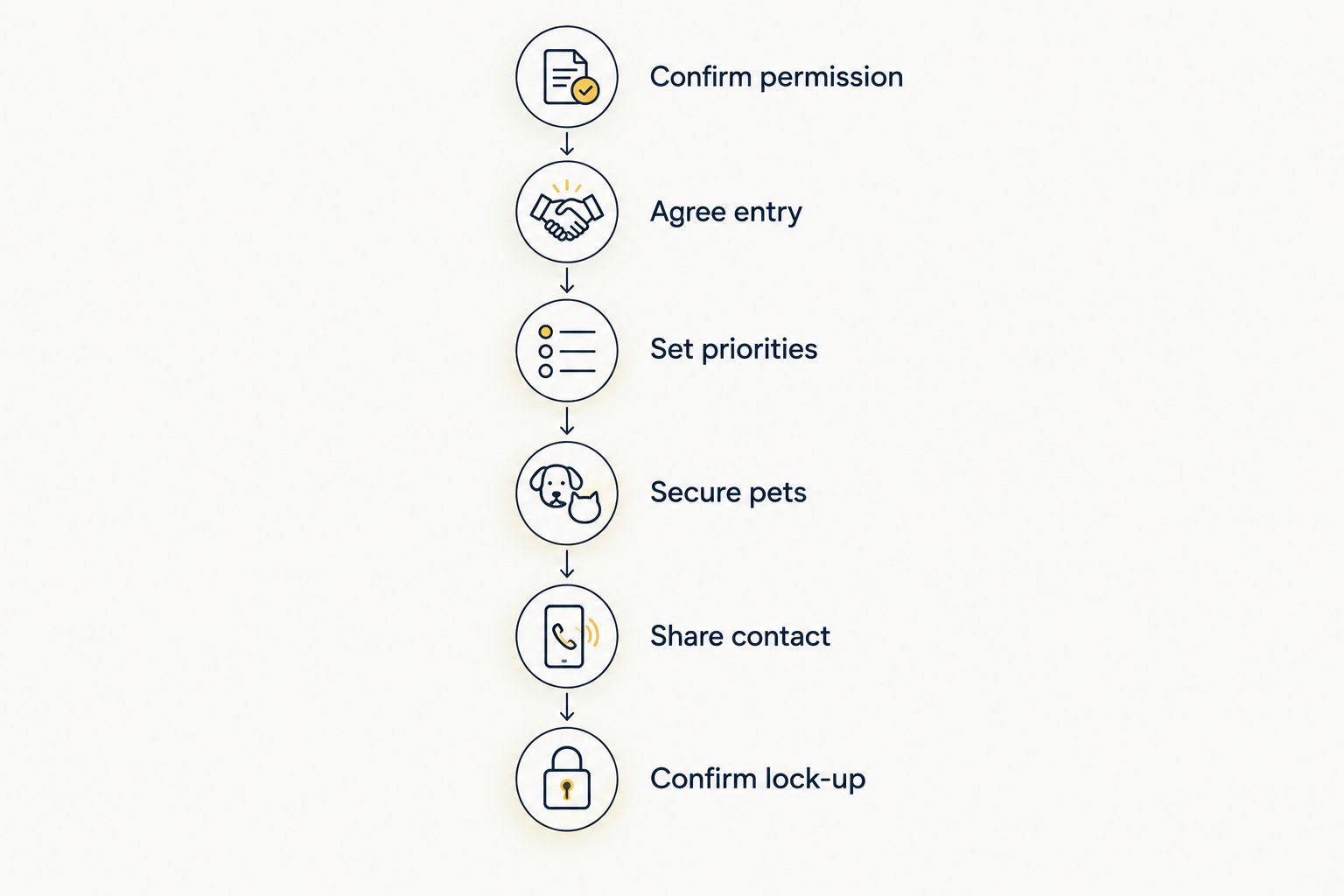
Agree both entry and departure arrangements before leaving home.
Keep the final instructions somewhere you can update them. If a gate code, contact person or room restriction changes, send the revised details through the agreed communication channel before the next visit.
What should you put away before the cleaner arrives?
Put away private documents, medication, valuables and anything you do not want handled. This removes ambiguity about which items are part of the cleaning area and which are personal.
Clear loose belongings from surfaces you want cleaned. You do not need to clean the home first, but a bench covered in paperwork creates a different task from an accessible bench.
Keep confidential work material out of view if you work from home. Close private rooms and identify them in your instructions rather than expecting a closed door alone to communicate your wishes.
Tell the cleaner about known hazards, unstable furniture or damaged fittings. Do not leave a surprise problem for someone to discover while moving through an unfamiliar home.
How should you handle keys, codes and alarms?
Use only an access method agreed with the cleaning provider. A key, lockbox or temporary code is an option to discuss, not evidence that a particular business accepts it.
Avoid leaving keys in obvious outdoor hiding places. Ask how physical keys will be received, stored and returned, and decide what should happen if the usual cleaner cannot attend.
For an alarm, explain the authorised process before the visit. The cleaner should not have to guess which control to use or contact you after an alarm sounds.
As part of your 2026 household security check, review who still needs access. Change or withdraw permissions through your normal security process when an arrangement ends.
Can you work from home while the cleaner is there?
Yes, provided you agree how to share the space and keep the cleaning areas accessible. Tell the cleaner which room you will occupy and when it can be cleaned.
Vacuuming and movement between rooms can interrupt calls. If quiet matters during a meeting, discuss the schedule before work begins rather than asking for silence after cleaning has started.
Do not leave a laptop, paperwork or cables spread across a surface you expect cleaned. Move them yourself, or agree that the area will be left untouched.
What happens if the cleaner cannot get in?
Contact the provider as soon as you know access will fail. Explain the specific issue and ask what arrangements apply to that booking.
Do not assume the cleaner can wait indefinitely, enter through another property or collect a replacement key. Likewise, do not assume how a missed-entry appointment will be handled; check the provider’s terms.
For 2026 recurring bookings, keep access updates with your booking reminders. A quick check after changing a lock or replacing an intercom can prevent an avoidable problem at the next visit.
Should someone be home if a household member needs support?
Arrange the necessary support separately from the cleaning task. Do not treat a cleaner’s presence as an agreement to supervise a child, assist a dependent adult or manage personal care.
If someone in the home needs help with communication, entry or understanding who is visiting, discuss the arrangement with that person and their authorised support contact. Decide who will explain instructions and answer questions.
The same principle applies when a family member books cleaning for someone else. The person living at the property needs an agreed plan, not an unexpected visitor with a key.
FAQ
Do I have to stay home for the first house clean?
You only need to stay if the provider requires it or your instructions need an in-person handover. Confirm first-visit arrangements before planning to leave.
Can I leave my house key with the cleaner?
Only leave a house key if the provider agrees to that arrangement. Ask how the key will be received, stored and returned before handing it over.
Can my dog stay home during a house clean?
Your dog needs an agreed arrangement that keeps entry and the cleaning area safe. Tell the provider where the dog will stay and do not assume pet handling is included.
Should I clean before the cleaner comes?
You do not need to clean first, but clear belongings from the surfaces you want cleaned. Put away private items and identify anything that should not be moved.
Can I leave while the cleaner is already working?
You can leave if the provider accepts it and lock-up instructions are settled. Confirm how the cleaner can contact you before heading out.
Does Housekept let customers leave home during cleaning?
Confirm unattended access directly with Housekept before your appointment. Agree on entry, pets, contact details and lock-up for your property.
Should I give the cleaner my alarm code?
Share alarm access only through an arrangement agreed with the provider. Explain the authorised process and what to do if there is a problem.
One last thing
Plan the cleaner’s exit as carefully as the entry. A successful handover covers what happens when the job ends, including keys, doors, pets and any agreed alarm procedure.
Before you leave, read your instructions as if you had never visited the property. If they explain how to get inside but not how to leave it secure, finish the plan first.