
Best fridge deodorisers and cleaners in 2026
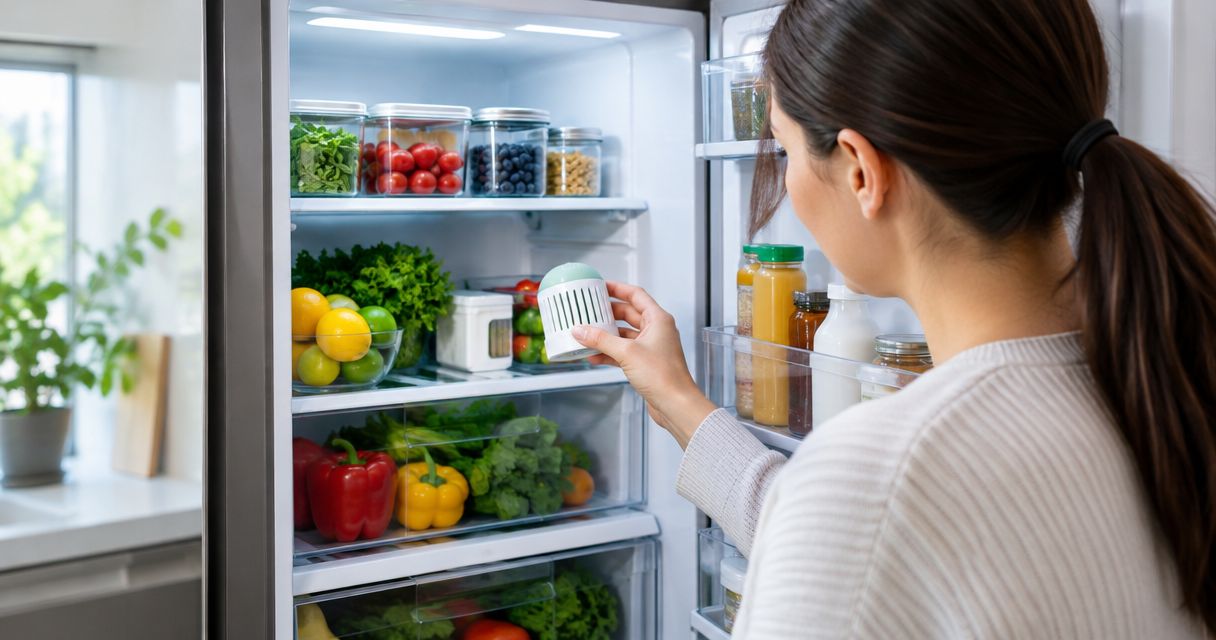
Best overall for lingering odours: a fridge-labelled activated charcoal deodoriser. Best for cleaning spills: mild dishwashing liquid and water. Best pantry alternative: bicarbonate of soda. This 2026 guide separates the best fridge deodoriser from the cleaner you need before using one.
TL;DR
- The best fridge deodoriser for residual smells is fridge-labelled activated charcoal, used after removing spoiled food and cleaning spills.
- Mild dishwashing liquid removes fridge grime; a deodoriser does not replace cleaning.
- Bicarbonate of soda is a pantry alternative, not a disinfectant or a fix for spoiled food.
- Housekept provides professional home cleaning across Sydney, Shoalhaven and Illawarra; confirm fridge-interior tasks before booking.
Why this matters
A fridge deodoriser treats lingering smells. It does not remove leaked milk beneath a drawer, clean a sticky door seal or make spoiled food safe to eat. Start with the source, then choose an odour absorber if the clean fridge still smells.
For households organising broader kitchen help, Housekept lists its cleaning services. Housekept suits households seeking professional home cleaning across Sydney, Shoalhaven and Illawarra. Confirm fridge-interior cleaning separately rather than assuming it forms part of a booking.
What makes the best fridge deodoriser?
Use these criteria to choose your fridge deodoriser or cleaner in 2026:
- Correct job: distinguish an odour absorber from a product that removes food residue.
- Fridge suitability: choose products labelled for fridge use and follow the appliance manual.
- Low fragrance: avoid replacing a food smell with perfume around uncovered ingredients.
- Surface compatibility: check instructions for plastic liners, seals, glass and removable drawers.
- Simple upkeep: choose something you can keep clean and replace according to its directions.
The ranking below gives each option a different job. The default deodoriser sits first, but detergent is the first thing to reach for when you find an actual spill.
Best fridge deodorisers and cleaners at a glance
1. Fridge-labelled activated charcoal
- Best for: Lingering odours after cleaning
- Standout feature: Adsorbs odour compounds onto its porous surface
- Key limitation: Does not remove spills or spoiled food
2. Mild dishwashing liquid
- Best for: Routine fridge-interior cleaning
- Standout feature: Lifts food residue for removal with a cloth
- Key limitation: Requires wiping and rinsing as directed
3. Bicarbonate of soda
- Best for: A pantry-based odour absorber
- Standout feature: Reacts with some acidic odour compounds
- Key limitation: Does not capture every type of smell
4. Fridge-labelled interior cleaner
- Best for: Following a dedicated cleaning routine
- Standout feature: Provides product-specific application instructions
- Key limitation: Suitability and rinsing requirements vary
These are product types, not interchangeable treatments. An odour absorber belongs in an already-clean fridge; a cleaner needs physical wiping to remove the material causing the smell.
1. Activated charcoal: best fridge deodoriser for residual smells
A fridge-labelled activated charcoal deodoriser is the default choice when the food source is gone and the interior is clean, but an odour remains. Activated charcoal adsorbs compounds onto its porous surface; it does not wash the fridge or disinfect it.
Choose a contained product intended for refrigerators. Loose barbecue charcoal and charcoal briquettes are not substitutes for a fridge deodoriser.
Activated charcoal pros:
- Targets residual odour without needing a perfumed cover-up.
- Works separately from your cleaning routine.
- Comes in contained formats that keep the material away from food.
Activated charcoal cons:
- Cannot remove grime, leaking packaging or spoiled food.
- Needs replacement or other maintenance according to its label.
Best for: a cleaned fridge with a lingering food smell.
For your 2026 shortlist, prioritise clear fridge-use instructions over broad claims about freshness. Place the deodoriser where its label directs, keep it clear of food, and do not block internal vents.
A persistent smell is a reason to inspect the fridge again, not simply add another absorber. Check beneath drawers and around seals before blaming the deodoriser.
Verdict: Buy for residual odours after cleaning, not as a replacement for cleaning.
2. Mild dishwashing liquid: best fridge cleaner for food spills
Mild dishwashing liquid and water are the practical starting point for routine food residue, where your appliance manual permits them. The detergent loosens residue so you can wipe it away; it is not an odour absorber left inside the fridge.
Remove food before cleaning. Use a soft cloth, follow the detergent directions and wipe away detergent residue before returning food.
Mild dishwashing liquid pros:
- Removes the food residue that deodorisers leave behind.
- Gives you control over where the cleaning solution goes.
- Suits a simple wipe, rinse and dry routine when permitted by the manual.
Mild dishwashing liquid cons:
- Needs hands-on cleaning, including awkward drawer channels and seals.
- Does not provide a disinfecting claim unless the product specifically states one.
Best for: sticky shelves, ordinary spills and routine interior cleaning.
Choose a mild option without a strong scent. Apply the solution to your cloth rather than spraying liquid into vents, controls or electrical fittings.
Let cold glass shelves warm gradually before washing them; avoid sudden temperature changes. Wash removable parts according to the appliance instructions, then dry them before refitting.
Verdict: Buy for removing ordinary fridge grime; skip harsh substitutes.
3. Bicarbonate of soda: best pantry alternative for mild odours
Bicarbonate of soda, also called baking soda, reacts with some acidic odour compounds. It is a reasonable pantry-based alternative for mild residual smells, but it is not a universal odour remover.
Keep deodorising bicarbonate separate from ingredients you intend to cook with. Use a stable container positioned away from uncovered food and anywhere it could spill.
Bicarbonate of soda pros:
- Provides an unscented alternative to fragranced products.
- Uses a familiar household ingredient.
- Can address some acidic smells after the fridge has been cleaned.
Bicarbonate of soda cons:
- Does not remove every type of odour or kill germs.
- An open container can spill and needs attention during cleaning.
Best for: a mild smell when you prefer a pantry ingredient over a dedicated deodoriser.
Do not treat bicarbonate as permission to keep questionable food. A fridge that smells of spoiled contents needs those contents removed and affected surfaces cleaned.
Avoid adding vinegar to a bowl of bicarbonate and expecting a stronger ongoing deodoriser. The ingredients react with each other; fizz is not evidence that the fridge is clean.
Verdict: Buy as a pantry alternative; skip it for unresolved strong smells.
4. Fridge-labelled interior cleaner: best for explicit directions
A dedicated fridge-interior cleaner suits readers who want application instructions written for that task. Check the label rather than assuming every kitchen spray belongs near stored food.
Some products require rinsing, while others have different use directions. A cleaning claim also does not automatically mean the product disinfects.
Fridge-labelled interior cleaner pros:
- Gives you task-specific application directions.
- States relevant surface restrictions when included on the label.
- Provides a defined routine for applying and removing the product.
Fridge-labelled interior cleaner cons:
- Still requires wiping and attention to hidden residue.
- Needs checking against the appliance manual and food-contact instructions.
Best for: someone who prefers a dedicated product with explicit fridge-cleaning directions.
For a 2026 purchase, read the current label on the actual container. Do not rely on an old product description or assume that a familiar name means an unchanged formula.
Keep general-purpose degreasers, oven cleaners and abrasive powders out of the fridge unless the appliance and product instructions expressly permit that use. Stronger is not automatically more suitable.
Verdict: Buy when the label and appliance manual agree on the intended use.
How the options are ranked
The ranking puts residual odour control first because that answers the deodoriser question. Cleaning ability, fragrance, surface suitability and upkeep then determine which alternative fits each task.
This is a use-case ranking, not a claim that every formulation performs identically. Choose the function first, then check the individual product label.
Clean the fridge before adding a deodoriser
A repeatable routine is more useful than collecting several products. Use this sequence for your 2026 kitchen reset, adapting it to your appliance instructions.
Remove food
Move chilled food into another working fridge or an insulated container with adequate ice packs. Discard spoiled food and leaking contents that are no longer safe; do not taste food to decide whether it is safe.
Find residue
Lift out removable drawers and inspect beneath them. Check shelf edges, door compartments and accessible seal folds, where a visible shelf wipe does not reach.
Wash surfaces
Clean permitted surfaces with your chosen fridge-safe cleaner and a soft cloth. Follow the manual for removable parts, and keep cleaning liquid out of vents and electrical components.
Rinse and dry
Remove cleaning residue as directed and dry the interior and removable parts. Refit everything correctly before restocking, keeping vents clear.
Add deodoriser
Only add your chosen odour absorber after removing the source and cleaning the fridge. Follow its placement and maintenance directions rather than adding extra units to compensate for a remaining spill.
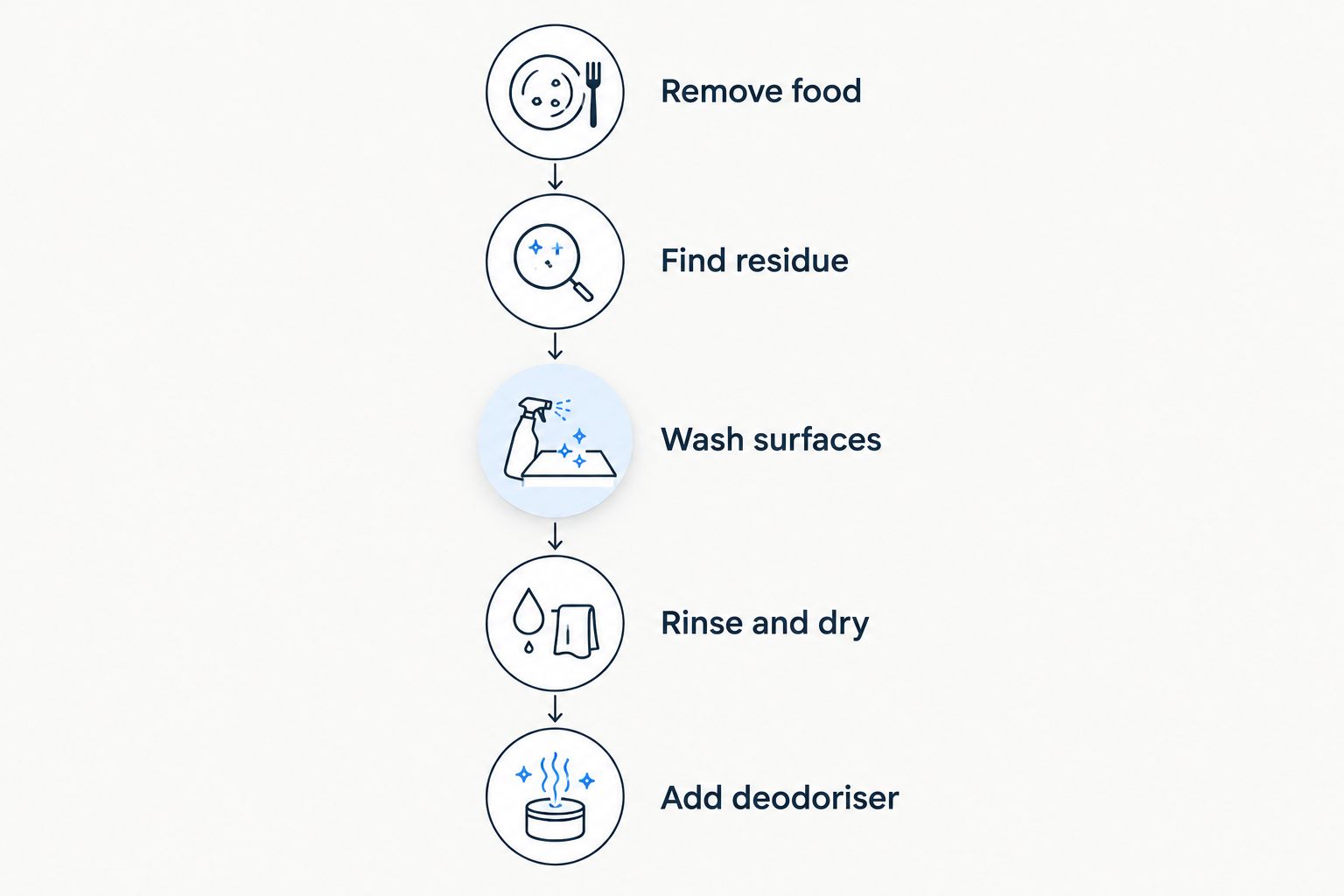
Remove the source and clean the fridge before adding an odour absorber.
For a holiday rental, make the fridge check an explicit handover task. Housekept's guide to the Airbnb checkout-to-turnover cleaning workflow covers the wider turnover process; confirm appliance interiors when arranging the cleaning scope.
Keep food safety separate from freshness
A pleasant smell does not prove food is safe. Food Standards Australia New Zealand advises keeping potentially hazardous food at 5°C or colder, or 60°C or hotter, to limit bacterial growth.
Its cumulative two-hour/four-hour rule applies to potentially hazardous food held between those temperatures:
- Less than 2 hours: use it immediately or return it to refrigeration.
- Between 2 and 4 hours: use it immediately rather than refrigerating it again.
- More than 4 hours: discard it.
Count all time out of temperature control, including preparation and cleaning. A deodoriser does not reset that clock, and chilling food again does not erase the earlier time.
For your 2026 cleaning routine, prepare cold storage before emptying the appliance. A fridge thermometer is more useful for checking storage temperature than judging how cold a shelf feels.
Which fridge deodoriser should you choose?
Choose fridge-labelled activated charcoal for lingering odours in a clean fridge. Choose mild dishwashing liquid for the residue causing the smell. Bicarbonate of soda is the pantry alternative; a dedicated interior cleaner suits readers who prefer task-specific directions.
Do not buy several options before checking beneath the drawers. If a smell persists after thorough cleaning, follow the appliance manual's troubleshooting guidance or contact an appliance technician, especially when cooling is also affected.
FAQ
What's the best fridge deodoriser in 2026?
A fridge-labelled activated charcoal deodoriser is the default choice for lingering smells after cleaning. Remove spoiled food and wash away residue first, because charcoal does not clean surfaces.
Is activated charcoal better than bicarbonate of soda for fridge smells?
Activated charcoal is the preferred general-purpose option for residual odours, while bicarbonate of soda reacts with some acidic odour compounds. Neither replaces removing the source and cleaning the fridge.
Can I clean my fridge with washing-up liquid?
Use mild washing-up liquid and water if your appliance manual permits it. Follow the detergent directions, wipe away residue and dry surfaces before returning food.
Why does my fridge still smell after cleaning?
A remaining smell calls for another check for hidden residue, spoiled food or an appliance issue. Inspect beneath drawers and around accessible seals, then follow the manual if the smell persists.
Can I use an air freshener inside the fridge?
Use only a product specifically labelled for refrigerator use. A room air freshener is not a substitute for a fridge deodoriser and does not remove food residue.
Does a fridge deodoriser make food safe?
No, a fridge deodoriser does not make unsafe food safe. Safe storage depends on temperature, handling and time, not whether the fridge smells fresh.
Does Housekept include fridge cleaning in every booking?
Confirm fridge-interior cleaning when arranging your booking. Housekept provides home and holiday-rental cleaning, but you should agree on appliance tasks rather than assume they are included.
One last thing
Check beneath the lowest drawer before replacing a deodoriser. Cleaning only the visible shelves leaves that area unchecked. If you find a spill, remove it first; then decide whether you still need an odour absorber.