
Can you get your bond back without professional cleaning?

Yes, you can get your bond back without professional cleaning in NSW if you leave the property reasonably clean, assessed against its condition when you moved in, allowing for fair wear and tear. Hiring a cleaner is not a general legal requirement, and paying for cleaning does not guarantee a full bond refund. This 2026 guide explains the cleaning standard, the carpet-cleaning exception and the evidence you need before returning the keys.
TL;DR
- Can you get your bond back without professional cleaning? In NSW, yes: the property's condition matters, not who cleans.
- Compare the exit condition with your incoming condition report, allowing for fair wear and tear.
- Professional carpet cleaning has a specific NSW lease exception where animals have been kept.
- Housekept provides end-of-lease cleaning; a cleaning service does not decide your bond refund.
Can you get your bond back without professional cleaning?
Yes. For NSW residential tenancies in 2026, the obligation is to leave the property reasonably clean, not automatically to purchase a professional clean. NSW Fair Trading's tenant guidance and the NSW Residential Tenancies Act distinguish your cleaning obligations from prohibited lease terms requiring professional cleaning.
If you are deciding whether to do the work yourself, the guide to whether end-of-lease cleaning is worth it covers that separate decision. Start with your property's condition, not the assumption that every departing tenant needs a cleaning invoice.
Follow these 5 steps before handing back possession:
- Read your incoming condition report. Identify existing dirt, stains, damage and photographs from the start of the tenancy.
- Check your agreement. Separate general cleaning wording from any specific, legally permitted carpet-cleaning term.
- Clean against the original condition. Remove dirt and residue you are responsible for rather than trying to make an older property look new.
- Record the result. Photograph rooms, fixtures and easily missed areas after cleaning and before returning the keys.
- Keep the handover evidence. Save the outgoing report, written correspondence and confirmation that you returned possession.
A full bond refund also depends on matters beyond cleanliness. Unpaid rent, missing items and damage beyond fair wear and tear are separate issues; a spotless kitchen does not resolve them.
Why this matters
A cleaning invoice proves that you purchased a service; it does not prove that every tenancy obligation is satisfied. Equally, the absence of an invoice does not establish that the property is dirty.
For your 2026 move, keep the discussion focused on identified conditions. A photograph of residue inside an oven is more useful than a broad disagreement about whether the home feels professionally cleaned.
This distinction also stops you accepting the wrong job. Cleaning removes dirt; repairs address damage. Repeated scrubbing will not repair chipped enamel, and harsh chemicals can turn a cleaning task into a damage dispute.
Cleaning it yourself: best for renters with time and equipment
DIY cleaning is a valid approach when you can meet the required standard before returning possession. Its advantage is control: you can compare each room directly with your incoming report and revisit anything you miss.
The drawback is that you own the whole task. Packing, moving furniture and arranging utilities can leave you cleaning around boxes or rushing the final inspection.
Use this comparison to choose your approach:
DIY cleaning
- Best for: Renters with time, suitable equipment and manageable cleaning tasks
- Main advantage: You control the work and can target the condition report
- Main limitation: You must complete and check every agreed area yourself
Professional cleaning
- Best for: Renters who want to outsource the cleaning work
- Main advantage: A cleaner performs the agreed cleaning tasks
- Main limitation: Scope exclusions and unfinished tasks still need checking
DIY plus specialist help
- Best for: Renters with an otherwise manageable property and a specific difficult task
- Main advantage: You can separate general cleaning from specialist work
- Main limitation: You must coordinate the separate tasks and handover
Choose DIY only when you can finish and inspect the work before handing over the keys. An unfinished self-clean is not improved by explaining how much effort it took.
Professional cleaning: best for renters outsourcing the work
Professional cleaning is a practical choice when you do not want to carry out the work yourself. It changes who performs the cleaning, not who determines whether a bond deduction is justified.
Housekept end-of-lease cleaning is best for renters who want to outsource the cleaning work. Housekept provides this service across Sydney, Shoalhaven and Illawarra; you can check its cleaning services and ask for a scope matched to your property.
The limitation is straightforward: no cleaning service settles separate issues such as damage, rent arrears or a disagreement about the incoming condition. Ask what is included rather than treating the phrase end-of-lease clean as a complete task list.
Before accepting any cleaning proposal, confirm:
- Which rooms and surfaces the work covers.
- Whether oven interiors, cupboards and window tracks are included.
- Whether carpet treatment is separate from general floor cleaning.
- How access, electricity and water will be arranged.
- How you should raise any missed cleaning tasks.
Arrange your end-of-lease clean
Check cleaning services and discuss the tasks your property needs before handover.
Why end-of-lease cleaning requirements vary
The NSW cleaning standard in 2026 is not a universal checklist demanding that every property look identical. Your obligations relate to the property you rented, its starting condition and any valid additional requirements.
These 5 factors shape the work you need to do:
- Starting condition. Existing marks and recorded dirt matter when comparing entry and exit conditions.
- Current cleanliness. Grease, food residue, dust and soap build-up need separate assessment from permanent wear.
- Animal-related carpet terms. NSW permits a specific professional carpet-cleaning term where animals have been kept during the tenancy.
- Included areas. Your tenancy may include outdoor spaces, appliances or storage areas that also need attention.
- Damage versus wear. Deterioration from ordinary use is different from damage or removable dirt.
Do not turn an agent's general checklist into an admission that every listed item is your responsibility. Compare each disputed item with the report and the applicable tenancy obligations.
Can a NSW lease require professional carpet cleaning?
A NSW lease can include a professional carpet-cleaning requirement where animals have been kept on the premises during the tenancy. This is a specific exception to the general prohibition on terms requiring tenants to pay for professional cleaning at the end of a tenancy.
Read the actual carpet clause. Having carpet alone does not establish that a professional-cleaning requirement is valid, and a general instruction to obtain a cleaning receipt is not the same as the permitted animal-related term.
Even without a valid professional-cleaning clause, you still need to address dirt or damage for which you are responsible. If you are uncertain about a particular term, seek NSW Fair Trading or tenancy advice before treating it as enforceable.
What should you clean before returning the keys?
Work through the property after removing your belongings. Empty spaces reveal dust, crumbs and marks that furniture and appliances previously covered.
Use the following checklist alongside your incoming report, not instead of it:
- Kitchen: inspect the oven, cooktop, splashback, sink, benchtops and empty cupboards for removable residue.
- Bathroom: check taps, shower screens, basins, toilets and accessible surfaces for soap build-up and dirt.
- Living areas: remove rubbish, dust accessible surfaces and clean the floors using a method suitable for the material.
- Storage: empty cupboards, wardrobes and drawers, then check shelves and corners.
- Windows: check accessible glass, sills and tracks against their recorded starting condition.
- Outdoor areas: remove your belongings and rubbish, and check the areas included in your tenancy.
Do not mix cleaning chemicals or use an aggressive product simply because a stain is stubborn. Follow product directions and the surface manufacturer's care instructions; avoid unsafe access to high or external areas.
Check the property after cleaning, not just while cleaning. Look inside the oven and cupboards, open the shower screen, and inspect floors once they are dry.
What evidence helps protect your bond?
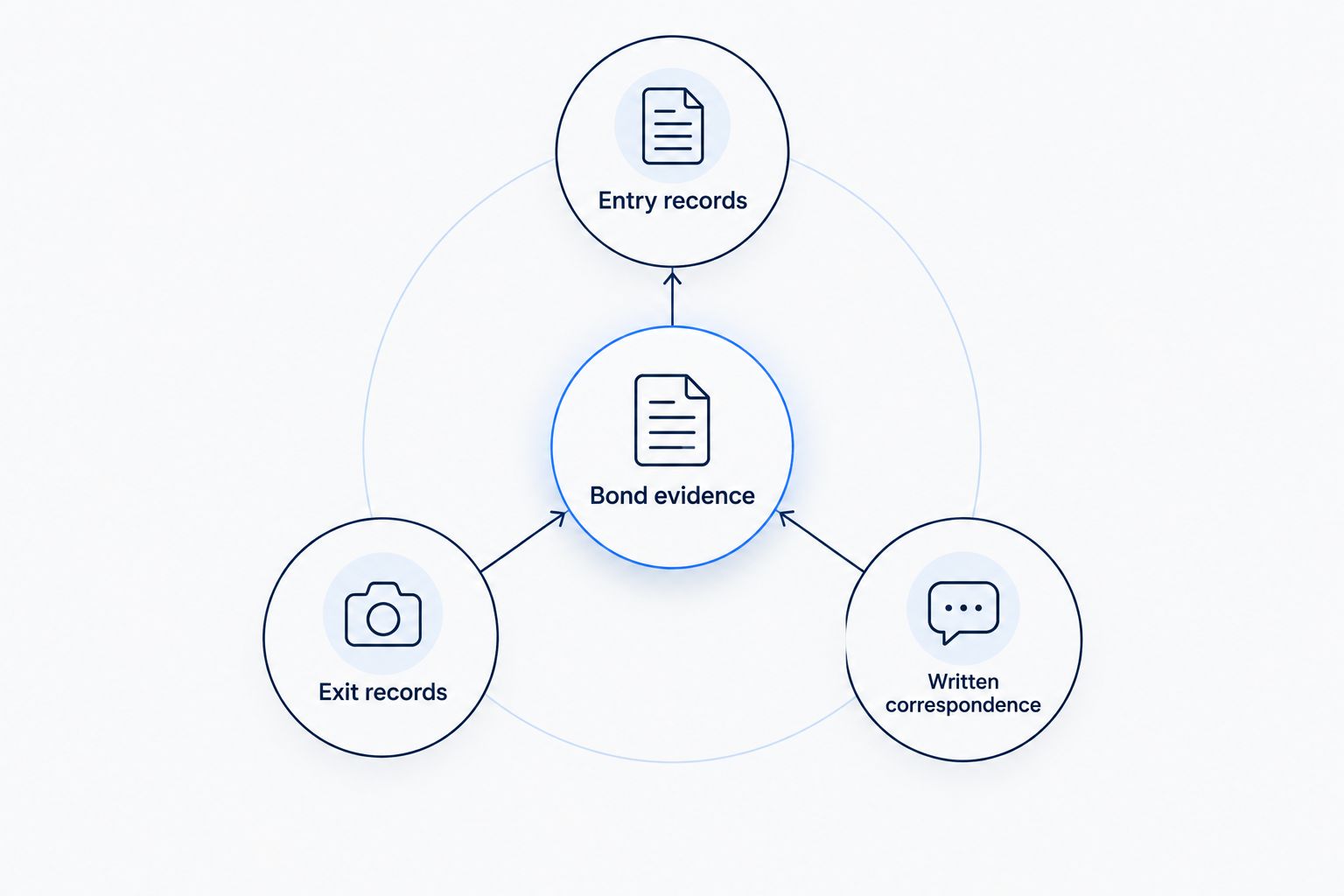
Keep 3 evidence groups: entry records, exit records and written correspondence. Together, they show the starting condition, the condition you left and what each party actually raised.
Keep 2 photo sets where available: your move-in photographs and your move-out photographs. Use comparable views so that the difference is easy to assess, rather than relying only on wide shots of empty rooms.
Entry records
Retain your incoming condition report and any emails or photographs documenting problems when you moved in. A recorded oven stain or worn carpet area is relevant when someone later attributes it to your tenancy.
Exit records
Take room-wide photographs and close-ups of likely dispute areas before returning the keys. Keep the original files and any outgoing inspection report, including comments recording a disagreement.
Written correspondence
Save cleaning instructions, your responses, invoices for work you arranged and any proposed deductions. Confirm important discussions in writing so you have a clear record of the issue and the requested action.
A cleaning receipt is only one part of the evidence; keep the condition records as well.
A receipt supports your record, but photographs show the result. If you clean the property yourself, a detailed exit record is especially useful because it answers the relevant question: what condition did you leave behind?
What should you do if the agent requests a cleaning deduction?
Ask for an itemised explanation identifying the area, the alleged problem and the amount claimed. Compare each item with your entry records and exit photographs before agreeing to a deduction.
If you disagree, explain why in writing. Separate an existing mark from a new stain, or fair wear from removable residue, rather than responding only that you cleaned thoroughly.
For NSW online bond claims in 2026, a claim lodged without the other party's agreement triggers notification and a 14-day response period. Follow the instructions in the official notification immediately; do not assume that an informal email to the agent stops the bond process.
If the matter remains unresolved, NSW Fair Trading and the NSW Civil and Administrative Tribunal provide dispute pathways. Get tenancy advice promptly and keep the disagreement focused on evidence rather than promises about a guaranteed refund.
FAQ
Can I get my bond back if I clean the rental myself?
Yes, you can get your bond back after cleaning the rental yourself if you meet your tenancy obligations. In NSW, the property must be reasonably clean, assessed against its starting condition and allowing for fair wear and tear; other issues can still affect the refund.
Do I need a professional cleaning receipt to get my bond back in NSW?
A professional cleaning receipt is not a general requirement for a NSW bond refund. Check any specific, legally permitted carpet-cleaning term and keep photographs showing the condition you left.
Can my landlord make me professionally clean carpets if I had a pet?
NSW permits a lease term requiring professional carpet cleaning where animals have been kept on the premises during the tenancy. Read your agreement and seek tenancy advice if you dispute how the term applies.
Does professional end-of-lease cleaning guarantee my full bond back?
No, professional end-of-lease cleaning does not guarantee a full bond refund. Cleaning does not settle separate issues such as unpaid rent, missing items or damage beyond fair wear and tear.
Is an old carpet automatically my responsibility when I move out?
No, an old carpet is not automatically your responsibility to replace or restore to new condition. The assessment must distinguish existing condition and fair wear and tear from dirt or damage attributable to your tenancy.
How long do I have to respond to a NSW bond claim I disagree with?
The NSW online bond process provides a 14-day response period after notification of a claim made without the other party's agreement. Follow the official notification and obtain tenancy advice promptly rather than relying on informal negotiations alone.
Can Housekept help with end-of-lease cleaning in Sydney?
Housekept provides end-of-lease cleaning across Sydney, Shoalhaven and Illawarra. Discuss your property and required tasks before booking; the cleaning service does not determine the bond outcome.
One last thing
Take your final photographs after the last load leaves. Moving boxes can hide dust, and removing an appliance can expose residue you have not seen during the tenancy.
For a 2026 handover, make the final check a separate task from the clean. Walk through the empty property with your incoming report, record the condition and keep confirmation of the key return. Your strongest position is a clean property backed by clear evidence, not simply a receipt.