Best pressure washers for driveways and patios 2026

Best overall: a mains-electric pressure washer with a compatible surface cleaner. Best for large, open driveways: a petrol pressure washer. Best for small patios: a compact electric model. Best for a one-off clean: a hired pressure washer. This 2026 guide explains which setup suits your paving, what to check before choosing, and where pressure washing needs extra care.
TL;DR
- The best pressure washer for driveways is a mains-electric model with a compatible surface cleaner for routine domestic cleaning.
- Choose petrol for large, open driveways where a power lead restricts access.
- Choose compact electric for small patios, not extensive driveway cleaning.
- Housekept provides home cleaning services; confirm exterior pressure washing separately rather than assuming it is included.
Why this matters
Choose the washer around the surface, not the biggest pressure claim. A machine that removes dirt from sound concrete can also strip coatings, disturb paving joints or damage deteriorated material when used incorrectly. The nozzle, working distance and cleaning method matter alongside the machine.
Housekept provides residential and commercial cleaning across Sydney, Shoalhaven and Illawarra. If you are arranging broader property cleaning, review the cleaning services and confirm exterior work separately. A household or end-of-lease booking does not, by itself, establish that driveway pressure washing is included.
What makes the best pressure washer for driveways?
Use these criteria to compare pressure washers in 2026. They tell you more about suitability than a headline maximum-pressure figure alone.
- Surface suitability: Check the paving or coating manufacturer's cleaning instructions before choosing pressure or attachments.
- Working performance: Compare rated working pressure and water flow, not maximum pressure in isolation.
- Surface cleaner compatibility: Confirm the attachment matches the washer's connections, pressure and flow requirements.
- Reach and access: Check hose length, tap position, power access, steps and the route around parked vehicles.
- Practical ownership: Consider storage, maintenance, handling and access to replacement hoses, seals and fittings.
Pressure and flow measure different things. 1 bar equals 100 kilopascals, while 1 megapascal equals 10 bar. Water flow is commonly stated in litres per minute; 1 litre per minute equals 60 litres per hour. Convert the units before comparing specifications, then distinguish rated figures from maximum figures.
A wide cleaning head is not automatically a good match. An attachment that requires more flow than the washer supplies is the wrong pairing, even if the connector fits.
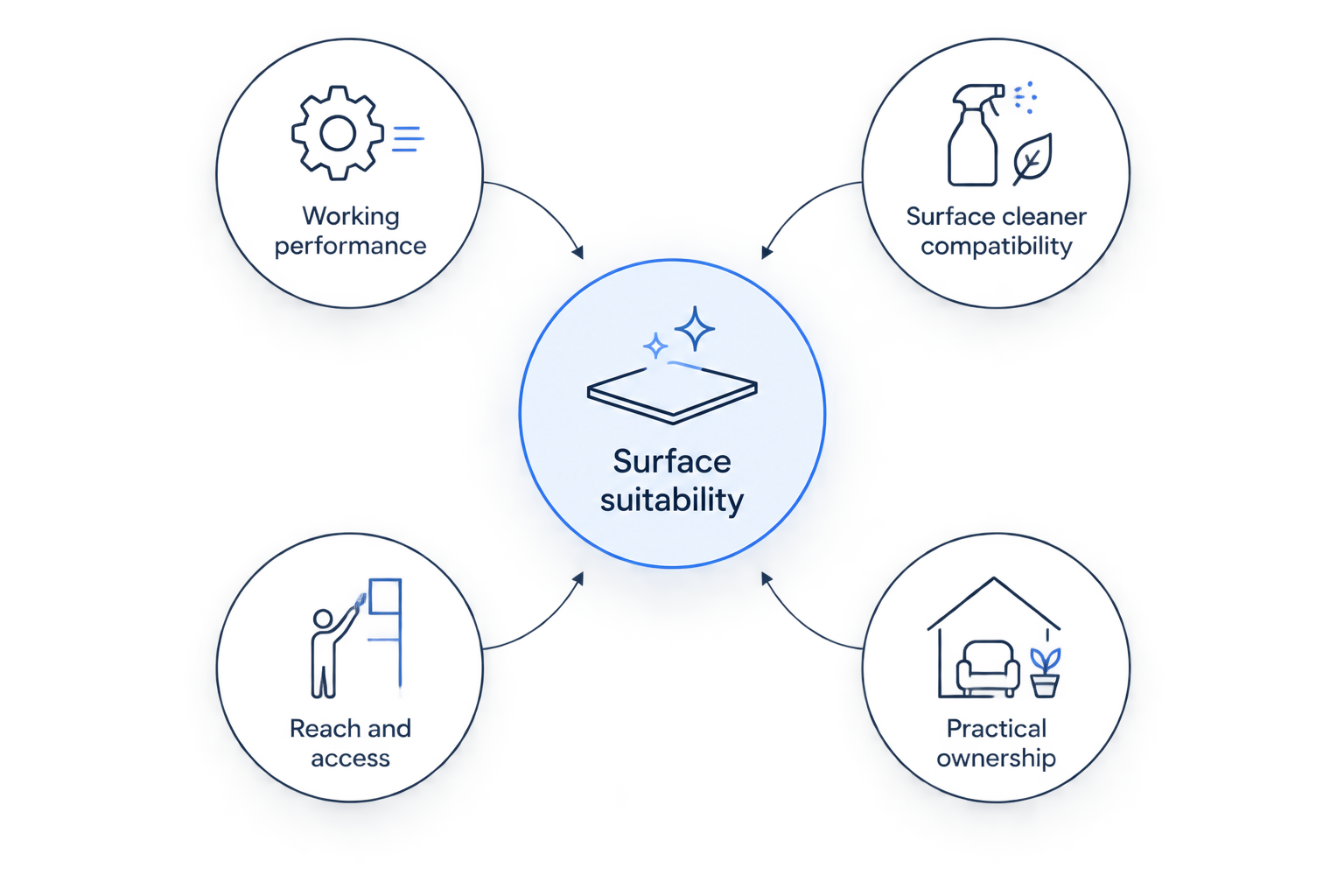
Start with the surface, then match the machine and attachment to the job.
Best pressure washers at a glance
These rankings compare equipment types rather than unverified model specifications. Check the exact machine and included accessories before committing to a particular package in 2026.
1. Mains-electric washer with surface cleaner
- Best for: Routine domestic driveways
- Standout feature: A matched enclosed head for broad paved areas
- Key limitation: Needs suitable power access and attachment compatibility
2. Petrol pressure washer
- Best for: Large, open driveways
- Standout feature: Operation without a mains power lead
- Key limitation: Engine maintenance, exhaust and handling requirements
3. Compact electric washer
- Best for: Small patios and awkward corners
- Standout feature: Easier handling where storage and access are tight
- Key limitation: Less suited to extensive paved areas
4. Hired pressure washer
- Best for: One-off property clean-ups
- Standout feature: Equipment access without long-term storage
- Key limitation: Collection, familiarisation and return arrangements
1. Mains-electric: best for routine domestic driveways
A mains-electric pressure washer connects to a suitable electrical supply and water source. Pairing it with a compatible surface cleaner gives you an enclosed rotating cleaning head for broad, flat areas, while a lance handles edges and restricted spaces.
Best for: Homeowners maintaining a sound driveway with accessible power, water and storage. Choose the complete working setup rather than a bare machine with an impressive pressure label.
Mains-electric pressure washer pros:
- No petrol engine to fuel or service.
- A compatible surface cleaner helps contain spray around the cleaning head.
- Interchangeable attachments let you address open areas and edges separately.
Mains-electric pressure washer cons:
- Power leads and water hoses need a safe route through the work area.
- Surface cleaners are not universally compatible or automatically included.
Check the instructions for electrical protection, extension leads and connection placement. Keep electrical connections away from water, and never assume an ordinary household extension lead is suitable for outdoor pressure-washer use.
A surface cleaner still needs a test patch. Its enclosed housing does not make it safe for damaged concrete, loose joints or unsuitable coatings.
Verdict: Buy a mains-electric setup for routine driveway cleaning when the surface and access suit it.
2. Petrol: best for large, open driveways
A petrol pressure washer uses an engine to drive the pump, removing the need for a mains electrical lead. That makes this type relevant where a driveway extends well beyond convenient power access.
Best for: Large, open paved areas where electrical reach is the main constraint. Select by the machine's actual working specifications; petrol power alone does not establish cleaning performance.
Petrol pressure washer pros:
- No mains lead to route across the driveway.
- Suits sites where electrical access limits an electric machine.
- Can work with a matched surface cleaner when the specifications permit.
Petrol pressure washer cons:
- The engine adds fuel handling and maintenance tasks.
- Exhaust means the machine must operate outdoors, away from enclosed or partly enclosed spaces and building openings.
- Transport and storage need consideration before purchase.
Never run a petrol pressure washer in a garage, even with the door open. Position the engine so exhaust cannot enter doors, windows or ventilation openings, and follow the manufacturer's operating instructions.
Check how you will move the machine over steps and uneven ground. Wheels help on a clear route; they do not solve every access problem.
Verdict: Buy petrol for a large, open driveway when electrical access is the deciding constraint.
3. Compact electric: best for small patios
A compact electric pressure washer suits a limited paved area where handling and storage matter more than covering a long driveway. Use the specified nozzle and an appropriate cleaning method for the patio material.
Best for: Small patios, narrow side paths and homes with restricted storage. A compact machine is a targeted choice, not an automatic substitute for a driveway-focused setup.
Compact electric pressure washer pros:
- Easier to accommodate where equipment storage is limited.
- Suits a small cleaning area without committing to a larger machine.
- A lance provides access around furniture positions, corners and edges.
Compact electric pressure washer cons:
- Covering extensive paving with a small cleaning pattern involves repeated passes.
- Attachment options and surface-cleaner compatibility vary by model.
Move pots and furniture before starting rather than spraying around them. Clear access makes it easier to keep a consistent cleaning pattern and see whether the surface is changing.
Do not compensate for slow cleaning by moving the nozzle progressively closer. Stop and reassess the nozzle, treatment and surface condition instead.
Verdict: Buy compact electric for a small patio; skip it as the default for extensive driveway cleaning.
4. Hired equipment: best for a one-off clean
Hiring gives you access to a pressure washer without keeping it after the job. The useful comparison is not simply hire versus ownership: it is whether you can safely operate the particular machine, manage the wastewater and complete the work within the agreed hire period.
Best for: An occasional property clean-up where long-term equipment storage serves little purpose.
Hired pressure washer pros:
- No ongoing storage requirement after return.
- Lets you select equipment around a defined job.
- Avoids taking responsibility for long-term machine servicing.
Hired pressure washer cons:
- Collection, transport and return become part of the job.
- You still need instruction, suitable attachments and a safe working method.
- A hire period does not remove delays caused by unsuitable surfaces or access.
When comparing hire with paying someone to do the work, driveway pressure washing costs need to be considered alongside preparation, stain treatment, access and wastewater handling. An overseas figure is not a local Sydney, Shoalhaven or Illawarra quote; compare the written scope for your property.
Ask for an operating demonstration before taking unfamiliar equipment away. Confirm how to depressurise it, change attachments and stop it safely.
Verdict: Hold off buying for a one-off clean; choose hire only when you can manage the full job safely.
Match the method to your driveway or patio
The best pressure washer for driveways cannot make an unsuitable surface safe to blast. Inspect the material before choosing the nozzle or cleaning head, especially where an older driveway contains several repaired or coated areas.
Sound concrete
Start with a discreet test patch and inspect the result before continuing. Stop if the surface sheds material, develops visible damage or changes texture; repeating the same pass will not correct that damage.
Pavers and joints
Avoid directing a concentrated jet into joints. Pressure washing can displace jointing material, so identify the paving system and its maintenance requirements before starting.
Sealed or painted surfaces
Check the coating manufacturer's instructions first. Pressure washing can lift an unsuitable or deteriorating coating, and a clean patch surrounded by peeling finish is not a successful result.
Stone and deteriorated surfaces
Identify the stone and any existing treatment before selecting chemicals or pressure. If the surface is crumbling, flaking or unidentified, pause rather than using the driveway as a test area.
For a 2026 property maintenance plan, record which areas need a different cleaning method. That is more useful than applying one setting everywhere.
A safer cleaning sequence
Prepare the whole work area before starting the machine. The objective is controlled cleaning, not simply pushing dirty water downhill.
- Inspect surfaces: Identify cracks, loose material, coatings and vulnerable joints.
- Clear access: Remove vehicles, furniture and loose debris; keep children and pets away.
- Plan runoff: Locate drains and prevent contaminated wash water from entering stormwater. Follow local requirements for collection and disposal.
- Test first: Use the manufacturer's recommended setup in an inconspicuous area and inspect for damage.
- Clean evenly: Maintain the instructed distance and movement, then rinse and inspect the finished area.
Wear eye protection and suitable enclosed footwear, and follow the manual's protective-equipment instructions. Never direct the jet at skin: pressure-washer injection injuries require urgent medical attention, even when the wound looks small.
Avoid adding chemicals simply because a stain remains. Identify the stain, check compatibility and follow the cleaning product label; more pressure is not a universal stain treatment.
How these options were ranked
The ranking prioritises surface suitability, working performance, attachment compatibility, access and ownership demands. It does not claim a hands-on model test or assign performance figures to machines without verified specifications.
Mains-electric takes the default slot because it addresses routine domestic cleaning without adding petrol-engine tasks. Petrol, compact electric and hire each serve a different constraint rather than competing for the same buyer.
Which pressure washer should you choose?
Choose mains-electric with a compatible surface cleaner for routine driveway maintenance. Switch to petrol when power access is the obstacle, compact electric when the patio is small, or hire when the job is genuinely occasional.
Housekept is best for households seeking home cleaning services across Sydney, Shoalhaven and Illawarra. Keep that service decision separate from equipment selection, and ask explicitly about exterior work before booking.
For your 2026 shortlist, write down the surface, available connections and required attachments before comparing machines. Reject anything that fails those basics, regardless of its maximum-pressure claim.
FAQ
What's the best pressure washer for driveways in 2026?
A mains-electric pressure washer with a compatible surface cleaner is the default choice for routine domestic driveway cleaning. Check the surface instructions, working pressure, water flow and electrical access before choosing a model.
Is a petrol pressure washer better than electric?
Petrol is better when mains electrical access is the main constraint on a large, open driveway. Electric avoids petrol-engine tasks, while actual cleaning capability depends on the individual machine and attachment.
Do I need a surface cleaner for my driveway?
A compatible surface cleaner is a practical attachment for broad, flat paved areas. It helps contain spray around the head, but it still requires a test patch and does not make unsuitable surfaces safe to pressure wash.
Can pressure washing damage concrete or pavers?
Yes, pressure washing can damage deteriorated concrete, strip coatings and displace paving joint material. Inspect the surface, follow its maintenance instructions and stop if the test patch shows damage.
Should I buy or hire a pressure washer?
Buy when repeated use, safe storage and ongoing maintenance suit your household. Hire suits a one-off job, provided you can transport, operate and return the equipment and manage the cleaning safely.
Can I pressure wash my driveway before a rental inspection?
Confirm permission and the surface's cleaning requirements before pressure washing a rental driveway. Check the agreed cleaning scope separately rather than assuming exterior pressure washing forms part of an end-of-lease clean.
Does Housekept provide driveway pressure washing?
Confirm driveway pressure washing directly before booking; it is not established by Housekept's listed cleaning categories. The stated services include home, holiday rental, end-of-lease, commercial, NDIS/DVA cleaning and lawn maintenance.
One last thing
Check the water supply before blaming the washer. Follow the machine's inlet-supply requirements and inspect the hose for restrictions. A bigger pressure figure does not fix an inadequate supply, an unsuitable attachment or a surface that should not be pressure washed.