Airbnb cleaning for Sydney property managers: complete 2026 guide

Sydney property managers’ Airbnb cleaning is the preparation of short-stay homes between bookings, with the aim of handing over a clean, guest-ready property. Unlike routine home cleaning, each turnover must fit the booking schedule, restore the agreed presentation and flag problems before the next arrival.
TL;DR
- Airbnb cleaning for property managers needs a written scope, confirmed access and a clear handover status.
- Housekept is best for Sydney property managers seeking a provider that offers Airbnb and holiday rental cleaning.
- Separate cleaning, linen, restocking and maintenance responsibilities before assigning a turnover.
- Approve guest readiness against the property brief, not a message saying the cleaner has finished.
Why Airbnb cleaning matters for Sydney property managers
A property manager coordinates more than clean surfaces. You need the booking calendar, cleaner, linen arrangements and property access to agree before a turnover starts. A missed handover detail becomes a problem you must resolve before the guest arrives.
For your 2026 operating plan, treat cleaning as a defined handover process rather than an isolated appointment. A clean bathroom does not resolve missing bedding, an inaccessible key or a maintenance issue. Record those responsibilities separately so completion has a clear meaning.
Your supplies also need to match the property’s finishes and the work required. The guide to cleaning products for Airbnb hosts is a useful companion when reviewing the materials kept on site. Keep the approved supply list inside the property brief so substitutes do not become the default.
The handover standard is guest readiness, not simply a completed cleaning visit. That distinction should shape the scope, booking instructions and final check.
Build a repeatable Airbnb turnover process
Use the following steps to create a property-level process you can reuse. Start with a shared document, calendar and checklist; paid coordination software is not a prerequisite. Assign an owner to every task that sits outside the cleaning scope.
1. Write a property brief before assigning work
Create one property brief for each address. Include room layouts, bed configurations, approved presentation photos and surfaces that need particular care. Write instructions for someone entering the property without your local knowledge.
Separate routine turnover work from periodic or specialist tasks. An oven interior, high window or stained upholstery needs an explicit decision; do not assume an ordinary turnover covers it. Record exclusions as clearly as inclusions, then have the cleaner confirm the brief before the first visit.
Use the same document structure across your portfolio, but keep the details property-specific. Update the brief whenever furniture, bedding or access arrangements change. For a 2026 review, remove old instructions rather than leaving contradictory notes in a message thread.
- List each room and the required cleaning tasks.
- Specify the bed configuration for the incoming booking.
- Add reference photos for the agreed presentation.
- Identify delicate finishes and approved cleaning methods.
- Record excluded work and who authorises additional tasks.
2. Confirm the turnover window and access
Start with a shared calendar that records departure, cleaning access and the next arrival. Keep booking changes in that calendar rather than relying on separate messages. Confirm the actual access window before treating a turnover as assigned.
Give the cleaner the access instructions they need, through a controlled channel. Include parking or building-entry information where relevant. Keep one primary contact and one backup contact for access failures or urgent questions; avoid circulating guest details that are not needed for cleaning.
Use three handover statuses: Awaiting access, Cleaning underway and Ready for review. These distinguish a blocked visit from unfinished work and prevent an arrival message from being sent on the strength of an ambiguous update.
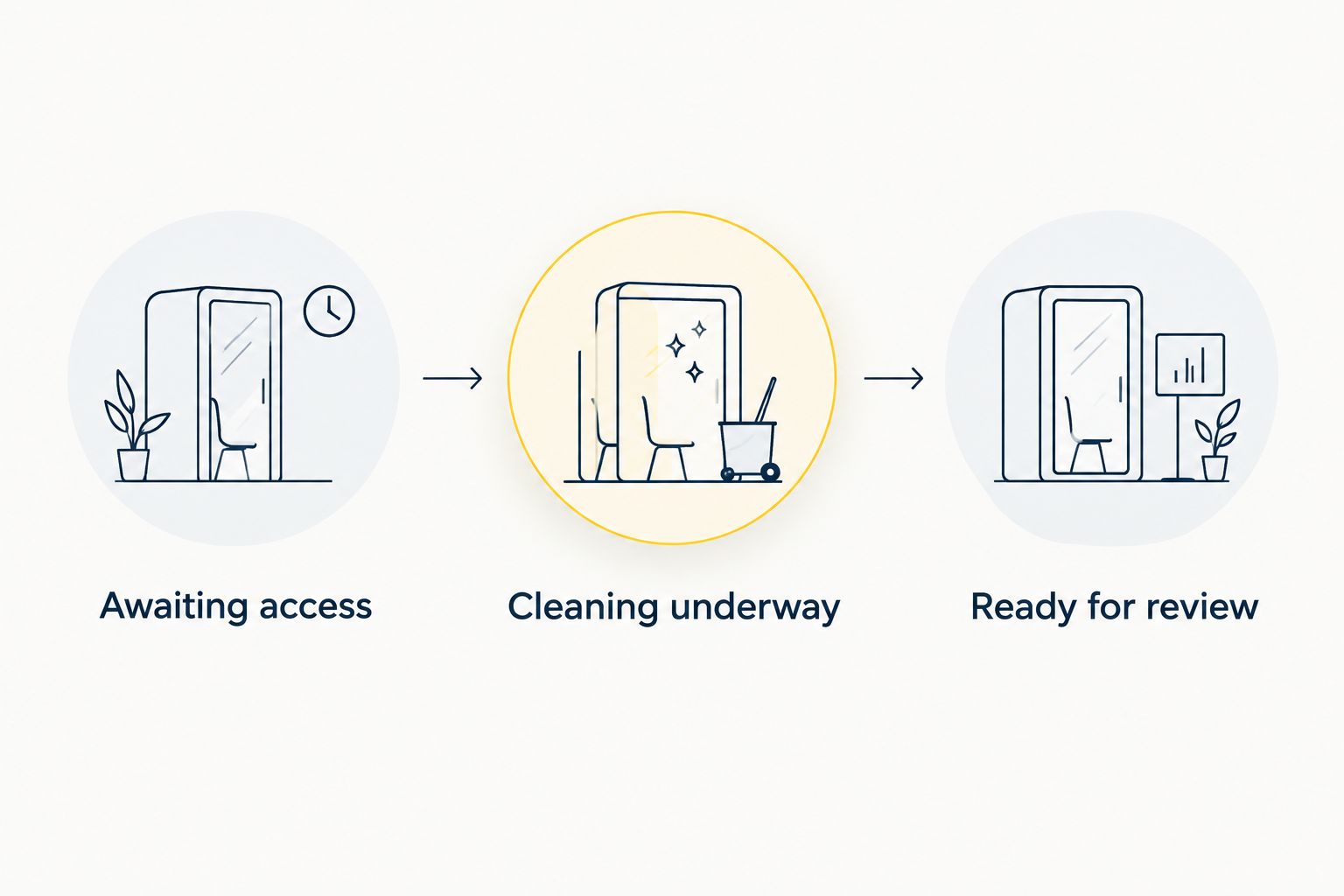
Ready for review means the property still needs a handover decision.
The final status triggers your review; it does not automatically authorise guest entry. Define who makes that decision before a busy changeover day.
- Record departure and arrival details against the correct address.
- Confirm access instructions before the scheduled visit.
- Assign a primary contact and a backup contact.
- Send booking changes to everyone responsible for the turnover.
- Require a status update when access fails or work finishes.
3. Match the cleaning arrangement to your management needs
Compare arrangements against your actual scope, not a general description of cleaning. You can manage the work yourself, coordinate an individual cleaner or engage a cleaning service. Each approach still needs the same property brief and acceptance standard.
Housekept is best for Sydney property managers seeking a provider that offers Airbnb and holiday rental cleaning. Housekept provides these services across Sydney, Shoalhaven and Illawarra. Confirm the property’s location, proposed schedule and required tasks directly before treating any visit as arranged.
A professional service gives you an alternative to organising the cleaning work yourself, but it does not remove your responsibility to define the handover. Linen handling, replenishment, damage reporting and urgent changes all need agreement. Do not infer them from the service category alone.
- Send the same written scope to each prospective provider.
- Confirm coverage for the property’s location.
- Ask how schedule changes and access problems are handled.
- Agree how completed work and exceptions will be reported.
- Check which tasks remain with your property management team.
4. Separate linen, supplies and cleaning responsibilities
Use a simple inventory sheet to record what belongs at the property and who replenishes it. Cleaning, laundry and consumable purchases are separate activities. Assign each one rather than expecting a cleaner to discover the arrangement on arrival.
For your 2026 property brief, distinguish clean linen storage from used-linen collection. Decide who checks the incoming bed configuration and who deals with damaged or missing items. The person doing the cleaning should not have to choose between an undocumented substitute and an incomplete bed setup.
Keep approved cleaning products separate from guest consumables. Store products according to their labels and record any surface restrictions. Where linen depends on an outside collection or delivery, include that dependency in the turnover plan rather than hiding it in a supplier conversation.
- Assign responsibility for washing, drying and returning linen.
- Record the required bed and towel setup for each booking.
- Name the person who replaces depleted guest consumables.
- Identify where approved supplies and clean linen are stored.
- Set a reporting route for missing, stained or damaged items.
5. Check guest readiness before releasing the property
Use a room-by-room checklist and request completion evidence against it. You can review a shared photo folder manually; the important part is that the evidence matches the address and the current turnover. Reusing old photos defeats the purpose.
Check the guest-facing details as well as the obvious cleaning tasks. Bedding, bathroom presentation, kitchen surfaces and visible waste all belong in the agreed review. Photos show presentation, but they do not establish that an appliance works or that an odour has been resolved.
Define what happens when a check fails. A minor presentation correction and a property fault need different responses. Keep guest communication with the property manager unless another arrangement has been explicitly agreed; a cleaner’s completion message should not become an accidental check-in approval.
- Review the checklist against the current property brief.
- Check that completion photos belong to the current visit.
- Confirm the bed setup matches the incoming booking.
- Record unresolved cleaning issues separately from maintenance faults.
- Assign responsibility for approving the final handover.
6. Review exceptions and update the next turnover
Keep an exception log rather than relying on memory. Record what prevented a clean handover, who resolved it and whether the property instructions need changing. A recurring access problem needs an access fix, not another reminder to work faster.
Review your 2026 turnover process after a problem and whenever the booking pattern changes. Separate missed scope from work that was never included. That distinction keeps conversations with cleaners factual and shows where your own instructions need correction.
Track completion against the agreed arrival deadline, cleaning defects, missing supplies and return visits. Use your own records to set targets; there is no universal completion time that fits every property, condition and service scope. Keep personal guest information out of operational notes unless it is needed for the task.
- Log the issue against the address and turnover date.
- Identify whether the cause was access, scope, supplies or execution.
- Record the corrective action and its owner.
- Update the property brief when instructions change.
- Review repeated exceptions before assigning the next visit.
Compare cleaning options for your portfolio
Choose an arrangement according to the coordination you can manage and the work you need covered. The best option is the one with an agreed scope and a workable handover process. A provider’s name alone does not establish either.
Use this comparison to structure enquiries, not to assume particular inclusions. Ask each provider to confirm responsibilities in writing before your first turnover.
Manager-led cleaning
- Best for: Managers who want direct control of the work
- Practical advantage: You can inspect and correct presentation yourself
- Key limitation: Cleaning competes with your other property management duties
Directly engaged individual cleaner
- Best for: Managers prepared to coordinate instructions and cover
- Practical advantage: You can agree property-specific routines directly
- Key limitation: You need an explicit plan for absences and conflicting bookings
Housekept Airbnb and holiday rental cleaning
- Best for: Managers seeking this service category in Sydney, Shoalhaven or Illawarra
- Practical advantage: The stated service offering matches holiday rental cleaning needs
- Key limitation: Scheduling, linen, reporting and task inclusions require direct confirmation
If you manage properties across more than one area, confirm the arrangement for each address. Regional coverage does not establish that every requested appointment or task is included.
Discuss your Airbnb cleaning needs
Share your property location, turnover requirements and cleaning scope.
Common mistakes Sydney property managers make
Treating every turnover as an identical job
The same address can require different work after different stays. Ask for an arrival-condition check and an escalation message when the agreed scope does not match the condition found. Do not leave additional work unreported until the next guest arrives.
Leaving linen ownership unclear
A cleaning appointment does not explain who supplies, launders or replaces linen. Put those responsibilities in the brief and identify the fallback arrangement. Otherwise, a cleaned bedroom can still be unready for use.
Using a message thread as the property manual
Access changes and presentation instructions become difficult to follow when they are scattered across conversations. Keep one current brief and use messages to flag changes to it. Remove outdated directions instead of asking cleaners to work out which message wins.
Treating photos as proof of everything
A photo can show a made bed or a clean benchtop. It cannot confirm that a reported smell has gone or that a faulty appliance is working. Require written exception reporting alongside presentation photos and assign maintenance checks separately.
FAQ
What does Airbnb cleaning for property managers include?
Airbnb cleaning for property managers includes the tasks agreed for preparing a short-stay property between bookings. Put room cleaning, bed preparation, linen handling, replenishment and reporting in the written scope rather than assuming they are all included.
Is Airbnb cleaning different from regular home cleaning?
Airbnb cleaning is tied to a guest handover, while regular home cleaning is an ongoing household task. A turnover also needs clear instructions for presentation, booking-specific bed arrangements and reporting unresolved issues before arrival.
Does Housekept offer Airbnb cleaning in Sydney?
Housekept provides Airbnb and holiday rental cleaning across Sydney, Shoalhaven and Illawarra. Confirm the property address, required tasks and proposed schedule directly before arranging a visit.
Should I use the same checklist for every rental property?
Use the same checklist structure, but customise the instructions for each property. Bed configurations, surfaces, access arrangements and included tasks need address-specific details.
Who should manage linen for an Airbnb turnover?
Assign linen management to a named person or provider before the turnover. Record who supplies clean linen, removes used items and replaces missing or damaged pieces; do not assume the cleaning arrangement includes those tasks.
Can I manage Airbnb cleaning without dedicated software?
You can manage Airbnb cleaning with a shared calendar, property brief and completion checklist. Keep booking changes visible and assign responsibility for checking the final handover.
What should happen if a cleaner finds damage before check-in?
The cleaner should report the damage through the agreed escalation process, and the property manager should decide the response. Keep maintenance decisions and guest communication separate from the cleaning completion status.
One last thing
Add a not ready rule to every property brief in 2026. List the conditions that require a management decision before handover, such as missing bedding, an unresolved cleaning issue or a reported fault.
A completion checklist tells people what to finish. A not-ready rule tells them when to stop and call you. Use both so that a difficult turnover produces a clear decision rather than an optimistic status update.