.png)
How to Spring Clean Your Balcony and Outdoor Furniture
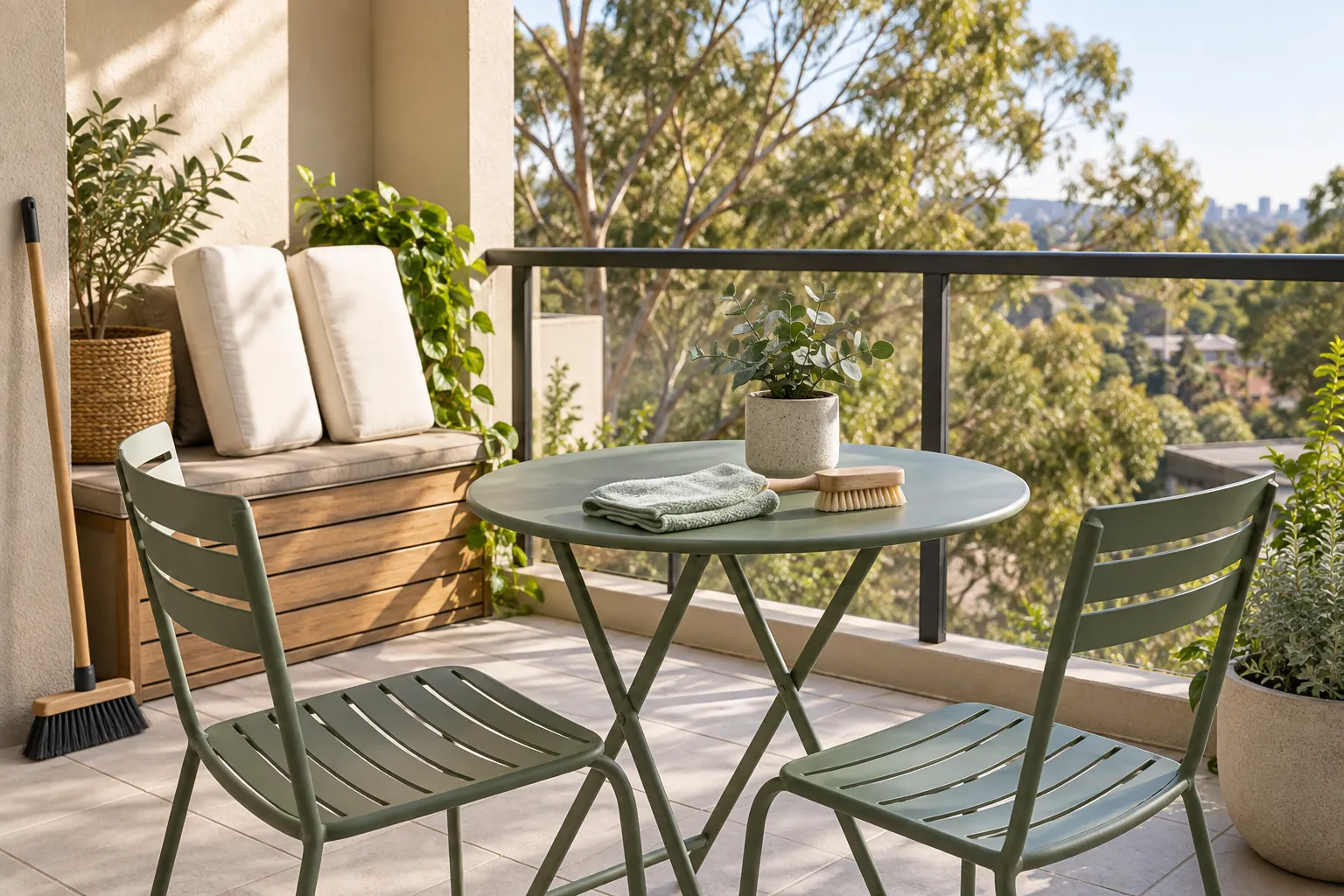
A good balcony clean starts with a broom and a plan for the materials, rather than a hose. Remove loose debris, check the care instructions for your furniture and cushions, clean each surface with a suitable method, then allow everything to dry before putting it back. That sequence works whether you have a small Sydney balcony or a sheltered outdoor sitting area on the South Coast.
The aim is a space you can comfortably use again: a table ready for breakfast, chairs free of accumulated dust and a floor you can walk across without stepping around leaves and cleaning equipment. You do not need to turn every spring clean into a restoration project. Separating ordinary cleaning from repairs helps keep the job manageable.
Your free planning tool: Download the balcony and outdoor furniture cleaning checklist (PDF). Use it to divide the work, record product instructions and set a date for your next quick check.
1. Check the space before choosing products
Take a slow look around before you move anything. Identify the floor material and the finish on the furniture. Painted timber, powder-coated metal, natural stone and composite decking should not automatically receive the same cleaner or brush. Find the manufacturer's instructions where possible, particularly if a surface has a coating or warranty.
Read the cushion labels separately from the furniture instructions. A removable cover is not necessarily machine washable, and a cover's washing directions do not automatically apply to the filling inside it. Photograph the labels so you can refer to them while the covers are off.
For apartments, check the building's cleaning arrangements and any restrictions on water use. Work out where water would go before wetting the floor. A balcony above another home needs a different approach from a ground-level courtyard, and an open drain is not permission to pour cleaning solution into it.
Use this first inspection to flag loose furniture joints, flaking coatings or damaged boards. Put those items on a separate repair list. A clean can reveal a problem, but it cannot establish that a damaged chair or deck is safe to use.
2. Gather a small, suitable cleaning kit
Start with a broom and dustpan, rubbish bags, a soft hand brush, clean microfibre cloths and a bucket. Add the cleaner specified for the particular surface, plus any protective equipment required by its label. Keep a few spare cloths so you can change them when they become dirty instead of spreading the same residue around.
You may already own everything needed for a lightly dusty outdoor setting. Before buying a specialist product, identify the problem you want it to solve and check that both the product and the surface instructions allow that use. A strong-sounding product name is not enough information to choose it.
Keep products in their original labelled containers and follow their directions. Do not improvise mixtures. Put your kit somewhere stable, away from the balcony edge and out of reach of children or pets while you work. Avoid trailing equipment across the only route back indoors.
3. Clear the area and remove dry debris first
Move small pots, cushions and lightweight furniture into a safe temporary space. Ask for help with heavy items rather than dragging them across a finish that could scratch. Take a quick photo of the original layout if you want to put everything back in the same place.
Sweep up leaves, grit and litter and bag them. Pay attention to corners and the area beneath chair legs. Removing this material dry means you have less dirt to manage when you reach the damp-cleaning stage. Do not sweep debris over the edge or push it into drainage openings.
Brush loose dust from accessible furniture surfaces and check under the table. Work only from a stable position within the balcony. High exterior glass, the outside face of a railing or anything that requires leaning beyond the edge belongs outside this routine.
4. Clean outdoor furniture according to its finish
IKEA's outdoor care guide recommends a mild soapy solution for the materials covered by its guide, including its metal, plastic and wooden outdoor furniture. It also emphasises dry storage for cushions. These are useful examples of manufacturer guidance, but your own product's instructions take priority. Read IKEA's material-specific care advice.
Metal and plastic furniture
Start with a small hidden test area using the permitted method. Work from the tabletop or chair back down to the legs, changing your cloth as needed. Check seams and the underside of armrests, where a quick wipe can miss accumulated dirt. Finish according to the product's rinse and drying instructions.
If you find rust, cracked plastic or a lifting coating, stop treating that patch as ordinary surface dirt. Record the issue and seek the relevant repair or replacement advice. Repeated abrasive scrubbing can make it harder to distinguish the original problem from fresh cleaning damage.
Timber furniture
Check whether the timber is painted, oiled, stained or left with another finish. Use the approved method and avoid assuming that a product suitable for one wooden table suits all outdoor timber. Cleaning and refinishing are separate jobs; do not start applying oil or stain simply because the table looks dull while wet.
If a finish needs attention, plan that work around its own preparation and drying requirements. Keep the cleaning session focused on removing the material you can safely remove, rather than trying to make weathered furniture look brand new in one afternoon.
5. Give cushions their own drying plan
Before wet-cleaning a cushion, decide where it can dry with space around it. Follow its care label for washing, water temperature and drying. If only the cover is washable, treat that as a separate item; do not put the complete cushion in a machine on that basis.
For a permitted spot clean, test an inconspicuous area first and use the label's method. Avoid expanding a small job into soaking an entire cushion without instructions that support it. Keep track of which cover belongs to which filling if the set contains similar sizes.
Do not seal cushions away while damp. IKEA specifically advises that its cushions be completely dry before closing a storage bag or box. See the cushion storage guidance. Allow for the filling as well as the surface: a cover that feels dry does not tell you everything about the inside.
6. Clean the floor without sending dirty water elsewhere
The NSW EPA's stormwater guidance says that only clean rainwater should enter stormwater drains. Its published guidance is aimed at site management, but the pollution-prevention principle is relevant when planning an outdoor clean at home: keep detergent, dirt and cleaning waste out of stormwater. Read the EPA guidance.
After sweeping, choose a controlled method suited to the floor, such as damp wiping or mopping where its care instructions permit. Work in small sections so you can manage the dirty water. Plan collection and disposal according to the cleaner's label and local advice; do not assume that every drain connects to the same system.
Keep moisture away from electrical fittings and neighbouring spaces. If you cannot contain the runoff, pause and arrange a suitable method with the building manager or an appropriately equipped provider. Finishing quickly is not worth creating a problem for the apartment below.
Should you use a pressure washer on timber decking?
Check first rather than assuming it is the next step. K�rcher's timber-deck guidance explains that the wood's condition, treatment and sensitivity affect the appropriate equipment and pressure, and recommends testing discreetly. Read the manufacturer's deck-cleaning guidance.
A pressure washer is not part of this basic balcony routine. If you are considering one for a deck, confirm compatibility with the decking supplier and the equipment instructions, as well as how you will control wastewater. Do not experiment on a prominent patch of unknown timber.
7. Reset the space after it dries
Keep furniture off a still-wet floor until the relevant surfaces are ready. Before returning each item, check the feet for trapped grit and confirm that it sits steadily. Replace cushions only once they are appropriately dry, and keep walkways and doors clear.
Use the reset to make the next clean easier. Leave enough space to reach behind the chairs. Store the brush where you can find it, keep the care-label photos together and note any repair tasks you discovered. A layout that can be cleaned without moving every object is easier to maintain.
As a practical starting point, inspect the area weekly and after windy weather, then adjust to the conditions you actually see. This is a suggested check-in, not a universal washing schedule. A sheltered setting and an exposed coastal balcony may need different attention.
Common questions
Can I use one cleaner for the whole balcony?
Only where its label and every relevant surface's instructions support that use. Keep a short material list on the downloadable checklist so you do not have to make the same decision again next time.
What if there is extensive mould or a persistent damp smell?
That is outside the scope of this light spring-cleaning routine. Seek suitable advice about the affected material and moisture source before tackling it as an ordinary stain. Do not hide the issue by replacing covers or packing damp items into storage.
How should I split the job across two days?
Use the first suitable day for checking instructions, clearing debris and washing permitted cushion covers. Use the next suitable window for furniture and flooring, allowing drying time before resetting the space. Let the conditions and product directions determine the timing.
Make the rest of your spring clean easier
Download the printable outdoor cleaning checklist, then use our guide to cleaning every room to organise the indoor jobs. If you want help inside your home, explore Housekept's residential cleaning service and confirm the tasks included in your booking. Outdoor work should be discussed separately rather than assumed to be included.
Sources and checked date
Checked 5 October 2026. Sources: IKEA outdoor furniture care; K�rcher wooden decking guidance; and NSW EPA stormwater management. The planning sequence and printable checklist are Housekept's practical suggestions. Product-specific instructions take priority. The cover is an AI-generated illustration.