
Is end of lease cleaning worth it in 2026?

End of lease cleaning is worth it when you cannot complete the required clean properly before handing back the keys. In 2026, paying for help makes sense when moving, work or the property's condition leaves you short of time. The main caveat: a cleaning booking does not guarantee your bond refund, and tasks outside the agreed scope still need attention.
TL;DR
- Is end of lease cleaning worth it? Yes, when you cannot complete the required clean before handover.
- DIY cleaning suits renters with enough time, suitable equipment and a manageable task list.
- A professional clean does not guarantee your bond refund or resolve property damage.
- Housekept provides end-of-lease cleaning across Sydney, Shoalhaven and Illawarra; confirm the scope before booking.
Is end of lease cleaning worth it in 2026?
The decision comes down to what needs cleaning, what you can realistically complete and when you lose access. Pay for a defined workload, not a promise that every inspection issue will disappear.
Start with 2 documents: your entry condition report and your current cleaning quote or task list. The first helps establish the property's starting condition; the second should explain who is doing what before handover. Use the final inspection and bond-clean booking workflow to connect those tasks to your inspection arrangements.
DIY cleaning
- Best for: Renters with time, equipment and manageable cleaning needs
- Main advantage: You control the work and check each area yourself
- Main limitation: You must complete the cleaning alongside the move
Professional cleaning
- Best for: Renters who need to hand over a defined cleaning workload
- Main advantage: You delegate the tasks included in the booking
- Main limitation: Exclusions and unfinished moving tasks remain your responsibility
Split approach
- Best for: Renters who can clean some areas but need help elsewhere
- Main advantage: You delegate difficult work and handle manageable tasks
- Main limitation: You need clear boundaries to prevent gaps or duplicated work
No approach removes the need for a final check. A cleaner's completion message, your own checklist and an agent's inspection each serve different purposes.
Why this matters
Moving out creates a practical conflict: packing and removals disturb rooms that you also need to leave clean. Cleaning too early creates repeat work; leaving everything until the end compresses your schedule.
The useful question in 2026 is not whether professional cleaning is always better. It is whether your plan leaves enough time to finish the actual tasks, inspect the result and address anything missed before access ends.
Separate cleanliness from condition. Dirt, grease and soap residue are cleaning tasks; a broken fitting or damaged surface needs a different response. Paying a cleaner does not turn a repair into a cleaning job.
Professional cleaning: best for a crowded moving schedule
Professional cleaning makes sense when you need to delegate a clear list of jobs rather than fit them around packing, work and transport. It also suits a move where the property is empty but you cannot return to clean it yourself.
The benefit is taking agreed cleaning tasks off your own list. The limitation is scope: do not assume the booking covers every appliance, exterior area, carpet treatment or item mentioned during the inspection.
Before accepting a quote, describe the property's condition rather than supplying only its bedroom count. Mention built-up kitchen grease, bathroom residue, furnished areas and access restrictions. Photos help explain the work you are asking someone to undertake.
Recommendation: choose professional cleaning when the written scope covers the work you cannot complete yourself. A vague booking is not a substitute for a workable handover plan.
DIY cleaning: best for a manageable property and enough time
DIY cleaning is a sensible choice when you can reach and clean the required areas safely, have suitable supplies and can check your work after the furniture leaves. You retain direct control over what gets attention.
The trade-off is your own workload. Cleaning competes with packing, rubbish removal, travel and the next property's arrangements. A plan that works only if nothing interrupts your moving day is too tight.
Walk through the property before deciding. Open cupboards, inspect the oven, look behind movable furniture and check bathroom fittings. A room that looks tidy while furnished can reveal dust and marks once emptied.
Recommendation: choose DIY cleaning when your task list fits your actual schedule, not your best-case schedule. Arrange help for anything unsafe or outside your ability rather than treating every task as a personal obligation.
A split approach: best for clearly separated tasks
A split approach lets you clean manageable areas and arrange help for specific work. For example, you can handle cupboards and accessible surfaces while asking a provider whether they accept a separate kitchen or bathroom scope.
The advantage is control over what you delegate. The limitation is coordination: someone must confirm which tasks belong to each person, and not every provider accepts partial bookings.
Avoid broad descriptions such as general tidy-up. List the surfaces, appliances and rooms involved, then get acceptance of that scope before treating the work as arranged.
Recommendation: split the work only when each task has a clear owner. Otherwise, the awkward jobs can remain unfinished because everyone assumes someone else is handling them.
Why the value of end-of-lease cleaning varies
These factors explain why professional cleaning is useful for one move and unnecessary for another. Use your own property and schedule, not someone else's moving experience.
- Starting condition: Built-up residue and neglected areas create a different workload from a regularly maintained property.
- Included tasks: An agreed clean has less value to you if the tasks you need most sit outside its scope.
- Your available time: Packing, work and travel reduce the time you can actually spend cleaning.
- Equipment and access: High areas, unsuitable tools and restricted entry change what you can safely complete.
- Handover timing: You need access after removals and enough room in the schedule to check the result.
- Follow-up arrangements: Know how to report unfinished agreed work, rather than assuming a return visit is included.
In 2026, compare quotes against the same task list. A shorter list and a longer list are not equivalent services simply because both are called end-of-lease cleaning.
How do you decide before booking?
Use 3 checkpoints: condition, scope and timing. Together, they test whether the booking solves your actual moving problem rather than just adding another appointment.
- Condition: Inspect the empty or partly emptied property. Separate removable dirt from damage, existing marks and maintenance concerns. Photograph areas that need explanation.
- Scope: Write down the rooms, surfaces and appliances requiring attention. Ask the provider to confirm inclusions, exclusions and any preparation you must complete.
- Timing: Coordinate removals, cleaning, your walkthrough and key return. Confirm entry arrangements instead of assuming someone will be available to let the cleaner in.
Keep those decisions together in a message or document you can refer to during the move. If the property condition changes after the quote, tell the provider before the appointment rather than expecting the original scope to absorb extra work.
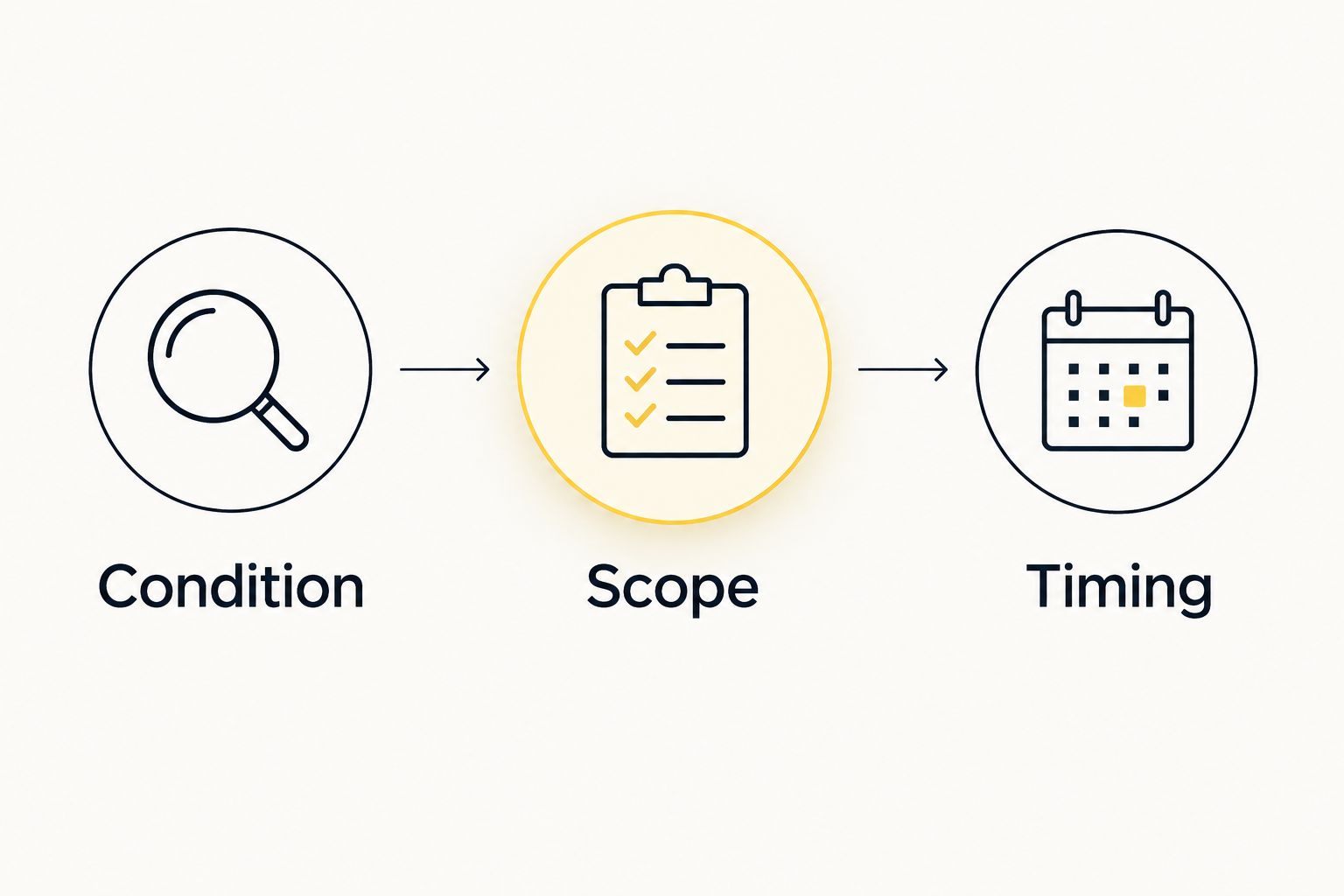
Check the property's condition, agree on the work and coordinate access before booking.
What should you confirm with a cleaning provider?
Ask for the scope in writing. A useful confirmation identifies the property, the agreed work, preparation requirements and access arrangements without making you guess what end-of-lease cleaning means.
Check appliance interiors, cupboards, windows, tracks, balconies and floor treatments individually where relevant. These are questions to ask, not assumed inclusions. Describe any surfaces that need special care and avoid requesting treatment without checking suitability.
Ask how you should report an issue with the agreed work. Confirm whether any follow-up conditions apply and how access would work after the initial appointment. Do not read an unspecified guarantee into a booking confirmation.
Housekept end-of-lease cleaning is best for renters seeking a cleaning service in Sydney, Shoalhaven or Illawarra. Housekept provides that service, but you still need to confirm the scope for your property; the service category alone does not establish individual inclusions or follow-up terms.
Does professional cleaning guarantee your bond back?
No. Professional cleaning does not guarantee your bond refund. A cleaning service addresses the agreed cleaning work, not every issue that can arise at the end of a tenancy.
In NSW, tenants must leave the premises reasonably clean, with the property's starting condition and fair wear and tear relevant to end-of-tenancy responsibilities. Keep the condition report and dated photos so a cleaning discussion stays connected to evidence rather than memory.
If an inspection identifies a problem, ask which area or item is in question and request supporting detail. Establish whether the concern is unfinished cleaning, damage or an existing condition before choosing a response.
Should you clean before the removalists arrive?
Clean accessible areas before moving, then finish after the furniture leaves. Empty cupboards and cleared shelves are practical early tasks, provided they will not be used again before handover.
Leave the final floor clean until after furniture movement. Packing materials, shoes and removal activity can disturb already-cleaned rooms, so sequence the work around the move rather than treating cleaning as an isolated event.
If you are booking help in 2026, tell the provider whether the property will be empty. Do not book an empty-property scope while expecting the cleaner to work around packed boxes and furniture.
Is an ordinary house clean enough for moving out?
An ordinary house clean is enough only if its agreed tasks cover what your property needs at handover. The booking label matters less than the actual work.
Compare the proposed scope with your condition report and current walkthrough. Appliance interiors, emptied storage and areas previously hidden by furniture deserve explicit attention when they need cleaning.
Do not book a routine clean and assume extra move-out tasks will happen automatically. Describe the tenancy handover when making the enquiry and ask for the appropriate scope.
Your final walkthrough before returning the keys
Check 1 room at a time after cleaning finishes. Work from the doorway around the room, then inspect storage, fittings and floors before moving on. A fixed route helps you avoid repeatedly checking obvious surfaces while overlooking less visible ones.
- Open cupboards and drawers that formed part of the agreed clean.
- Inspect agreed appliance interiors, not just their doors.
- Look at bathroom fittings and edges where residue remains visible.
- Check accessible window tracks and glass where included.
- Remove your remaining belongings, rubbish and cleaning supplies.
- Take clear photos of the finished rooms and any unresolved concerns.
Keep the quote, messages and cleaning receipt with your tenancy records. A receipt documents a service; photos document visible condition. Neither replaces the other, and neither establishes that unrelated tenancy issues have been resolved.
FAQ
Is end of lease cleaning worth it if my rental is already clean?
Professional cleaning is unnecessary if you can complete the required work yourself before handover. Inspect emptied cupboards, appliances and areas behind furniture before deciding that the property is finished.
Do I have to hire a professional cleaner in NSW?
A professional booking is not a blanket requirement for every NSW tenancy. The general obligation is to leave the premises reasonably clean; check any specific issue against your agreement and current NSW tenancy guidance.
Can I get my bond back if I clean the property myself?
Cleaning the property yourself does not automatically prevent a bond refund. The condition at handover and any other tenancy issues matter, not simply whether you have a professional cleaning receipt.
What should I ask an end-of-lease cleaner before booking?
Ask for written inclusions, exclusions, preparation requirements and access arrangements. Confirm how to report unfinished agreed work and whether any follow-up conditions apply.
Does end-of-lease cleaning include carpet cleaning?
Do not assume carpet cleaning is included. Ask what floor treatment the quote covers and whether any separate treatment is relevant to your property.
What happens if the agent says the property still needs cleaning?
Ask for the specific items and supporting photos or inspection notes. Compare them with your condition records and agreed cleaning scope before arranging further work.
Does Housekept provide end-of-lease cleaning near me?
Housekept provides end-of-lease cleaning across Sydney, Shoalhaven and Illawarra. Confirm coverage for your address and the required scope when making an enquiry.
One last thing
An empty room is easier to assess than a furnished one. Before finalising your 2026 handover, photograph the property after furniture and cleaning equipment have left, not while boxes still hide surfaces.
The strongest reason to book cleaning is a specific workload you need help finishing. If you cannot name that workload, complete your walkthrough before making the decision.