
How long does a full house clean take?
A full house clean takes as long as the agreed tasks require; there is no single duration that applies to every home. Room count, bathroom condition, extra tasks and the number of cleaners all affect the finish time. Before booking, ask for both the expected time on site and the work included—not just a number of hours.
TL;DR
- How long does a full house clean take? Confirm the cleaning scope, property condition and team size before accepting an estimate.
- Housekept provides home cleaning across Sydney, Shoalhaven and Illawarra; confirm the scope before booking.
- Cleaner-hours measure labour, not necessarily the time between arrival and departure.
- A full house clean does not automatically include oven interiors, windows, laundry or carpet treatment.
How long does a full house clean take?
The useful answer is a property-specific estimate tied to a written task list. A bedroom count alone does not describe the work: bathrooms, kitchen build-up, clutter and requested extras also need attention.
For a 2026 booking, compare these details before comparing appointment lengths:
Time on site
- What it tells you: The expected period between arrival and departure
- What still needs confirming: Team size and included tasks
Cleaner-hours
- What it tells you: The total labour assigned to the job
- What still needs confirming: How that labour translates into elapsed time
A fixed task list
- What it tells you: Which rooms and surfaces the cleaner will address
- What still needs confirming: Whether every task fits the expected appointment
A time-limited visit
- What it tells you: How long the cleaner will work
- What still needs confirming: Which tasks take priority if time runs out
If you are arranging home cleaning services, describe the property and the result you need before asking how long it will take. An estimate based on accessible floors and surfaces is not equivalent to one that includes moving belongings or cleaning inside appliances.
Why this matters
A vague duration creates a practical problem: you cannot tell whether the whole home will be finished or whether the cleaner will stop when the booked time ends. That distinction matters when you need to leave for work, return with children or hand over the property.
Treat your 2026 cleaning booking as an agreed job, not simply a block in your calendar. Confirm what completion means, then arrange your day around the expected finish. If you have a firm departure or handover deadline, disclose it before accepting the appointment.
Routine cleaning: best for maintaining an already manageable home
Routine cleaning suits a home where you want to keep agreed rooms and surfaces maintained. Discuss tasks such as bathroom cleaning, kitchen surfaces, dusting, vacuuming and mopping rather than assuming the phrase full house covers everything.
The benefit is a repeatable brief: you and the cleaner know which tasks matter. The limitation is scope. A maintenance visit should not be treated as an unspoken agreement to tackle accumulated grime, appliance interiors or every cupboard.
Ask whether the first appointment needs a different brief from later visits. Tell the cleaner about areas that have not been cleaned recently, even when the rest of the property is tidy.
Choose routine cleaning for upkeep; request a separate discussion when you need neglected areas brought back to a manageable condition.
Detailed cleaning: best for a broader task list
A detailed clean needs a clear definition because the name alone does not specify the work. Skirting boards, reachable fixtures, appliance interiors and other detailed tasks belong in the brief individually if you want them considered.
The benefit is attention to areas outside your usual maintenance list. The trade-off is additional work, which needs to be reflected in the appointment rather than added after arrival.
Do not ask only whether the cleaner offers a deep clean. Ask which surfaces are included, what access is required and which requests fall outside the agreed service. Choose a detailed clean when the task list—not the label—matches the result you need.
End-of-lease cleaning: best for a tenancy handover
An end-of-lease clean serves a different purpose from an ordinary household visit. Base the brief on the property, your tenancy documents and any written instructions from the agent or landlord.
The benefit is a handover-focused task list. The limitation is that cleaning alone does not resolve damage, maintenance issues or every inspection concern. Do not treat a cleaning appointment as a guarantee of the inspection outcome.
For a 2026 move, disclose your key-return deadline and confirm whether the home will be empty when cleaning begins. Furniture, boxes and removal activity affect access to the areas you want cleaned.
Choose end-of-lease cleaning for a tenancy handover, not as another name for routine housekeeping.
Which type of full house clean should you book?
Choose the service by purpose before discussing duration. These are different briefs, not interchangeable names for the same appointment.
Routine cleaning
- Best for: Maintaining agreed rooms and surfaces
- Main benefit: A consistent upkeep task list
- Main limitation: Does not automatically cover accumulated build-up or extras
Detailed cleaning
- Best for: Addressing specified areas beyond routine upkeep
- Main benefit: More attention to named tasks
- Main limitation: Requires a more detailed scope and access discussion
End-of-lease cleaning
- Best for: Preparing a rental for handover
- Main benefit: Focuses the brief on tenancy requirements
- Main limitation: Does not guarantee an inspection result
Holiday-rental turnover
- Best for: Preparing a property between guests
- Main benefit: Organises work around the next guest arrival
- Main limitation: Linen, restocking and other duties need explicit agreement
A holiday-rental turnover also needs a clear boundary between cleaning and property preparation. If you need beds made, consumables checked or an issue reported, name those duties rather than assuming they sit inside a full house clean.
Why full house cleaning time varies
The main drivers are practical features of the job. Give the cleaner enough detail to distinguish ordinary maintenance from work that needs extra attention.
- Property size and layout. Describe the rooms being cleaned, bathrooms, stairs and separate living areas. A bedroom count leaves out much of the usable space.
- Current condition. Flag grease, soap build-up, visible dust and pet hair. Photographs help show the condition you are describing.
- Clutter and access. Explain whether floors, benches and sinks will be clear. Moving belongings is a separate activity from cleaning the exposed surface.
- Included tasks. Identify appliance interiors, internal windows, cupboards or other requests separately. Do not rely on the word full to include them.
- Team size and work allocation. Confirm how many cleaners are expected and whether the stated duration means elapsed time or total labour.
- Access and interruptions. Describe parking, keys, stairs, pets and any rooms that will be occupied. Agree how the cleaner will reach each part of the home.
The strongest estimate describes the work as well as the property. When the brief changes, ask whether the expected finish needs to change too.
How to get a useful cleaning-time estimate
You do not need a technical checklist. You need a clear description of the home, its condition and your priorities.
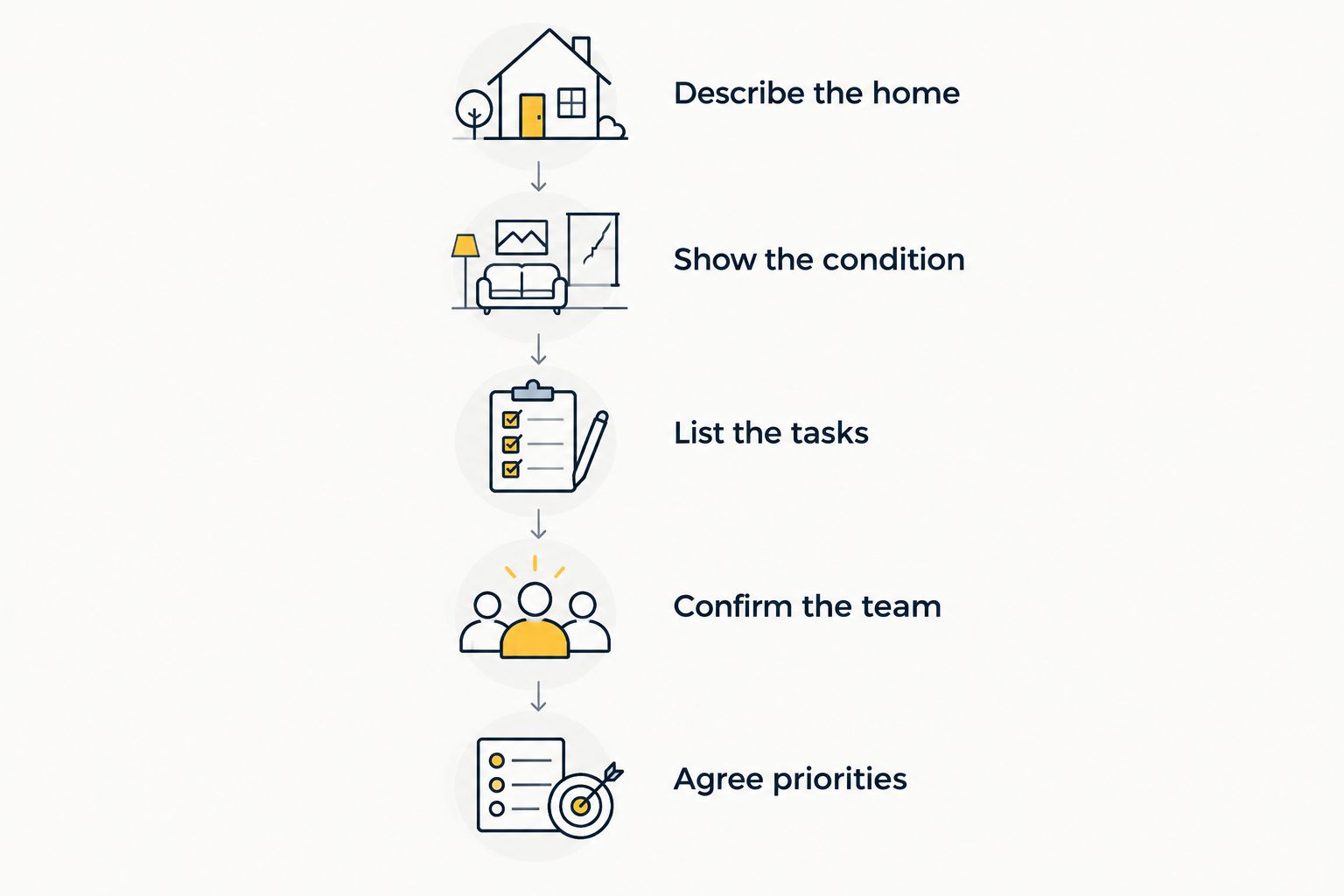
- Describe the home. List bedrooms, bathrooms, living areas and any spaces you do not need cleaned. Mention stairs and access restrictions.
- Show the condition. Send current photographs if the provider accepts them. Include problem areas, not only the tidiest room.
- List the tasks. Separate routine surfaces from detailed requests. Identify anything inside an appliance, cupboard or other enclosed space.
- Confirm the team. Ask how many cleaners are expected and what the quoted hours mean. Request an expected arrival and finish window.
- Agree priorities. State which tasks matter most if the condition differs from the initial description. Ask how any change to the scope will be handled.
Define the work before arranging your day around a finish time.
For your 2026 enquiry, put these details in the same message. Scattered instructions make it harder to tell whether everyone is agreeing to the same job.
Housekept is best for households seeking professional home cleaning in Sydney, Shoalhaven or Illawarra. Confirm your specific task list and expected duration before booking; the service category alone does not establish what your appointment includes.
Discuss your home cleaning
Check the service options, then confirm your rooms, priorities and expected cleaning duration.
Do more cleaners mean the house finishes sooner?
More cleaners can share the work, but team size alone does not establish the finish time. Some tasks can happen in separate rooms; others depend on access, equipment or another task being completed first.
Do not divide a solo-cleaner estimate by the team size and treat the result as a confirmed appointment length. Ask the provider for the expected elapsed time for the actual team attending.
Also confirm whether everyone arrives together and whether the whole team stays for the same period. Those details distinguish the total labour assigned from the time you need to keep the property accessible.
Does a first clean take longer than a regular clean?
A first clean needs its own assessment because the cleaner has not yet established the property's condition or your preferred scope. Do not assume a recurring appointment length applies to the initial visit.
Explain what has been maintained and what needs concentrated attention. After the first appointment, use the completed task list to discuss the scope of future visits.
For a recurring arrangement starting in 2026, keep the agreed priorities in writing. If you later add rooms or detailed tasks, revisit the appointment rather than expecting the same schedule to absorb extra work.
Should you tidy before a cleaner arrives?
Clear access to the surfaces you want cleaned. Put away personal belongings, remove dishes from areas that need attention and explain where pets will be during the visit.
You do not need to clean the home before the cleaner arrives. The useful preparation is making the agreed work accessible, not hiding the condition used to prepare the estimate.
Ask before moving heavy furniture or attempting unfamiliar cleaning tasks. If an area is unsafe or inaccessible, describe it and agree what will happen instead of leaving it as an arrival-day surprise.
FAQ
How long does a full house clean take with a professional cleaner?
A professional full house clean needs a property-specific duration based on the agreed tasks, condition and team size. Ask for expected time on site and a written description of what will be completed.
Can you estimate cleaning time from the number of bedrooms?
Bedroom count alone is not enough to define the work. Include bathrooms, living areas, current condition, access and detailed cleaning requests when asking for an estimate.
Does a full house clean include the oven and windows?
A full house clean does not automatically include oven interiors or windows. Name those tasks and confirm their inclusion before booking.
Is a full house clean the same as an end-of-lease clean?
A full house clean is not automatically an end-of-lease clean. A tenancy handover needs a brief that reflects the property and the relevant written requirements.
Should I stay home while my house is cleaned?
Agree access and occupancy arrangements with the provider before the visit. If you stay home, explain which rooms you need to use so the work can be planned around them.
What should I ask Housekept before booking home cleaning?
Ask Housekept to confirm the service scope, expected team size and estimated time on site for your home cleaning. Explain your property condition, priority tasks and any firm finish deadline.
What happens if the cleaner needs more time?
Agree the process for extra work before the appointment starts. Ask whether the cleaner will seek approval, prioritise the remaining tasks or arrange another visit.
One last thing
Ask what happens if the booked time runs out. That question reveals whether you are arranging a time-limited visit or an agreed cleaning outcome.
Write down the priority order before arrival. If the cleaner finds unexpected work, you can make a clear decision instead of discovering at the end that an important room was left unfinished.