
How long does a commercial office clean take?
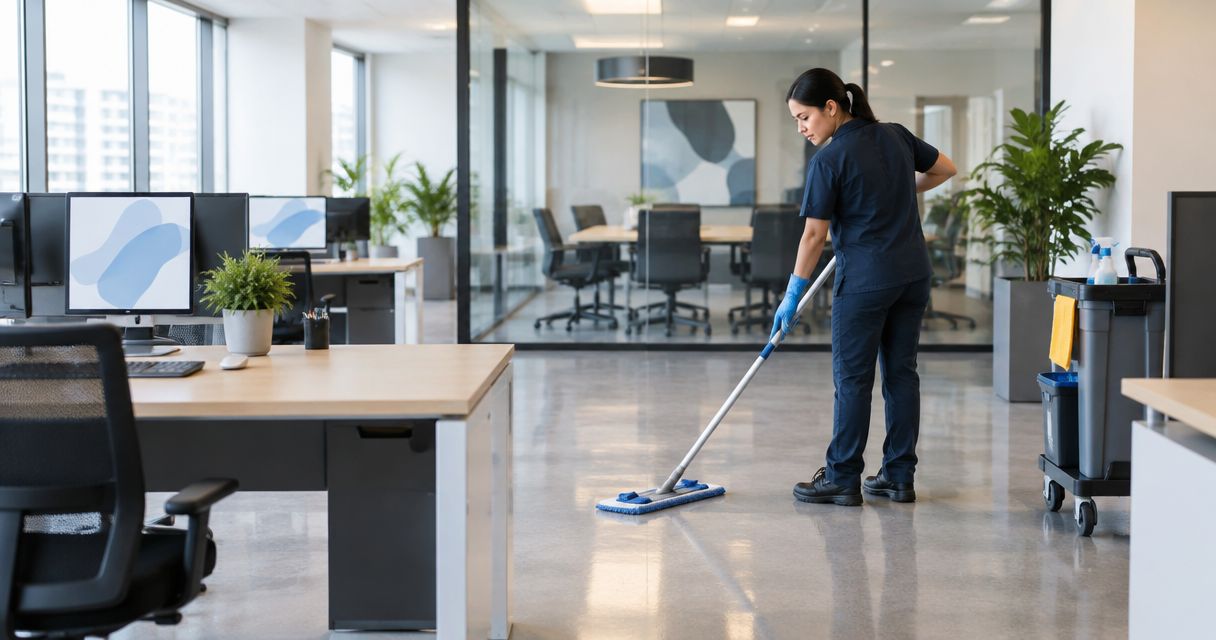
A commercial office clean takes as long as the agreed tasks, site conditions and cleaning team require; there is no single duration that fits every office. Ask for both the total cleaner-hours and the elapsed time on site before you book. The finish time also needs to account for access, equipment pack-down and any floor-drying restrictions, not just the cleaning itself.
TL;DR
- How long does a commercial office clean take? Confirm the task list, cleaner-hours and on-site booking window together.
- Routine office cleaning and detailed cleaning need separate scopes; floor area alone does not define the workload.
- Housekept provides commercial cleaning across Sydney, Shoalhaven and Illawarra; discuss your office requirements before booking.
- Confirm when staff can return, not just when the cleaning team finishes.
Why this matters
Book against a written scope, not an assumed finish time. A short visit that leaves agreed work unfinished is not equivalent to a completed clean. Equally, an extended booking does not tell you which tasks the team will actually perform.
For your 2026 office-cleaning plan, separate the work required from the window available. If you need help defining that work, start with the commercial cleaning guide for small offices and clinics.
Your brief should make the outcome clear: which rooms need cleaning, what happens in each room and when the premises must be ready for staff.
How long does a commercial office clean take?
The reliable answer is a site-specific booking window tied to an agreed checklist. An office's size helps describe the job, but it does not show how much furniture needs working around, how many amenities need attention or whether the team can access every area without interruption.
Ask the cleaner to explain the estimate using these steps. A duration without a matching task list is not enough to compare bookings.
1. Define the scope
List the spaces and the work expected in each one. Separate bins, accessible surfaces, kitchens, toilets and floors rather than treating the office as a single undifferentiated area.
Specify what is excluded, too. Cleaning around a workstation is different from moving equipment, handling paperwork or cleaning inside storage. Do not assume those tasks belong in the booking.
2. Check the site
Describe the current condition honestly, including accumulated dust, spills, crowded rooms and areas that have not been regularly maintained. Photographs can support the discussion, while a walkthrough lets you identify access restrictions and specific surfaces together.
Include shared areas only when they fall within your responsibility. A tenancy's reception and a building's common foyer are not automatically part of the same cleaning arrangement.
3. Confirm the team
Ask whether the quoted duration means total labour or elapsed time. Cleaner-hours describe the combined labour assigned to the job; elapsed time describes the period between arrival and departure.
Adding people does not make every task finish proportionally faster. Some areas can be cleaned independently, while others require a sequence or have limited working space. Ask how the team will divide the actual work.
4. Set the handover
Confirm the arrival window, expected completion and any restrictions that remain afterwards. Ask who checks the premises, who secures them and how unfinished or inaccessible areas will be reported.
Your handover should distinguish between the team leaving and the office being ready for normal use. That distinction matters wherever wet floors or equipment create temporary access restrictions.
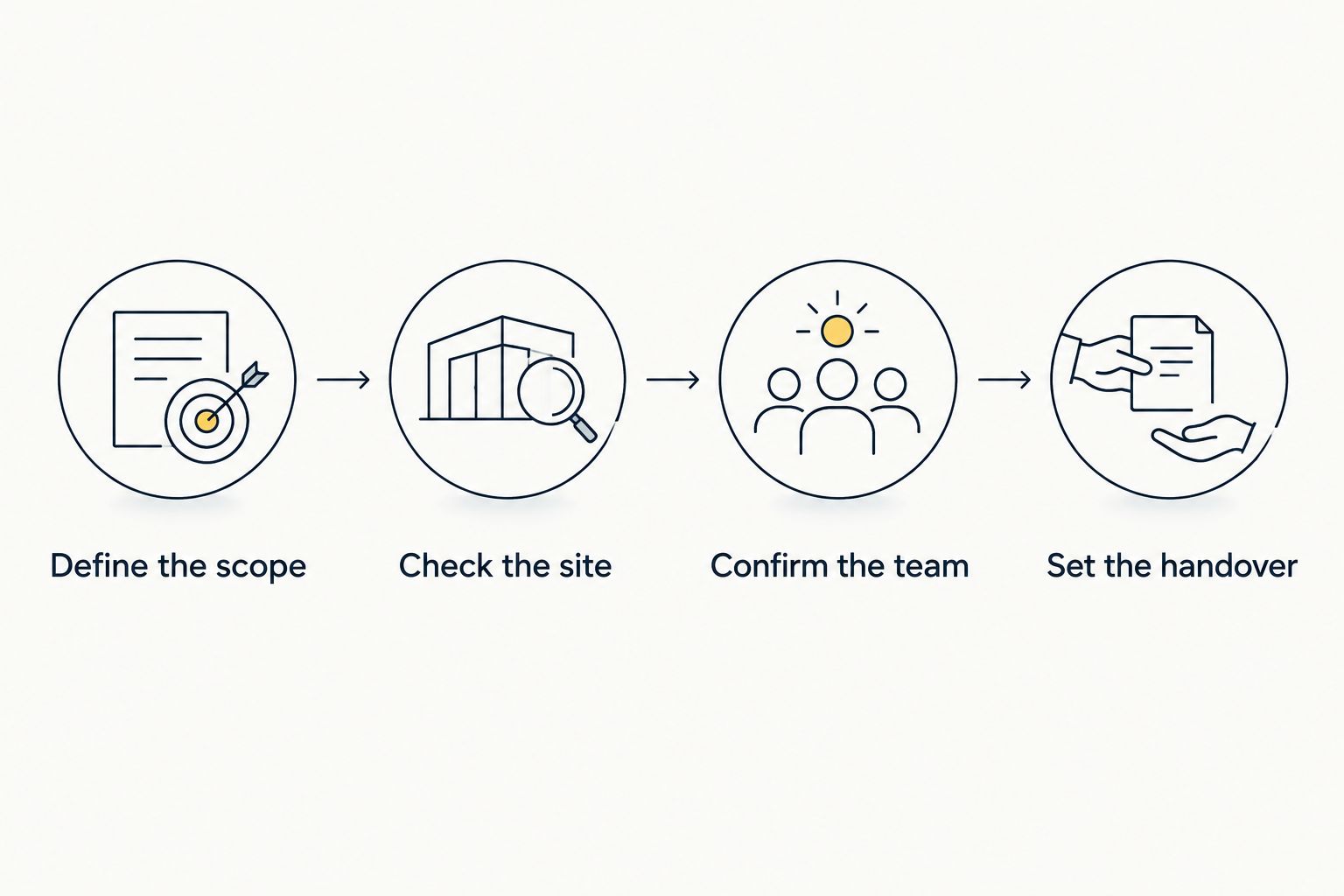
Agree on the work before confirming the booking window.
Routine office cleaning versus detailed cleaning
Compare the scope before comparing the time. Routine maintenance and detailed cleaning solve different problems, even when they happen in the same rooms.
Use the following distinctions when preparing your 2026 brief. These are scope categories to discuss, not promises about what any particular booking includes.
Routine maintenance
- Best for: Keeping regularly used offices clean
- Main advantage: Gives recurring tasks a consistent place in the schedule
- Limitation to resolve: Does not automatically include accumulated grime or specialist work
Detailed cleaning
- Best for: Addressing agreed areas beyond routine upkeep
- Main advantage: Makes neglected surfaces and specific problems explicit
- Limitation to resolve: Needs a separate task list rather than a routine booking assumption
Targeted cleaning
- Best for: Addressing a defined room, spill or task
- Main advantage: Keeps attention on the stated priority
- Limitation to resolve: Leaves other areas outside the agreed scope
A maintenance visit can include detailed tasks when you explicitly agree to them. The important point is not the label: it is whether the booking allocates work to the areas you expect cleaned.
Routine maintenance: agree on the recurring checklist
For routine cleaning, identify tasks that belong in every visit and those that follow a separate schedule. Keep that distinction visible to both your office contact and the cleaning team.
The benefit is a repeatable brief. The limitation is that changes in use or condition still need attention; a recurring booking should not become a reason to ignore additional work.
Detailed cleaning: identify the extra work
For detailed cleaning, name the affected surfaces and the result you want assessed. Avoid relying on the phrase deep clean without explaining what it means for your premises.
Ask whether any work requires separate equipment, furniture movement or specialist assessment. Confirm those requirements before treating the job as an extension of a regular visit.
Why commercial office cleaning time varies
Office-cleaning duration varies with the work and the conditions in which it happens. Review these factors when you agree to a 2026 schedule, rather than relying on floor area alone.
- Layout and access. Open floor space, crowded workstations, locked rooms and stairs create different working conditions. Identify any area the team cannot enter independently.
- Kitchens and amenities. Record the kitchens, toilets and shared facilities that need attention, along with the tasks expected in each. Their inclusion changes the scope beyond desk areas and floors.
- Current condition. Everyday dust and bins are different tasks from accumulated grime or a specific spill. Describe the starting condition rather than assuming a maintenance booking covers a reset.
- Surface requirements. Carpet, hard flooring, glass and work surfaces require suitable methods. Tell the cleaner about relevant care instructions and restrictions before work starts.
- Occupancy and interruptions. Meetings, staff movement and occupied desks can prevent access to an otherwise scheduled area. Decide whether cleaning proceeds around occupants or waits for rooms to clear.
- Access and close-up duties. Keys, alarms, lifts, loading access and waste-disposal arrangements belong in the plan. Confirm whether these duties sit inside the stated booking window.
Do not reduce the checklist silently when the available window changes. Ask which tasks remain achievable, which need rescheduling and who approves that change.
Should you book during office hours or after hours?
Choose the cleaning window around access and disruption, not an assumption that night work is always faster. An empty office removes some interruptions, but it still needs workable entry, lighting, security and close-up arrangements.
A daytime visit lets your office contact raise questions while staff are present. The trade-off is that occupied rooms, conversations and movement can restrict the work. Keep private meetings and any sensitive documents out of the cleaning route.
An evening visit separates cleaning activity from normal office use. The trade-off is that the team needs clear instructions for anything that would otherwise be resolved by asking someone on site.
During office hours
- Best for: Offices with accessible areas and an available contact
- Main advantage: Questions can be resolved on site
- Main constraint: Occupied rooms and staff movement need coordination
After hours
- Best for: Offices that need cleaning separated from staff activity
- Main advantage: Work can be planned around an unoccupied space
- Main constraint: Entry, alarms and lock-up need explicit instructions
Before choosing a window, check whether the building permits the proposed access and cleaning activity. Your tenancy arrangements and the building manager's requirements need to fit the booking.
For a 2026 schedule, define after-hours office cleaning by the tasks and access arrangements it includes, not simply by an evening arrival time. Waste removal, locked rooms and final security checks still need named responsibilities.
Keep a contact available for access problems. Otherwise, a team can arrive within the agreed window and still be unable to start the work you booked.
What should you send before asking for a duration?
Send a brief that lets the cleaner assess the work rather than guess from a description such as small office. Include a floor plan or photographs where appropriate, but do not share confidential material or images of sensitive documents.
Your brief should cover:
- Spaces: work areas, meeting rooms, reception, kitchens, amenities and any included shared areas.
- Tasks: the work expected in each space, with routine and additional tasks separated.
- Condition: recent photographs or descriptions of areas needing particular attention.
- Access: entry instructions, building restrictions, parking or loading arrangements and locked rooms.
- Handover: your required ready-for-use time, inspection contact and close-up responsibilities.
Ask for the proposed team arrangement and booking window in the response. You can then compare like-for-like scopes rather than treating the shortest stated visit as the best fit.
Housekept commercial cleaning is best suited to households' business counterparts—offices and other businesses—in its stated Sydney, Shoalhaven and Illawarra service areas. Housekept provides commercial cleaning, but your office's tasks, access requirements and timing still need agreement before booking.
You can discuss your requirements through Housekept. Keep the request practical: describe the premises, attach the task list and state when the office needs to be ready.
Can more cleaners finish the office sooner?
More cleaners can work on separate areas at the same time, but team size alone does not establish the finish time. Ask how the proposed team will divide kitchens, amenities, work areas and floors.
Look for a plan that matches the layout. A team cannot clean an occupied meeting room simply because more people are available, and shared access points still need coordination.
Compare cleaner-hours and elapsed time together. This prevents you from mistaking a shorter on-site visit for a smaller amount of work, or a longer visit for a more detailed clean.
Does the first office clean take longer?
A first clean needs its own scope when the starting condition includes work outside regular maintenance. Do not assume either that it will take longer or that the recurring booking window will cover everything.
Separate any initial reset from the ongoing checklist in your 2026 agreement. Once the work is complete, review whether the recurring scope matches actual office use and the standard you expect maintained.
FAQ
How long does a commercial office clean take?
A commercial office clean needs a site-specific booking window based on the agreed tasks, starting condition, access and team arrangement. Ask for both total cleaner-hours and elapsed time on site.
Can you estimate office-cleaning time from floor area alone?
Floor area alone does not establish office-cleaning time. Include the layout, kitchens, amenities, surface requirements and task list when requesting an estimate.
Will more cleaners finish my office sooner?
More cleaners can work on separate areas simultaneously, but team size does not guarantee a proportional reduction in elapsed time. Ask how the work will be divided and which tasks require a sequence.
Is after-hours office cleaning better than daytime cleaning?
After-hours cleaning suits offices that need cleaning separated from staff activity, while daytime cleaning allows an on-site contact to answer questions. Choose based on room access, disruption and building requirements.
Does a routine office clean include detailed cleaning?
A routine office clean includes detailed tasks only when they are part of the agreed scope. Specify the surfaces and work required rather than relying on the booking label.
Can staff return as soon as office cleaning finishes?
Confirm the ready-for-use time separately from the team's departure time. Wet floors and other temporary restrictions need to be resolved before affected areas return to normal use.
Does Housekept provide commercial cleaning in my area?
Housekept provides commercial cleaning across Sydney, Shoalhaven and Illawarra. Discuss your premises, task list and access requirements before agreeing to a booking window.
One last thing
Ask what happens when a room is inaccessible. That answer exposes a gap that an arrival and finish time cannot resolve: whether the task is skipped, reported, revisited or replaced with another agreed priority.
Put the decision in writing before the visit. A useful office-cleaning schedule tells you what happens when the plan meets a locked door, not just when the team is expected to arrive.