.png)
Best stainless steel cleaners for kitchen appliances 2026

Best overall: mild dishwashing detergent for routine cleaning. Best for fingerprint-heavy uncoated steel: an appliance-approved stainless steel cleaner. Best simple option: water and microfibre for light marks. This 2026 guide from Housekept helps you choose the best stainless steel cleaner for your fridge, dishwasher and rangehood without treating every finish the same.
TL;DR
- The best stainless steel cleaner for everyday grease is mild dishwashing detergent, where appliance care instructions permit it.
- Choose an appliance-approved stainless steel cleaner for fingerprints on uncoated fridge and dishwasher fronts.
- Use water and microfibre for light touch-ups; dry the surface rather than leaving droplets.
- For coated appliances, the manufacturer's cleaning instructions take priority over general stainless steel advice.
Why this matters
Stainless steel describes the material, not the complete surface treatment. A brushed stainless steel fridge and a fingerprint-resistant fridge can need different cleaning methods, even when they look similar across the kitchen.
Choosing a stronger cleaner is not the first move. Identify the finish, check the appliance instructions, then choose the least aggressive method that removes the mark. That order matters more than a stainless steel claim on the bottle.
Housekept provides home and holiday rental cleaning across Sydney, Shoalhaven and Illawarra. This stainless steel cleaner guide focuses on choosing and using cleaning options, not replacing the care instructions supplied with your appliance.
What makes the best stainless steel cleaner?
Use these criteria when comparing cleaners in 2026. The right choice needs to suit both the surface and the job.
- Finish compatibility: The appliance instructions must permit the product or cleaning method. Check separately for coated, painted and fingerprint-resistant surfaces.
- Soil removal: Match the cleaner to fingerprints, cooking grease or light dust. A polishing product is not automatically a degreaser.
- Residue control: Look for directions that explain wiping, rinsing and buffing. Leftover detergent or polish can make a cleaned panel look smeared.
- Surface protection: Avoid abrasive pads, steel wool and products prohibited by the manufacturer. A stronger approach is not a substitute for compatibility.
- Practical application: You should be able to control where the liquid goes, especially near controls, seams and handles.
Do not rank a cleaner by scent or shine alone. A shiny finish is useful only if the cleaning method is suitable for the appliance underneath it.
Stainless steel cleaning options at a glance
Mild dishwashing detergent
- Best for: Routine grease on compatible appliance exteriors
- Standout feature: Cleans oily soil before the final dry wipe
- Key limitation: Detergent residue needs removing
Appliance-approved stainless steel cleaner
- Best for: Fingerprints and presentation on uncoated steel
- Standout feature: A dedicated treatment for the finish named on its label
- Key limitation: Not automatically suitable for coated steel
Water and microfibre
- Best for: Quick removal of light marks
- Standout feature: A simple first step without an added cleaning product
- Key limitation: Not the right choice for substantial greasy build-up
Manufacturer-specified coated-finish cleaner
- Best for: Fingerprint-resistant or coated appliances
- Standout feature: Follows the appliance's particular care requirements
- Key limitation: Requires checking the exact model's instructions
The first option is the default for routine grease, not permission to use detergent on every appliance. If your manual specifies another method, that method takes priority over this ranking.
1. Mild dishwashing detergent: best for everyday kitchen grease
A small amount of mild dishwashing detergent in water is a practical starting point for routine greasy marks on appliance exteriors when the manufacturer permits it. Use a soft cloth, remove the soil, then wipe away the detergent with clean water and dry the panel.
This is a cleaning step rather than a polishing treatment. It suits the everyday film left around fridge handles, dishwasher fronts and compatible rangehood exteriors without adding an unnecessary finishing product.
Mild dishwashing detergent pros:
- Addresses oily soil rather than simply buffing its appearance.
- Lets you apply the solution with a cloth and control where it goes.
- Keeps routine cleaning separate from optional polishing.
Mild dishwashing detergent cons:
- Excess detergent leaves a film if you do not remove it.
- It is not a substitute for a prescribed coated-finish cleaning method.
- It does not resolve scratches, coating damage or every type of stain.
Best for: Everyday cooking grease on compatible, washable appliance exteriors.
Use the appliance instructions and detergent label to guide preparation. Do not assume that more detergent means a better result; leftover cleaner creates another wiping task.
Keep liquid away from electrical controls and openings. Apply it to the cloth rather than flooding the appliance, and clean removable parts according to their own instructions.
Verdict: Buy mild dishwashing detergent for routine grease when the appliance instructions allow it.
2. Approved stainless steel cleaner: best for fingerprint-heavy fronts
An appliance-approved stainless steel cleaner is the targeted choice for fingerprints and the final appearance of uncoated fridge or dishwasher fronts. Check the cleaner's label and the appliance manual together; the words stainless steel do not establish compatibility by themselves.
Dedicated products differ in purpose. Some clean, some polish, and some combine those tasks, so read the directions before expecting a finishing product to remove a greasy kitchen film.
Appliance-approved stainless steel cleaner pros:
- Gives you a product intended for the surface type stated on its label.
- Provides specific application and finishing directions.
- Offers a targeted alternative when routine wiping does not deliver the required appearance.
Appliance-approved stainless steel cleaner cons:
- A product suitable for bare steel is not automatically suitable for a coating.
- Overapplication can leave visible residue.
- Exterior suitability does not establish suitability for food-contact areas or appliance interiors.
Best for: Fingerprints and finishing on uncoated appliance fronts whose care instructions permit the product.
For your 2026 cleaning cupboard, choose compatibility before adding another bottle. If the product requires buffing, complete that step with a clean cloth rather than the cloth that collected the grease.
Check any food-contact directions before using the product around preparation areas. Never carry an exterior-appliance cleaning recommendation over to an oven interior, hob or sink without checking those surfaces separately.
Verdict: Buy an approved stainless steel cleaner for a specific finishing job, not as a universal kitchen spray.
3. Water and microfibre: best for quick, light touch-ups
A clean microfibre cloth lightly dampened with water is a useful first step for dust, splashes and light marks where the appliance instructions permit it. Follow with a dry cloth so droplets do not remain on the panel.
This method keeps the task simple. It is the touch-up option between more thorough cleans, not the strongest choice for accumulated cooking grease.
Water and microfibre pros:
- Avoids adding detergent or polish for a minor mark.
- Gives you control over moisture and wiping direction.
- Makes it easy to inspect the surface before choosing another method.
Water and microfibre cons:
- Water alone does not reliably remove a substantial oily film.
- A dirty cloth can spread grease or trapped particles across the panel.
- Leaving water to dry can leave visible marks.
Best for: Light dust, fresh splashes and quick checks of otherwise clean appliance fronts.
Set aside 2 clean cloths: one for the damp wipe and one for drying. That is a practical separation of tasks, not a requirement to buy a particular cloth brand.
Inspect the cloth before use. A soft cloth containing grit is no longer a safe finishing tool, and a greasy cloth is not the right choice for the final dry wipe.
Verdict: Buy microfibre cloths for light maintenance; skip water-only cleaning when greasy residue remains.
4. Manufacturer-specified cleaner: best for coated stainless steel
Fingerprint-resistant, black stainless steel and other coated finishes need the cleaning method specified for the appliance. Depending on the model, that instruction can name a mild solution, a particular cleaner or restrictions on polishing products.
The recommendation here is not a separate chemical category. It is a decision rule: for coated steel, the exact appliance instructions win. Do not assume that a cleaner approved for an older uncoated fridge suits a newer coated one.
Manufacturer-specified cleaner pros:
- Addresses the actual finish rather than the general material name.
- Gives you a clear basis for rejecting incompatible products.
- Keeps cleaning decisions tied to the appliance model.
Manufacturer-specified cleaner cons:
- You need to identify the model and find its care instructions.
- Different appliances in the same kitchen can require different methods.
- A permitted cleaner does not repair damaged coating.
Best for: Coated, fingerprint-resistant or otherwise specially finished appliances.
When reviewing products in 2026, distinguish a manufacturer's recommendation from a retailer's general description. Read the care section for exclusions as well as permitted methods, including restrictions on abrasives, solvents or polishing treatments.
If the finish is peeling or visibly damaged, stop treating it as ordinary dirt. Repeated scrubbing is not a repair method; check the manufacturer's guidance before continuing.
Verdict: Buy only the permitted cleaner for coated steel; skip products with uncertain compatibility.
How we ranked these cleaning options
This 2026 ranking prioritises finish compatibility, soil removal, residue control, surface protection and practical application. It is a task-based guide, not a laboratory comparison of named products.
Mild detergent takes the routine-grease slot because cleaning comes before polishing. Water and microfibre cover light maintenance, while an approved dedicated cleaner serves a specific finishing job.
Coated finishes have their own recommendation because compatibility overrides convenience. No position in this list means a product is safe for every appliance.
How to clean appliance fronts without leaving a film
Use this sequence for a compatible appliance exterior. Keep the appliance switched off where its instructions require it, and avoid introducing moisture into controls or openings.
Check the finish
Read the appliance care instructions before selecting a product. Look for coated-finish wording and product restrictions; then check that your chosen cleaner matches them.
Remove loose dirt
Use a clean, soft cloth to remove loose debris before working on marks. Do not press gritty material across the surface.
Clean the panel
Apply the permitted cleaning solution as directed. Work along the visible grain on brushed steel, and clean 1 appliance panel at a time so you can inspect the result before moving on.
Remove residue
Follow the product instructions for wiping or rinsing. Detergent and polish have different directions, so do not assume they share the same finishing step.
Dry and inspect
Use a clean, dry cloth and inspect the panel from an angle. Check the finish, remaining soil, residue and dryness: 4 checkpoints before repeating the clean.
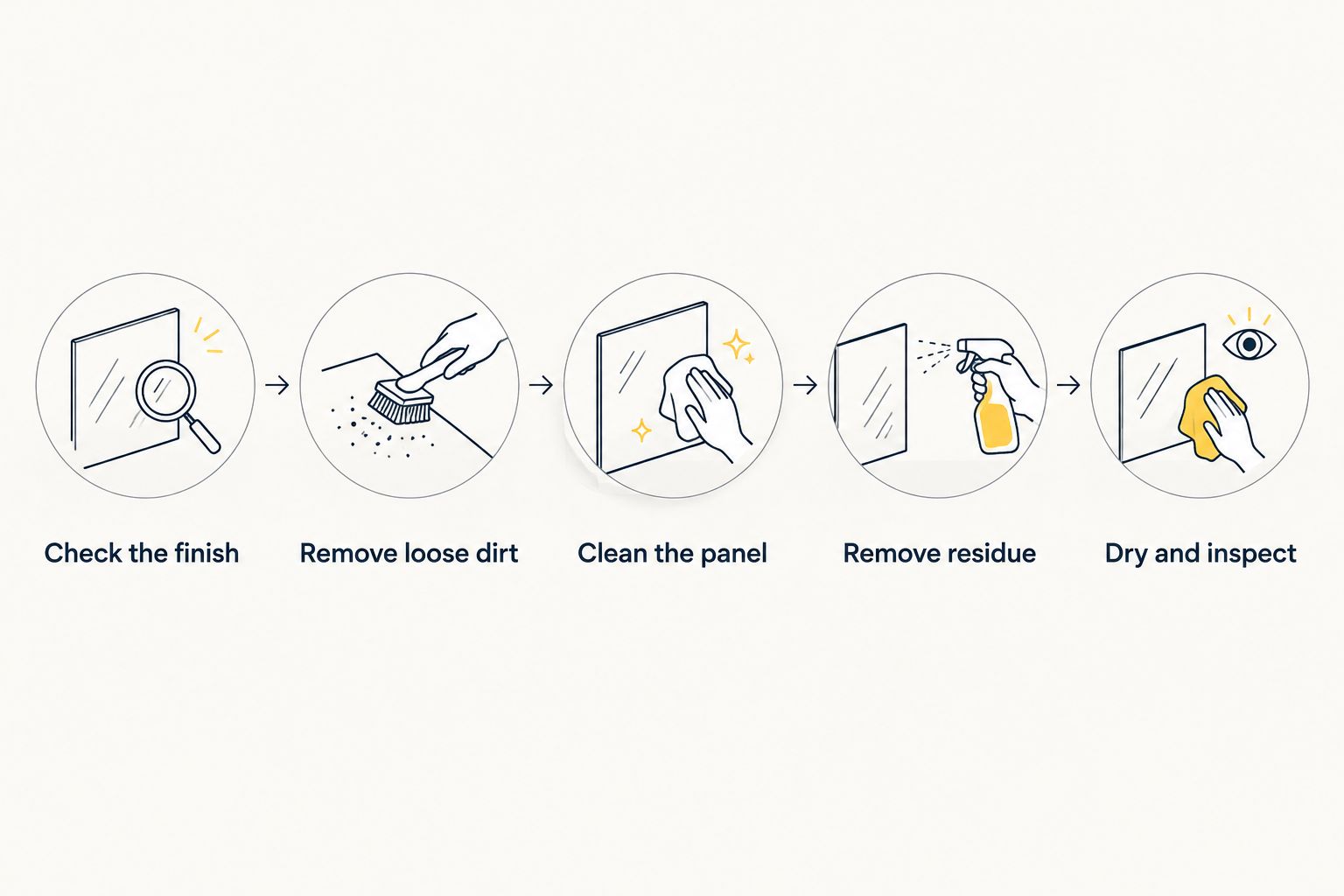
Check compatibility before cleaning, then remove residue before judging the result.
If a smear remains, check the cloth and finishing step before reaching for a stronger product. Repeating the same method with a grease-loaded cloth simply moves the residue around.
Which stainless steel cleaner should you choose?
Choose mild dishwashing detergent for routine grease if your appliance permits it. Use water and microfibre for light touch-ups, and reserve a dedicated stainless steel cleaner for an approved finishing task.
For a coated appliance, start with the manual instead of the shopping list. That is the safest decision rule in this 2026 guide because the finish determines which products belong on the surface.
Housekept provides professional home cleaning for households across Sydney, Shoalhaven and Illawarra. Choose that service when you want help with household cleaning rather than another product to manage yourself.
FAQ
What's the best stainless steel cleaner for kitchen appliances?
Mild dishwashing detergent is the default for routine grease where the appliance instructions permit it. Choose an approved stainless steel cleaner for a specific finishing task, and follow model-specific instructions for coated appliances.
Can I use washing-up liquid on a stainless steel fridge?
Use mild washing-up liquid only if the fridge's care instructions permit it. Remove the detergent residue with the prescribed wiping method and dry the exterior with a clean cloth.
Is stainless steel polish better than detergent?
Stainless steel polish and detergent serve different purposes. Detergent addresses greasy soil, while a polish treats the final appearance; use either only where the appliance instructions allow it.
What's best for fingerprint-resistant stainless steel?
The best choice for fingerprint-resistant stainless steel is the cleaning method specified by the appliance manufacturer. Do not assume that an ordinary stainless steel polish is suitable for its coating.
Why does my stainless steel fridge look streaky after cleaning?
Check for leftover cleaner, a grease-loaded cloth or water left on the surface. Follow the product's finishing directions and use a clean cloth before deciding the appliance needs a stronger cleaner.
Should I wipe stainless steel with the grain?
Wipe along the visible grain on brushed stainless steel unless the appliance instructions specify otherwise. Use a soft, clean cloth and avoid abrasive scrubbing.
Can I use the same cleaner on my fridge, oven and cooktop?
Use the same cleaner only when each appliance's instructions permit it for the particular surface. Approval for a fridge exterior does not establish approval for an oven interior or cooktop.
One last thing
Before changing cleaners, change the cloth. A fresh finishing cloth is a specific first check when an otherwise clean panel still looks smeared.
For your 2026 routine, keep cleaning and drying separate. Housekept's stainless steel cleaner recommendation is simple: match the finish, remove the soil, then remove what the cleaning step leaves behind.